Commercial Dining Rooms Cannot Outsource Vigilance to Family Protocol
A sentencing in Singapore underlines how hospitality environments rely on domestic assumptions that commercial architecture cannot enforce
SINGAPORE
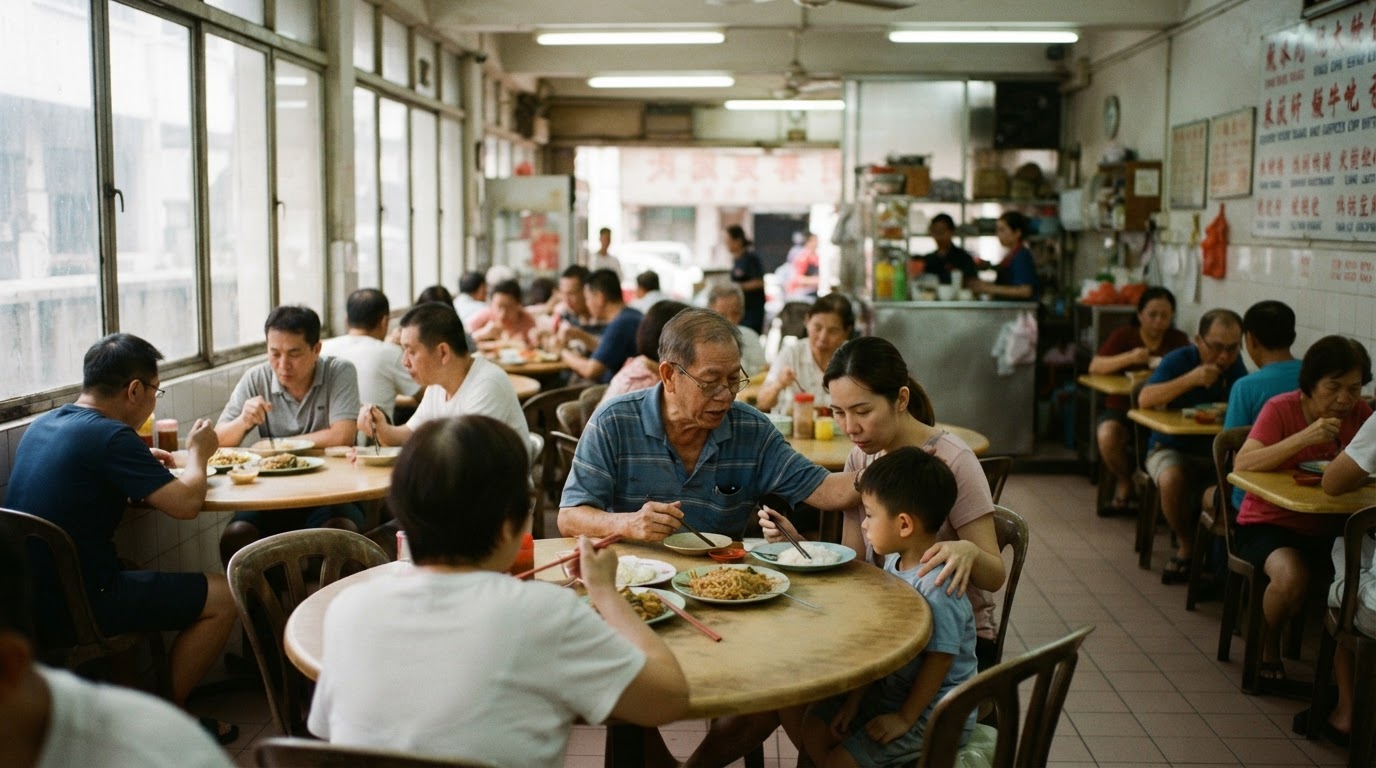
Public dining spaces operate on an implicit contract of safety, assuming that the presence of servers, other patrons, and shared tables naturally constrains illicit conduct. That assumption collapsed in a case reported by Malay Mail, in which a 70-year-old Singapore man received a jail sentence for sexually assaulting his 11-year-old grandniece during a family dinner at a restaurant.
The conviction recorded in Singapore highlights a friction between commercial hospitality settings and the realities of domestic violence. Establishments sell hospitality through communal gatherings, group bookings, and multi-generational celebrations. Yet the commercial floor plan offers no organic barrier against predatory acts when family authority masks abusive behavior.
The Illusion of Public Deterrence
Operators across urban retail and restaurant sectors design spaces for throughput, visibility, and consumer comfort. Sightlines are arranged to facilitate service efficiency and customer reassurance, operating under the theory that public exposure acts as an automated deterrent. A crowded dining room, however, remains dependent on the social dynamics seated at each table.
When offences occur within a multi-generational group during dinner, the vulnerability stems from internal familial power structures rather than exterior physical security. Hospitality venues frequently emphasize their suitability for family gatherings, projecting an environment where private domestic boundaries seamlessly merge with public recreation. What the Singapore court outcome demonstrates is that physical exposure inside a licensed commercial premise provides zero structural protection if proximity is weaponized under the cover of family familiarity.
One counterargument holds that private establishments bear no institutional capacity or moral mandate to monitor interpersonal conduct within dining parties. By this logic, a restaurant provides real estate, culinary preparation, and hospitality service, while individual accountability rests exclusively with the law and family custodians. Expecting hospitality staff to police subtle familial interactions introduces impossible liability and operational friction into standard service.
Limits of the Service Perimeter
That limitation is valid, yet it exposes the fragility of hospitality positioning. Venues rely heavily on family occasions to anchor their revenue baselines, marketing public dining as an extension of domestic intimacy. When institutions benefit commercially from facilitating private social gatherings, the boundary between public commercial space and private familial harm becomes contested.
Legal penalties deliver accountability after the breach, but they arrive only after harm has taken place within premises designed for shared leisure. The judicial system in Singapore enforced clear penal consequences for the 70-year-old perpetrator. The structural question left for public gathering spaces, however, is whether the commercial illusion of a secure public setting inadvertently lowers situational awareness among those present.
Commercial environments remain transactional squares leased for the duration of a meal. They do not possess inherent protective qualities, nor can their open sightlines substitute for active scrutiny of vulnerable individuals.
Sources
Newsletter
Pacific Daily
A curated briefing from Thailand, Asia-Pacific and the world.