The Commercial Limits of Subsistence Nutrition
University of the Witwatersrand field research in Zambia demonstrates that insect consumption declines at the rural base even as policy models propose it as scalable food security.
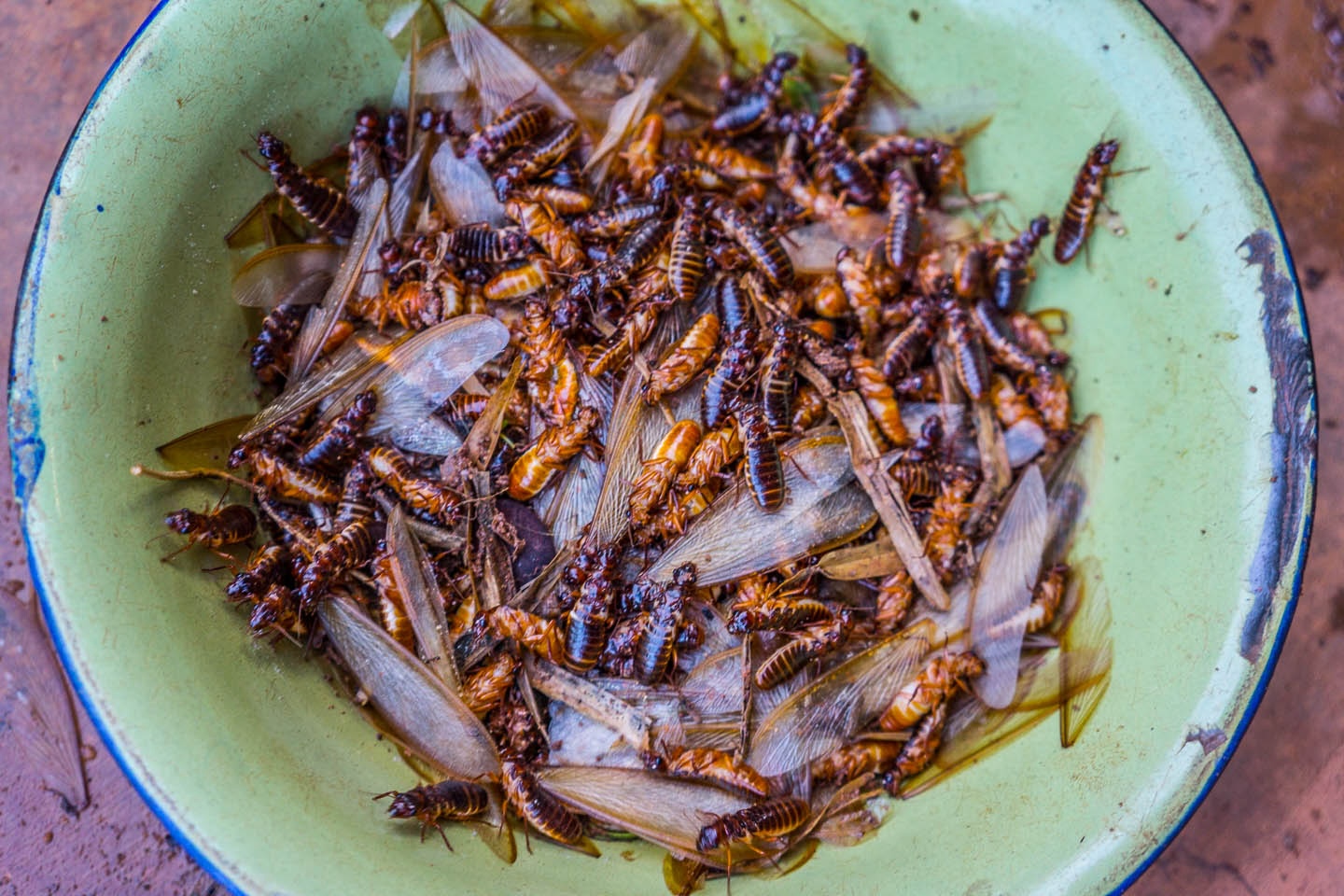
Subsistence foraging yields zero-marginal-cost protein, yet commercial retail structures routinely penalise informal food traditions. Development planners frequently treat customary dietary habits as underutilised production models waiting for institutional capital. Consumer markets, however, clear transactions based on unit processing costs, shelf stability, and status differentiation rather than caloric logic. What appears viable within a rural perimeter collapses when subjected to the administrative overhead of formal distribution.
Empirical evidence from Zambia’s Central province exposes this structural divide. A field survey of 139 rural households conducted by researchers John Nyawali and Jasper Knight, based at the University of the Witwatersrand in South Africa, established that edible insects measurably support household food security and basic nutrition. Their survey also documented an accompanying contradiction: the tradition of entomophagy, defined as the eating of insects as food, has contracted in recent years. While the biological utility remains intact, the cultural practice sustaining daily intake is unravelling under modern economic pressures.
The Retail Translation Gap
Scaling traditional diets into mainstream distribution requires predictable commodity volumes, sanitised processing, and broad market compliance. When commercial enterprises attempt to manufacture shelf-stable insect protein, corporate balance sheets confront immediate friction. High capital expenditure in processing yields finished retail prices that struggle against industrial poultry or mass-milled grains. The rural dietary practice documented in Central province functions precisely because gathering incurs zero financial outlay, an economic premise that dissolves once packaging, transport, and inventory carrying costs are introduced.
Institutional proposals often assume that demonstrating nutritional density is sufficient to induce consumer adoption. Market observation suggests the opposite dynamic. Food selection operates primarily as a marker of purchasing capacity and social distinction. As rural communities gain access to modern retail networks, customary foraged staples are frequently discarded in favour of processed commodities that signal financial mobility, regardless of comparative nutrient profiles. The commercial preference for standardised goods displaces unbranded subsistence collection long before supply shortages emerge.
Mainstream adoption depends less on nutritional advocacy than on unit processing costs and retail market compliance.
This consumer behaviour limits the viability of entomophagy as an engineered policy intervention. Nyawali and Knight observe that the broader potential of edible insects depends directly on how widely insect-eating is embraced by mainstream consumers. Mainstream consumer adoption, however, demands commercial conditions entirely absent from subsistence environments. Converting intermittent seasonal gathering into a dependable commodity requires dedicated captive breeding infrastructure, compliant cold chains, and substantial brand expenditure to overcome entrenched dietary aversion.
Subsistence Efficiency Versus Capital Allocation
Cross-border consumer dynamics across emerging economies show that regional food customs cannot be transplanted into formal commercial frameworks without altering their basic economics. The sample of 139 households in Zambia’s Central province reflects an informal safety net, not an unexploited supply chain ready for institutional investment. For subsistence families, insects serve as an opportunistic, zero-capital nutritional cushion during seasonal harvest shortfalls.
Treating an opportunistic harvest as an unmonetised commercial asset misreads the microeconomics of retail distribution. Private capital requires volume consistency, regulatory clarity, and margin expansion, none of which exists in dispersed rural gathering. Because the traditional habit is already retreating at the household level, institutional efforts to revive consumption face a structural headwind: the rural communities with the historical knowledge of entomophagy are steadily abandoning it in pursuit of commercial convenience.
The biochemical efficacy of insect nutrition is verified by field data, yet the commercial bridge between rural foraging and formal retail distribution remains an unfinanced assumption. Institutional models can chart nutritional deficits with analytical precision, but commercial markets allocate capital based on consumer demand, operating margins, and scalable supply. Until industrial processing drives the unit cost of insect protein below subsidised livestock, entomophagy will remain confined to historical subsistence rather than modern food security.
Sources
Newsletter
Pacific Daily
A curated briefing from Thailand, Asia-Pacific and the world.