Taiwan's KMT Internal Shifts Tracked by Major Powers
Internal dynamics within Taiwan's Kuomintang party suggest structural changes that influence regional strategic calculations for Beijing and Washington.
SINGAPORE
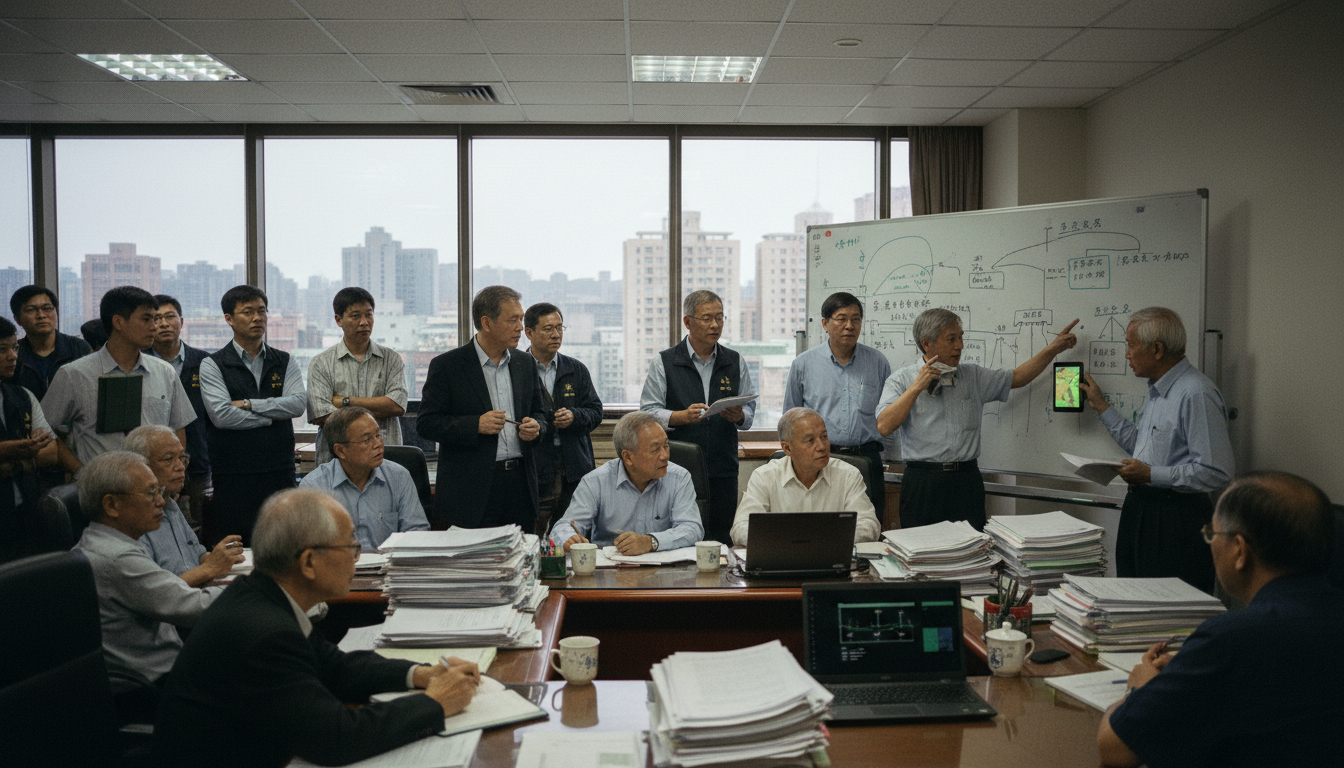
A reported power struggle within Taiwan's Kuomintang (KMT) party signals a structural shift in the island's political landscape. Both the United States and China track this development, as Nikkei Asia reported on October 9, 2026. This indicates that KMT internal dynamics extend beyond domestic competition, becoming a subject of international scrutiny.
China's consistent position against Taiwan's independence has been articulated directly. An individual identified as China's leader stated in April 2026 that independence would not be tolerated. This stance makes any KMT reorientation a factor in cross-strait relations. Concurrently, the United States monitors these changes, reflecting its strategic interests in Taiwan's autonomy and regional stability.
The KMT's role in this dynamic remains complex. While its leader expressed willingness to meet with an individual identified as a former US President during a U.S. trip in June 2026, the party's actions also reveal internal policy divisions. The KMT proposed a USD 7.5 billion drone plan in June 2026, following the government's previous bid. This illustrates a party navigating its opposition role and its international engagements. The KMT's internal cohesion or fragmentation directly impacts its capacity to present a unified front on defense or cross-strait policy.
The tracking of this KMT power struggle by major powers underscores Taiwan's pivotal position. For Washington, understanding KMT leadership changes is critical for assessing future cooperation and Taiwan's democratic resilience. For Beijing, KMT internal affairs serve as a barometer for potential shifts in Taiwan's approach to the mainland, especially given China's military capacities. China's civilian fleet could be a potent weapon in a Taiwan invasion, as identified in November 2025.
This situation represents more than just domestic politics. It is a visible manifestation of external powers attempting to discern Taiwan's future direction through its political parties. The question is not only who leads the KMT, but also what implications their internal struggles have for established patterns of regional influence. The unresolved constraint lies in how internal party decisions will align with, or diverge from, the broader strategic interests of the United States and China. The outcome now depends on how the KMT resolves its internal divisions, and how those resolutions are perceived and acted upon by external actors.
Sources
Newsletter
Pacific Daily
A curated briefing from Thailand, Asia-Pacific and the world.