Taiwan's Athletic Successes Navigate Complex Regional Diplomacy
Recent medal wins by Taiwanese athletes in regional competitions underscore the persistent political sensitivities inherent in multilateral forums, challenging the notion of apolitical sport.
SINGAPORE
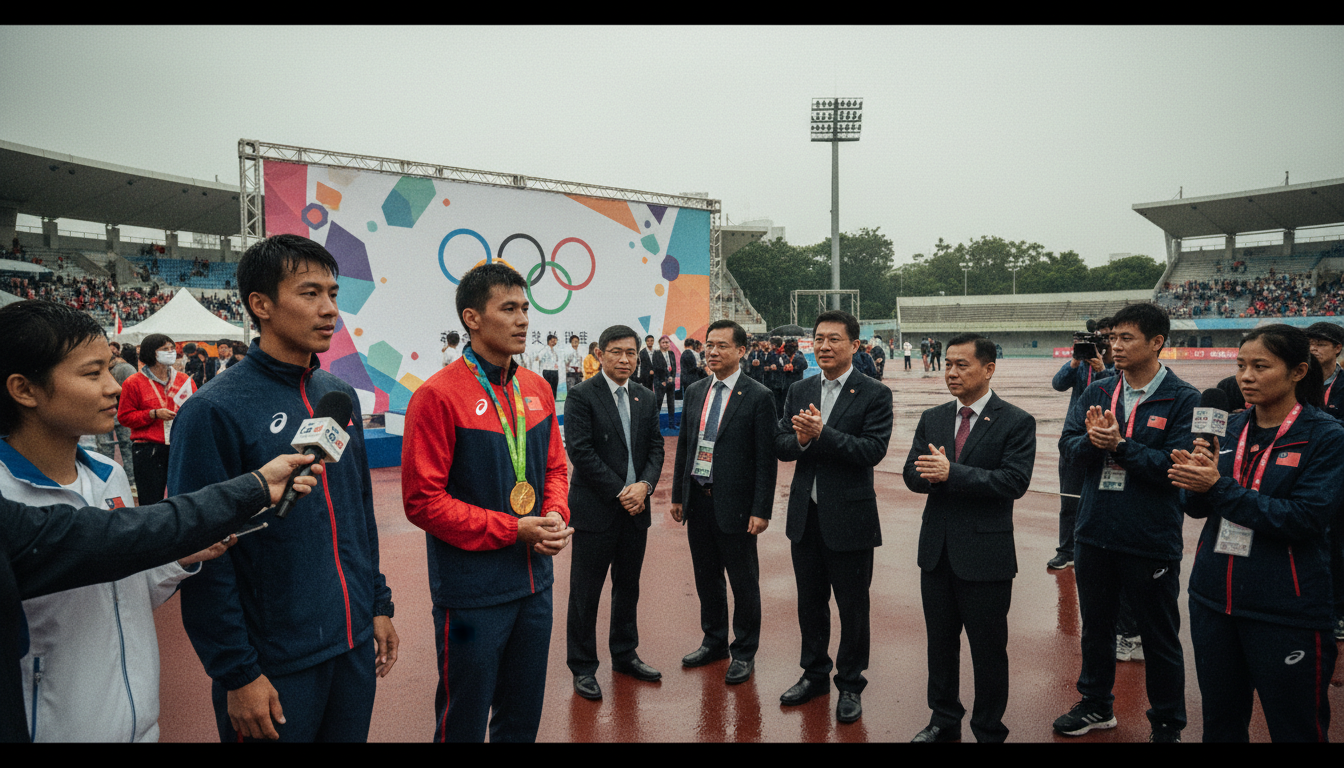
The doubles gold medal secured by Hsieh and Liang for Taiwan at the Asian Games on October 3, 2026, exemplifies athletic distinction. This achievement, alongside Chang's silver medal in men's compound archery on October 1, and two bronzes in men's archery and esports, reflects a demonstrated capability in international competition. These sporting successes, however, occur within a framework of ongoing diplomatic ambiguities, as evidenced by a controversy concerning a 'Taiwan' branded towel earlier in the Games. Such incidents reveal how even minor symbolic elements can highlight deeper political contestations in regional settings.
Taiwan's sustained performance across various sports, from its little league teams participating in international events to its medal hauls at the Asian Games, indicates a robust internal athletic infrastructure. This capacity enables consistent participation on regional and global stages. Yet, the official recognition of these athletes and their affiliations frequently encounters diplomatic friction. The controversy involving the towel at the Asian Games demonstrates that the public presentation of identity, even within a sporting context, remains a sensitive point for some participants and organizers within a multilateral framework.
This recurring pattern of athletic participation alongside political sensitivities holds significant regional implications. For nations in Southeast Asia, including Thailand, navigating these issues represents a persistent diplomatic challenge. Host countries of major regional games must balance the sporting principles of broad participation against the political concerns of diverse states and entities. The decisions made in these balancing acts directly influence event execution, the experience of athletes, and the overarching narrative of regional collaboration. Consequently, the achievements of athletes from Taiwan simultaneously affirm their athletic excellence and illuminate the enduring political divisions that shape regional governance and interaction.
While international sporting events are frequently framed as platforms for unity, the specific case of Taiwan's involvement illustrates the limitations of such aspirations when confronted with established geopolitical realities. The episode involving the 'Taiwan' towel underscored how these sensitivities can publicly manifest, even in the presence of ostensible agreements or protocols. Continued athletic success by Taiwanese competitors will likely ensure these diplomatic ambiguities remain a characteristic feature of future regional events, obliging host nations and organizational bodies to consistently address the political dimensions of sporting achievement. The unresolved constraint remains the reconciliation of athletic merit with complex political identities within regional multilateral platforms.
Sources
Newsletter
Pacific Daily
A curated briefing from Thailand, Asia-Pacific and the world.