The Sovereign Security Illusion Behind the Louvre Heist
Arresting suspects satisfies state procedure, but recovering dismantled capital across global transit networks remains impossible
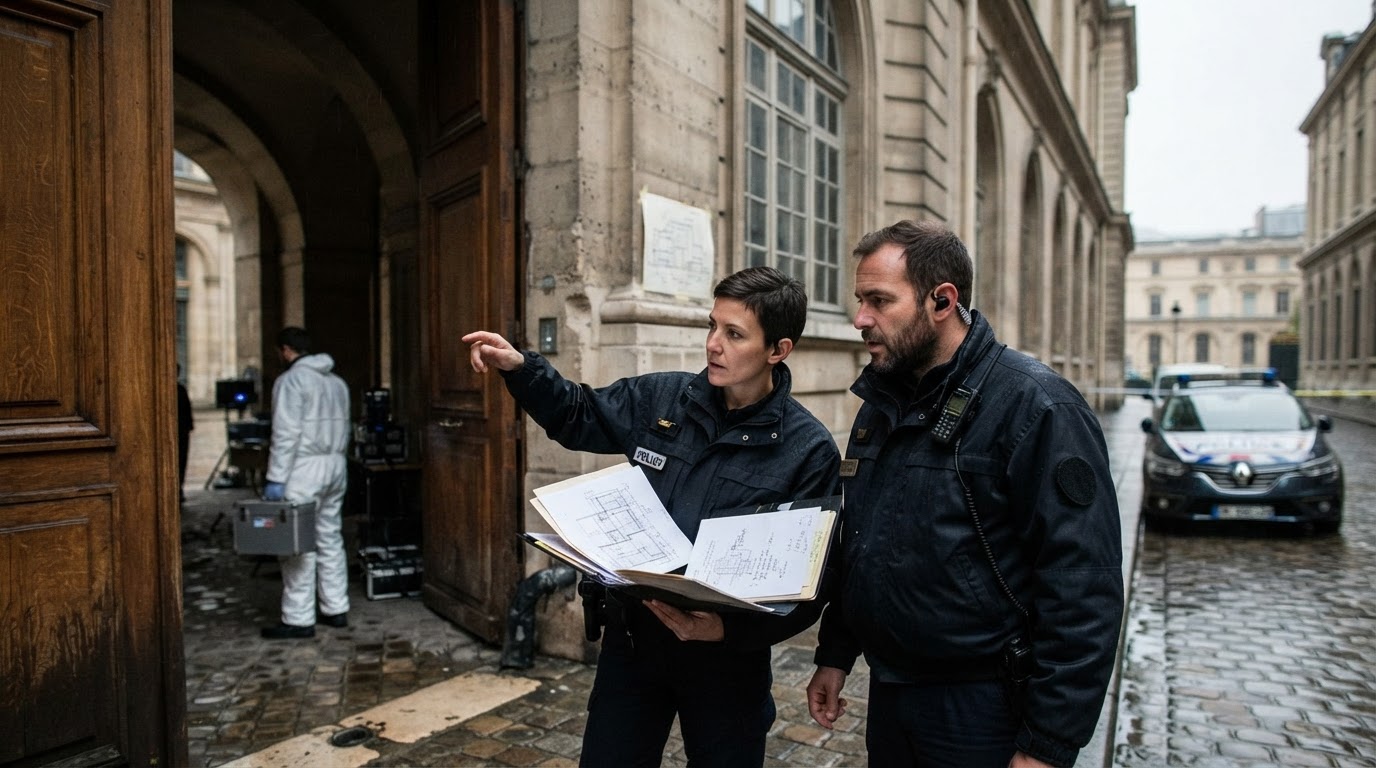
SINGAPORE
Sovereign custody can secure suspects behind state bars, but it cannot retrieve dismantled capital. In Paris, four men sit in judicial detention one year after the Oct 19 breach at the Louvre Museum. They face prosecution. Yet the eight stolen items, carrying an estimated valuation of US$100 million, remain entirely absent from official inventories.
National security apparatuses excel at retrospective capture. Slicing through protective display barriers with industrial disc-cutters while disguised as workmen, the intruders required only minutes to strip sovereign regalia tied to Napoleon III and Eugenie from national custody. French flags flutter above public palaces, yet administrative sovereignty over historic treasures terminates the moment physical goods enter unregulated commercial conduits. Still, judicial agencies consistently confuse criminal detention with asset recovery.
The Mechanics of Extraction
Security planning frequently mistakes the detention of individuals for the restitution of state property. Surveillance cameras and municipal police sweeps across Aubervilliers generated fast arrests, supplying magistrate courts with physical defendants. Yet the physical chemistry of illicit mineral trade renders administrative victories largely ornamental. Historical gold melts into generic bars within hours. Gemstones are cleaved, recut, and scrubbed of cataloged provenance.
Physical custody of historic regalia guarantees zero durability once precious materials enter private black markets.
As Christopher Marinello of Art Recovery International has documented, professional syndicates systematically deconstruct cultural heritage into anonymous commodity streams. A nineteenth-century brooch ceases to function as public heritage the instant diamond cutters divide its facets into unverified market weight. Investigative files confirm that while suspects sit in cells, the physical trail has gone cold.
Inland ministries formulate protective protocols under the assumption that national borders operate as impermeable screens. Transport corridors moving freight from inland capitals toward maritime ports and external transit nodes across the United States and the Asia-Pacific handle millions of sealed containers annually. Once an imperial jewel is unseated from its mount, regulatory watchlists become completely useless. Customs checkpoints search for registered museum inventory, not unrefined bulk precious metals. Central authorities enact policies in capital halls, but the actual loss is absorbed across decentralized maritime corridors.
The Irreversible Ledger
Political leadership routinely treats cultural property theft as an ordinary policing issue rather than an irreversible liquidation event. Official directives associated with President Emmanuel Macron cannot reverse the structural mechanics of black-market liquidation. When the Apollo Gallery reopened in July, curators displayed empty vitrines to the public. The exhibition presented an unvarnished void.
Inferences drawn by independent analysts suggest the detained suspects operated merely as contracted labor, leaving the syndicates financing the extraction untouched. Territorial statutes inevitably bind European investigators to national jurisdictions and formal judicial requests. Conversely, illicit capital moves across decentralized financial corridors before detectives complete crime-scene documentation.
Curators now confront an unyielding operational contradiction. Assembling irreplaceable treasures inside public halls invites sophisticated industrial extraction that statutory authorities cannot undo. Locking suspects into detention cells validates statutory procedure. It provides administrative closure. But judicial process does not restock empty display cases, nor does it reconstruct sovereign heirlooms already transformed into anonymous bullion. The state retains the prisoners, but the borderless market keeps the wealth.
Sources
Newsletter
Pacific Daily
A curated briefing from Thailand, Asia-Pacific and the world.