Taiwan's High-Speed Rail Expansion Faces Testing Delays, Underscoring Infrastructure Challenges
The arrival of new HSR trains was met with calls for expedited service, but regulatory testing protocols prioritize safety over immediate deployment.
SINGAPORE
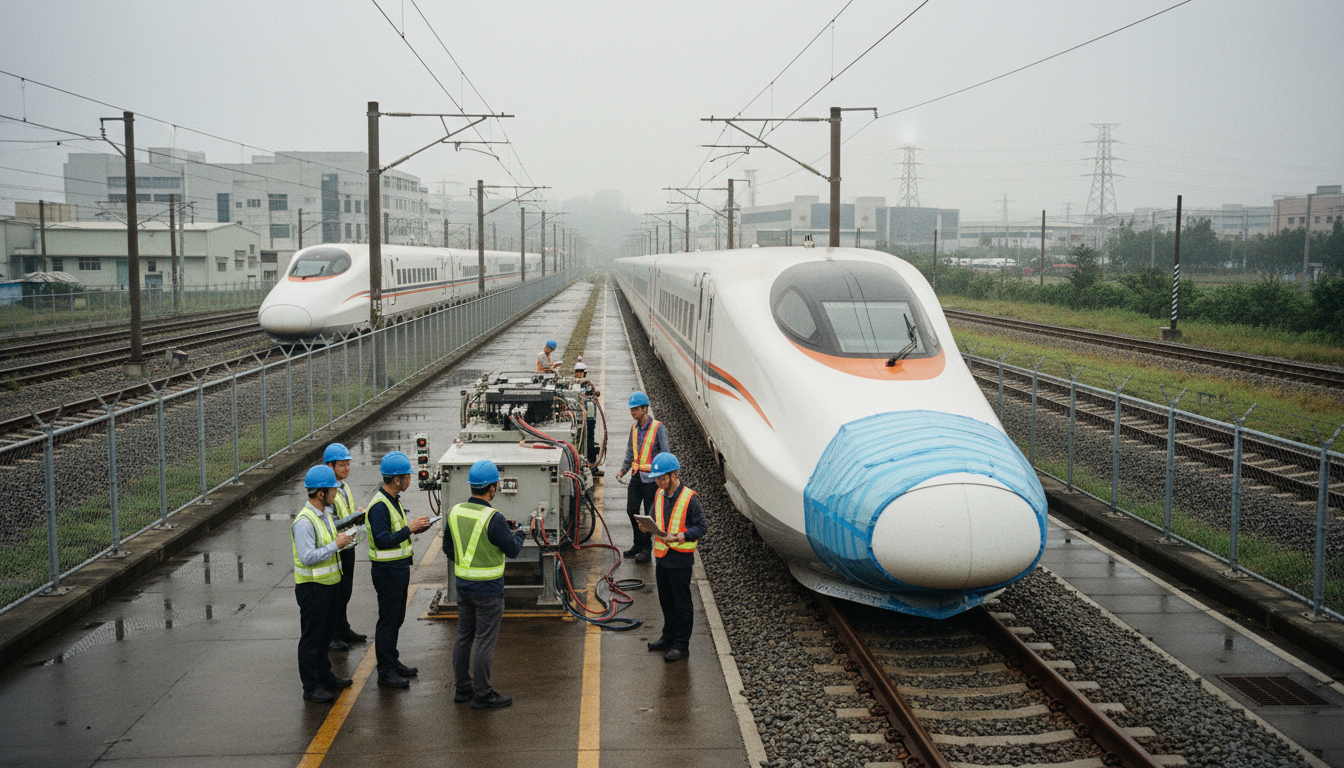
The first of 12 newly acquired high-speed trains arrived in Taiwan last month, triggering public expectations for an immediate easing of capacity constraints on the Taiwan High Speed Rail (THSR) network. However, the Railway Bureau has clarified that these trains will not enter service ahead of schedule. Director-General Yang Cheng-chun, speaking in Tainan, stated that extensive static and dynamic testing is mandatory before operation, a process that began with the train's assembly following its mid-August arrival.
This insistence on a full testing regimen, even amidst calls for expedited deployment, underscores a fundamental tension in infrastructure development. Public pressure, and presumably the Taiwan High Speed Rail Corp (THSRC), seek to quickly integrate new assets to meet growing demand. In contrast, the Ministry of Transportation and Communications, through the Railway Bureau, prioritizes safety and regulatory compliance. The new trains must pass all required tests, a clear and non-negotiable step in the approval process.
Such a structured approach to verification, rather than an accelerated one, implies a cautious risk assessment. The decision to uphold strict testing protocols suggests that the potential costs of premature deployment, such as safety incidents or operational failures, outweigh the benefits of an earlier capacity boost. This reflects a broader pattern observed in large-scale public transportation projects across the Asia-Pacific region, where the rollout of new technologies or expanded services is frequently subject to multi-stage evaluation processes.
Adherence to a thorough testing phase means that the immediate capacity problems THSRC faces will persist longer than some might hope. Once operational, the 12 new trains are intended to enhance the network's ability to serve passengers. Yet, the exact timeline for their entry into service remains contingent on the successful completion of these rigorous tests. This creates an ongoing operational challenge for THSRC, which must manage existing demand with its current fleet until the new trains are fully certified.
The Railway Bureau's stance highlights a common constraint in complex infrastructure upgrades: the need to balance project timelines with safety and quality assurance. The eventual benefits of increased high-speed rail capacity, and the associated economic and social impacts, depend entirely on the adherence to this structured, albeit slower, approval pathway. Operational capacity for THSRC, alongside passenger experience, will hinge directly on the efficiency and findings of these tests.
Sources
Newsletter
Pacific Daily
A curated briefing from Thailand, Asia-Pacific and the world.