Taiwan's Coast Guard Visit to the Philippines Signals Realigned Incentives, Not Just Diplomacy
The 2027 visit, coupled with a vessel donation, indicates a functional security alignment driven by regional dynamics, with implications for Bangkok's strategic calculus.
SINGAPORE
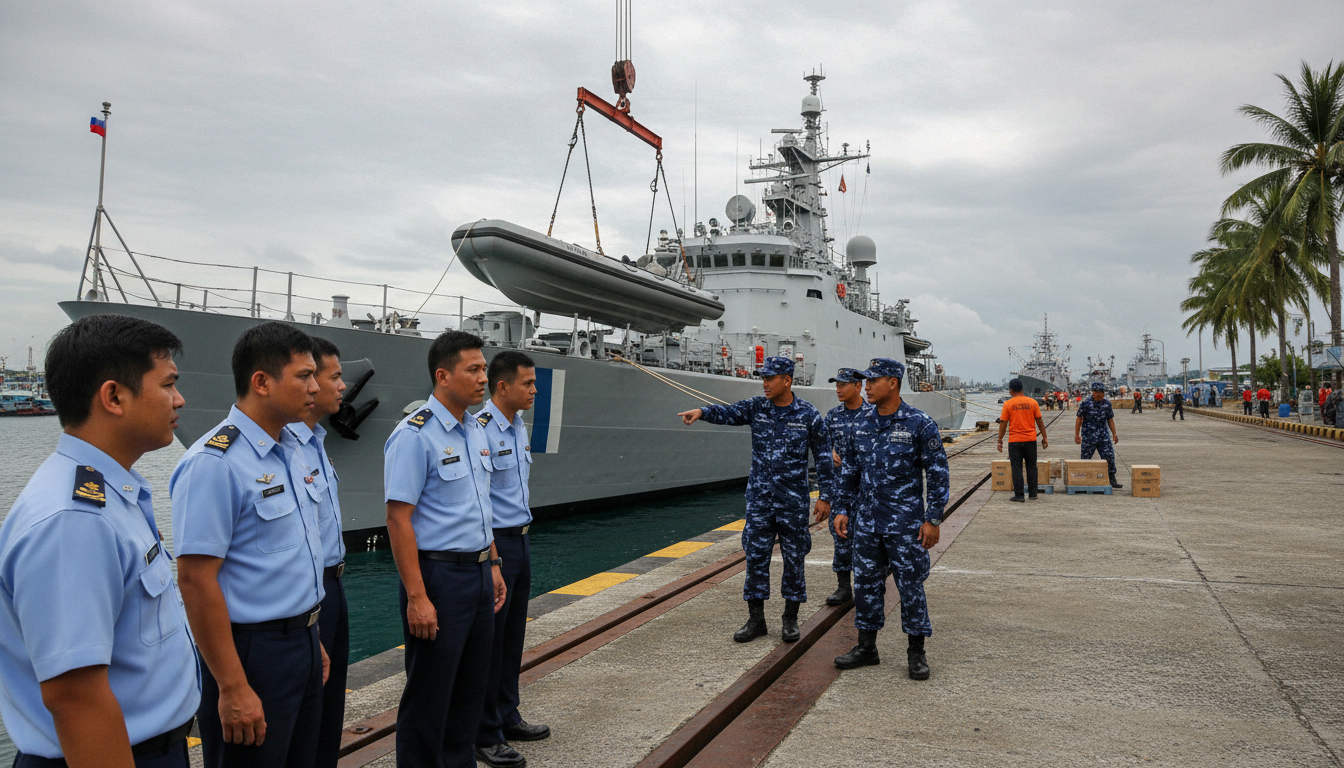
The Taiwan Coast Guard Administration’s (CGA) planned high-profile visit to the Philippines in October 2027, marking the first such visit by a Taiwanese maritime law enforcement vessel, represents a significant shift. This event, alongside the donation of a decommissioned patrol vessel to Manila, moves beyond conventional diplomatic gestures. It signals a functional security alignment, driven by evolving incentives for both Taipei and Manila in the Asia-Pacific maritime domain.
The Republic of China (ROC) Navy last conducted a visit of this nature in 1974, prior to the Philippines’ diplomatic recognition of the People’s Republic of China in 1975 [1]. The absence of official naval visits since then underscores the political sensitivity surrounding Taiwan's international standing. The CGA's 2027 deployment, with ships explicitly bearing “Taiwan Coast Guard” identification, establishes a new precedent for practical engagement where formal diplomatic ties are absent. The transfer of a retired vessel to a non-diplomatic ally further solidifies this operational bond [1].
This development occurs within a regional context where the Philippines has demonstrated a strategic reorientation. The country’s focus on anchoring US naval strategy in Asia, exemplified by moves related to Subic Bay [3], illustrates Manila's intent to enhance its maritime security capabilities and partnerships. The CGA’s actions align with this broader Philippine strategy, providing tangible support for maritime enforcement. For Taipei, this strengthens its de facto security relationships and projects its capacity for regional contribution, even without formal diplomatic recognition from Manila.
The underlying incentive for both parties appears to be the collective strengthening of maritime domain awareness and enforcement in areas of shared interest, particularly given the pressures in the South China Sea. This is not a direct challenge to Beijing, but rather a practical response to shared maritime security requirements. The direct beneficiaries are the Philippine maritime agencies, gaining capacity, and the CGA, securing a public and operational affirmation of its role in regional security.
### Thailand's Position
For Thailand, these actions present a relevant case study in balancing great power dynamics and securing national maritime interests. Bangkok maintains formal diplomatic relations with Beijing and has a policy of non-alignment. However, as regional security architectures evolve, such as the emerging operational ties between Taiwan and the Philippines, Thailand may need to assess the efficacy of its existing maritime cooperation frameworks. The CGA's move demonstrates that robust security cooperation can proceed without the prerequisite of full diplomatic recognition, focusing instead on mutual operational benefits and shared strategic objectives. Bangkok's incentive structure currently prioritizes economic engagement with China, alongside maintaining diverse security partnerships. The question for Thailand is whether the benefits of this non-traditional security alignment outweigh potential diplomatic complexities.
### Outlook
Predictions suggest that such functional security engagements, based on specific operational needs rather than traditional diplomatic alignment, will become more prevalent across the Asia-Pacific. The outcome now depends on the extent to which these operational relationships can expand in scope and frequency without provoking significant diplomatic or military countermeasures. The primary constraint remains the geopolitical sensitivity surrounding Taiwan's status. Any miscalculation in managing this could undermine the practical gains. The success of this CGA visit, and subsequent engagements, will offer a clearer signal of the regional appetite for such pragmatic security arrangements.
Sources
Newsletter
Pacific Daily
A curated briefing from Thailand, Asia-Pacific and the world.