The Domestic Gallery and the Pop Curation of High Art
Singapore's cultural calendar exposes an uneasy search for new arbiters as private residences and rock frontmen step into roles once reserved for state institutions
SINGAPORE
A gallery room conventionally operates on quiet authority, inviting viewers to stand before framed masterworks under neutral lighting with the expectation that aesthetic significance speaks for itself. That tacit agreement has frayed. In Singapore, the traditional distance between the spectator and historical modernism now requires an intermediary soundtrack, while alternative artistic expressions seek refuge in domestic living rooms rather than civic institutions.
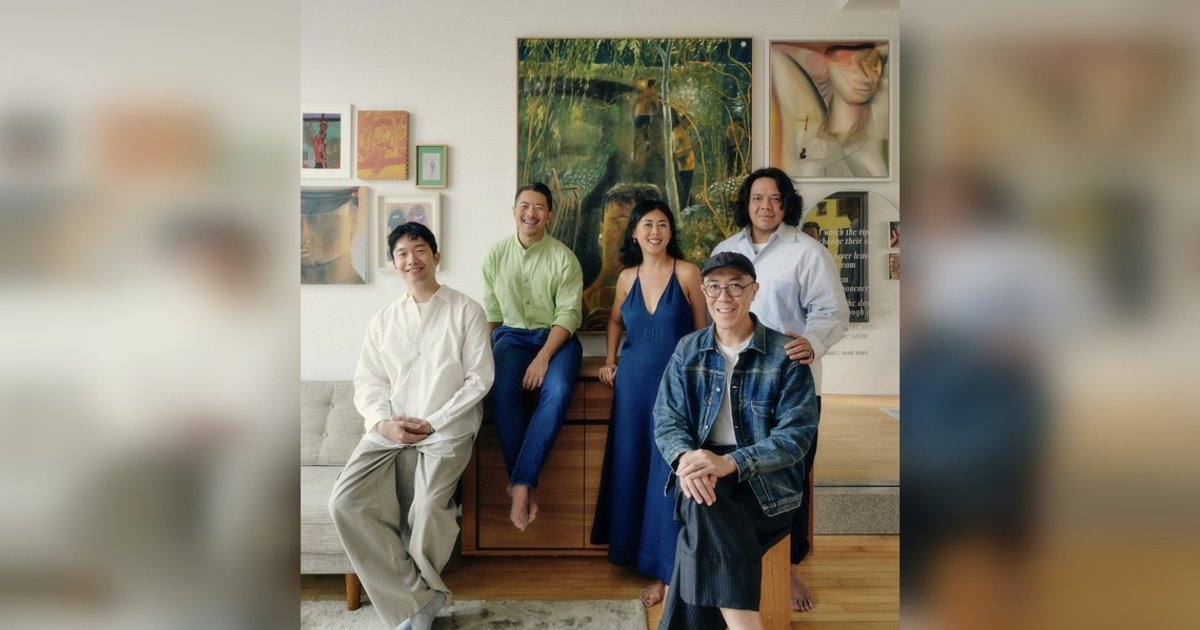
Consider the curatorial logic running across Singapore's arts schedule from late October to early November 2026. At Opera Gallery, the Singapore Masters Show 2026 presents paintings by Pablo Picasso accompanied by music selected by Julian Casablancas, the frontman of American rock band The Strokes. Across the city, private walls present an opposing response to the same public void. In a local condominium, art collector Justin Low, who serves as chief communications officer for Omnicom Media Group, joined Art Again co-founder Chua Ching Yi to host No Straight Lines, an exhibition featuring work by 13 queer artists on display until Nov 1.
Shifting the Frame
These programs do not merely reflect eccentric programming across an autumn calendar. They illustrate an acute divergence in how visual culture negotiates authority in Southeast Asia's wealthiest metropolis. For commercial commercial galleries handling twentieth-century giants, the presence of Picasso alone is evidently no longer deemed self-sufficient for a contemporary audience raised on digital cross-referencing. Enlisting Casablancas suggests that blue-chip modernist art must be filtered through alternative rock royalty to retain immediacy, translating historical prestige into consumer familiarity.
Yet the reliance on celebrity listening guides highlights an underlying anxiety about how audiences encounter legacy painting. If the canon requires a musical celebrity to justify another regional outing, high culture concedes that visual literacy has become secondary to lifestyle cross-promotion. The framing threatens to reduce modernist masters to wallpaper for curated audio tastes, prioritizing ambient diversion over direct visual engagement.
Sanctuaries in Concrete
The retreat of challenging art into residential apartments marks a pragmatic response to institutional caution.
Against that commercial adaptation sits the migration of marginalized work into private domestic spaces. Low and Chua first tested residential exhibition models in 2025, demonstrating that residential real estate can circumvent the gatekeeping of formal commercial venues. By housing works by 13 queer artists inside an apartment, No Straight Lines establishes a sanctuary where community visibility avoids the bureaucratic scrutiny and civic hesitations that frequently accompany public exhibitions.
Private hosting inevitably narrows the audience. While living-room exhibitions bypass commercial landlords, they restrict public entry to invited networks and personal acquaintances, swapping broad civic resonance for domestic intimacy. Concurrently, events such as Lirica Arts' Opera 10 adopt spoken commentary alongside singing to decode supernatural motifs during Halloween, acknowledging that classical forms risk alienation without structured verbal guides.
Neither the rock-curated showroom nor the condominium salon represents a durable resolution to Singapore's cultural distribution. One initiative leans on global pop credibility to revive historical European prestige, while the other creates safe spaces by turning inward. Both strategies reveal that conventional cultural spaces struggle to satisfy either institutional masterworks or independent voices. Between the collector's living room and the sound-tracked showroom, Singapore's arts ecosystem reveals an unsettled public sphere where meaning is either mediated through celebrity endorsement or whispered quietly in domestic confines.
Sources
Newsletter
Pacific Daily
A curated briefing from Thailand, Asia-Pacific and the world.