Seabed Extraction in American Samoa Confronts the Limits of Executive Mandates
Federal efforts to open territorial waters to deep sea mining run straight into legal pushback from Pacific leadership
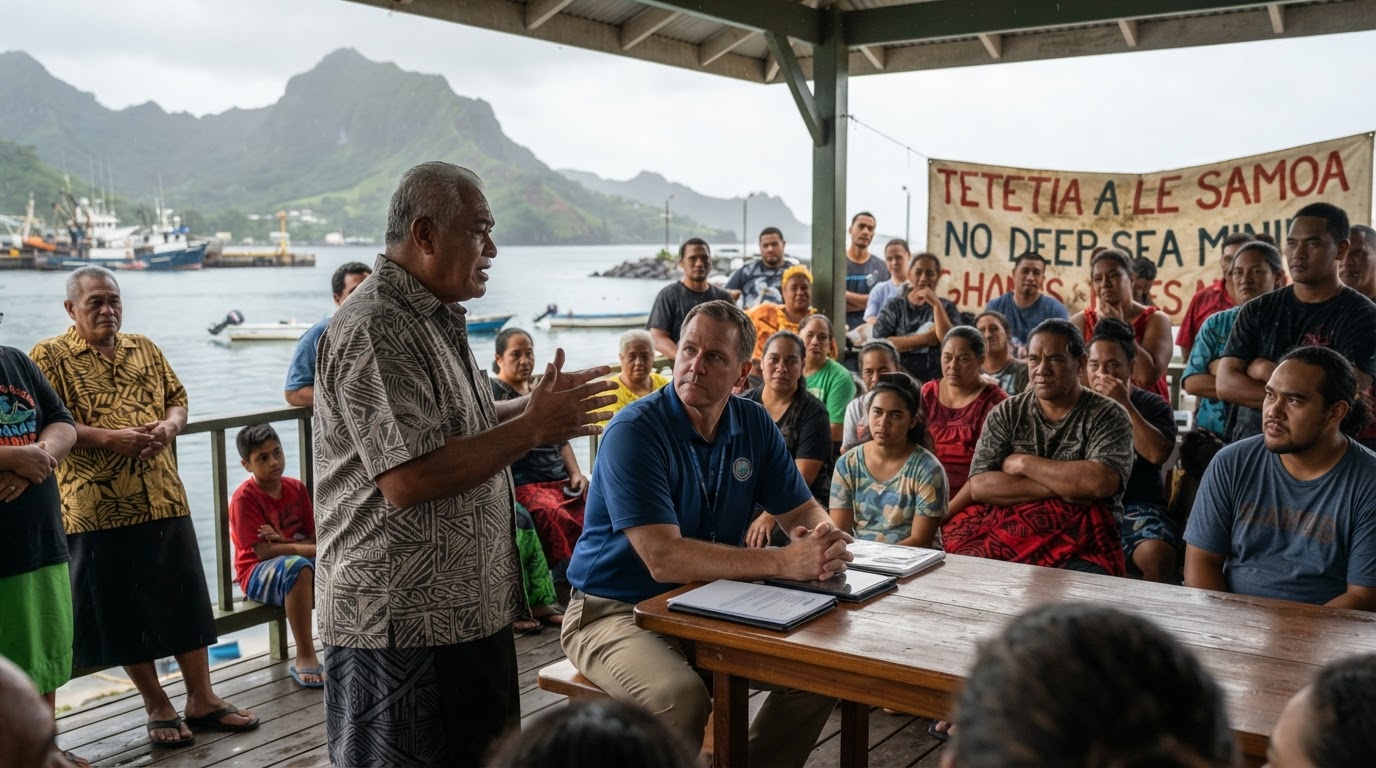
Executive orders cannot engineer an extractive industry out of thin air. The administration under President Donald Trump is accelerating plans to auction deep sea mining tracts off American Samoa. Yet that administrative push has run directly into a federal lawsuit brought by environmental groups and traditional chiefs. The conflict lays bare a fundamental miscalculation in resource policy: political decrees cannot substitute for secure legal title.
Industrial demand for critical battery inputs continues to pull national planners toward maritime frontiers. Terrestrial mining carries heavy domestic baggage, from protracted permitting disputes to fierce surface land battles. Subsea concessions off American Samoa appear, on paper, to bypass those terrestrial liabilities. Federal planners calculated that offshore territorial waters offered a direct route to domestic supply chains. That assumption was flawed. Capital allocation does not operate on administrative ambition alone. Deep-water extraction requires enormous upfront outlays, and capital retreats the moment property rights enter litigation.
Jurisdictional Friction in the Pacific
By pushing ahead with leasing plans without securing territorial assent, federal authorities created an immediate structural impasse. Litigants are challenging the statutory power of the executive branch to auction seabed tracts off the territory. When traditional leaders and conservation litigants challenge federal leasing authority, the commercial asset loses its value before a single vessel deploys.
Contested marine leases do not secure critical minerals; they create stranded capital.
Pacific governance is layered. Traditional tenure and territorial standing do not dissolve simply because an executive agency issues an auction notice. Skipping local consultation may shorten bureaucratic timelines in the capital, but it multiplies commercial exposure in the courtroom. No extraction consortium can borrow against a contested lease. Institutional lenders demand clarity on jurisdiction, royalty regimes, and environmental liability before underwriting offshore platforms.
Capital Risk and Institutional Resistance
Corporate balance sheets bear the eventual cost of administrative haste. Mining consortia need decades of regulatory certainty to amortise deep-water exploratory machinery. If offshore leases face judicial injunctions or protracted statutory reviews, the underlying asset becomes illiquid. In 2025, environmental groups warned that executive moves would trigger generational setbacks across marine protection regimes. Those warnings signalled precisely what is happening now: litigation has become the primary operational barrier to executive expansion.
Downstream Asian industrial processors rely heavily on clear upstream timetables. When western policymakers promise new critical mineral pipelines from Pacific waters, downstream refiners assess the actual delivery dates. Unresolved lawsuits in American Samoa push extraction timelines back by years, if not decades. Manufacturers cannot calibrate battery cathode production against unadjudicated seabed leases.
The contest off American Samoa demonstrates that access to natural resources cannot be secured by administrative fiat. Executive directives may signal political intent, but legal resistance from indigenous chiefs and environmental litigators establishes a hard commercial boundary. The viability of deep sea mining in the territory now depends entirely on whether federal courts uphold executive authority or affirm the legal standing of local leadership.
Sources
Newsletter
Pacific Daily
A curated briefing from Thailand, Asia-Pacific and the world.