The 'Model Minority' in Singaporean Literature
New fiction challenges the quiet expectations placed on Southeast Asia's youth.
SINGAPORE
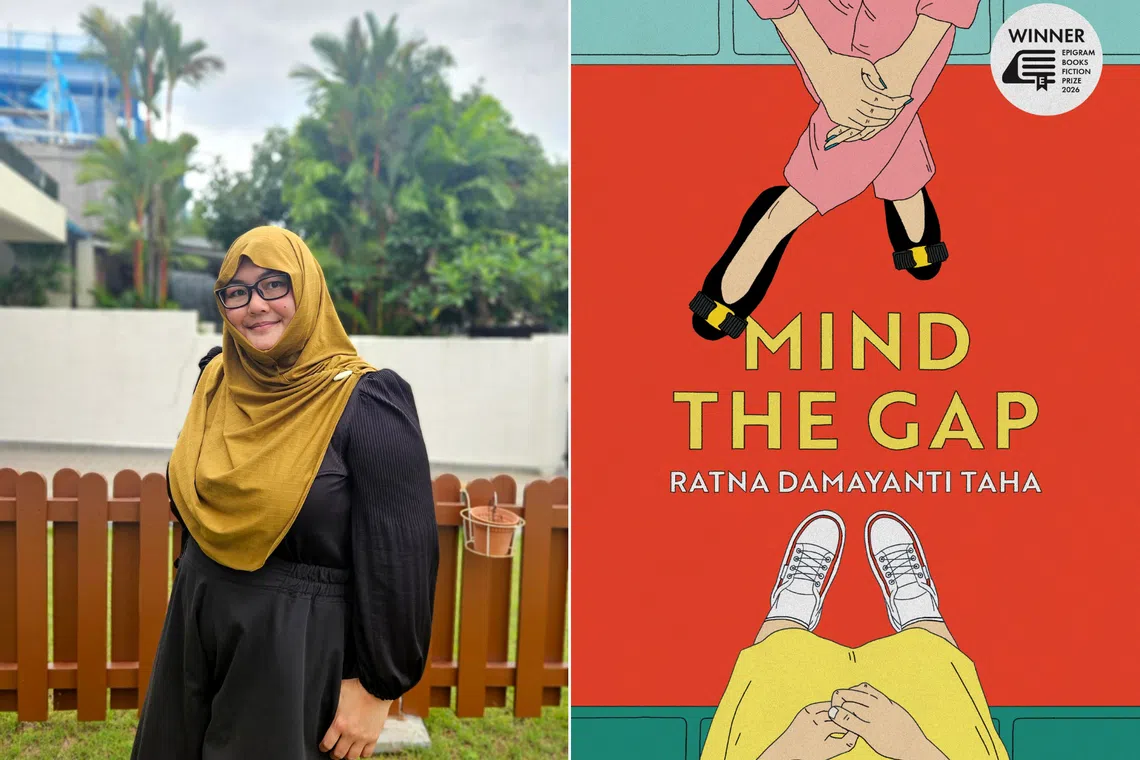
The narrative landscape of Southeast Asia is often a reflection of its societal pressures, subtly revealing how cultural expectations manifest in the lives of its younger generations. The recent announcement of Ratna Damayanti Taha’s “Mind The Gap” as the winner of the 2026 Epigram Books Fiction Prize offers a window into one such pressure point: the 'model minority' student.
The Epigram Books Fiction Prize has, in previous years, highlighted diverse voices from across the region, featuring shortlisted authors from Singapore and Malaysia, and exploring themes from Indian housewives to Chinese fantasy and Bruneian folklore. This year, the focus narrows to the experiences within Singapore itself. “Mind The Gap” follows Nora, a 14-year-old girl attending a renowned girls’ school, charting her journey across three decades of Singaporean social and political transformation.
The source, The Straits Times Life, describes the book as offering “a meaningful look at the challenges faced by minority youth in Singapore.” This classification, however, raises a question of perspective. To frame the experiences of minority youth as 'challenges' in this context implicitly acknowledges a prevalent, often unspoken, societal ideal. The 'model minority' trope, while frequently associated with East Asian communities in Western contexts, also finds echoes in Asian nations where specific ethnic groups are perceived as exemplary in their academic and professional pursuits. This perception, while seemingly positive, can mask significant internal struggles and external pressures to conform to an idealized, often unrealistic, standard.
Singapore, a nation built on multiculturalism and economic progress, has fostered an environment where academic achievement and social integration are highly valued. For minority communities, this can translate into an intense pressure to not only succeed but to do so quietly, without causing disruption or drawing undue attention. The narrative of Nora, navigating a “renowned girls’ school” and the social currents of Singapore, suggests a careful examination of this dynamic. The phrase “Mind The Gap,” itself a direct reference to Singapore’s MRT system, could also be interpreted metaphorically as a caution regarding the psychological space between outward expectation and internal reality, or between different cultural groups.
While the source mentions that the book's “MRT metaphor and character depth have flaws,” this assessment does not diminish the significance of the subject matter. The very act of portraying the inner life of a 'model minority' student, even with narrative imperfections, is a commentary on the cultural habit of silent expectation. It pulls back the curtain on the often-private burdens carried by individuals striving to meet an externally imposed ideal. The 'model minority' is not merely an individual who performs well; it is a cultural construct that demands specific behaviors and outcomes, often at the cost of authentic self-expression.
In Southeast Asia, where collective harmony and respect for authority are often emphasized, the internal world of a young person grappling with these expectations can remain unarticulated. Literature, then, serves as a crucial space for these stories to emerge, allowing for a public, albeit fictionalized, examination of personal cost. Taha’s work, by winning a significant regional prize, brings this particular tension to the forefront of cultural discussion. It suggests a growing recognition that the quiet successes of some can conceal complex, individual struggles that deserve wider understanding.
This literary acknowledgment does not signal an immediate shift in societal norms, but it does mark a moment where the implicit demands on 'model minority' youth are being rendered explicit through art. It invites a closer look at the mechanisms of cultural assimilation and achievement, and the often-unseen toll they exact. The win for “Mind The Gap” thus serves as more than just an award; it is a cultural signal, highlighting the quiet contradictions inherent in the pursuit of an ideal. It asks audiences to consider what lies beneath the surface of outward appearances in a region where such narratives have long been left unspoken.
Sources
Newsletter
Pacific Daily
A curated briefing from Thailand, Asia-Pacific and the world.