Shelf Space Arbitrage in the Beauty Aisle
Olive Kim targets 2,000 retail doors by transplanting South Korean functional beverage culture directly into cosmetic aisles.
SINGAPORE
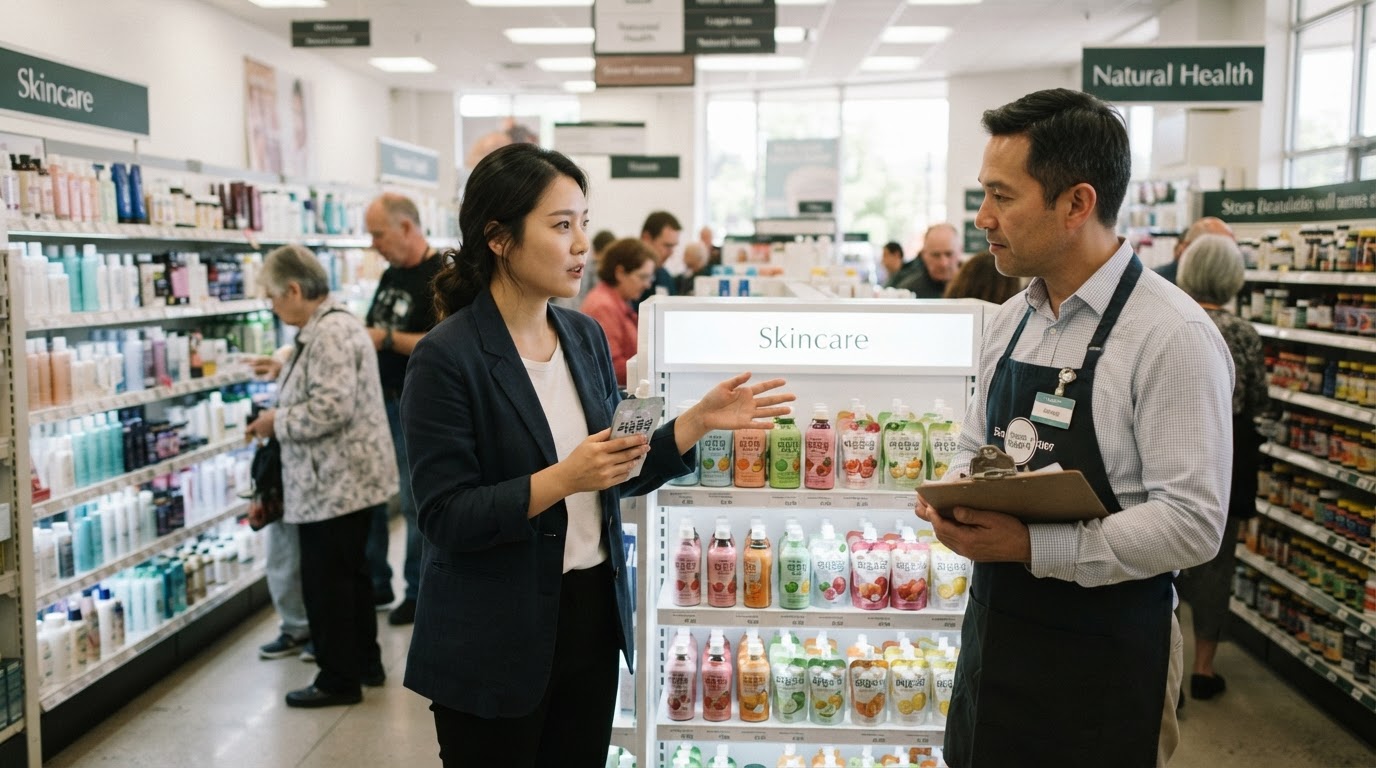
Packaged beverages carry some of the tightest operating margins in consumer commerce, yet North American cosmetic retailers are allocating prime display space to canned functional drinks. That commercial contradiction defines the retail rollout scheduled for November, when Cloüd Cafe expands across Ulta Beauty and Target to surpass 2,000 collective doors. Behind the enterprise is Olive Kim, an entrepreneur who previously demonstrated how niche manufacturing operations could convert into institutional retail acquisitions.
Kim understands the mechanics of crossover placement. Her family established The Crème Shop as a Los Angeles manufacturing entity during the 1980s, which she reshaped into a Korean-inspired beauty brand before selling it to LG H&H in 2022. Having launched Cloüd Cafe in late 2024, Kim is now executing an adjacent strategy. She is transplanting South Korea cafe aesthetics and collagen-infused formulas directly into aisles designed for personal care, bypassing traditional supermarket beverage chillers where distributor slotting fees and volume battles routinely crush startup capital.
Margin Math Behind the Checkout Counter
The incentives behind this migration reflect structural pressure across retail floors. Specialty cosmetic chains have spent decades defending high margins on topical skincare and color cosmetics. Grocery beverage coolers, by comparison, operate on razor-thin unit spreads dependent on high-frequency velocity. Positioning collagen-supplemented teas, matcha, and coffees inside specialty beauty doors allows a brand to bypass standard beverage category pricing. It shifts the product classification from liquid sustenance to consumable wellness treatment.
For Ulta Beauty and Target, the calculation involves customer basket value. Retailers gain an ingestible add-on item with higher turnover potential than an expensive cosmetic palette. Securing placement through existing retail relationships provides Kim with immediate physical scale that standalone specialty cafes could never match without ruinous real estate commitments.
Consumable wellness products demand relentless replenishment cycles that decorative cosmetics rarely face on retail shelves.
Treating cosmetic shoppers as beverage consumers carries evident operational friction. Sceptics within hospitality and consumer finance can reasonably argue that shoppers visiting Ulta Beauty arrive seeking topical moisturizers or hair products, not daily refreshment. Unlike conventional cafes that thrive on daily habitual morning routines, cosmetic retail visits occur at intervals of weeks or months. Maintaining product velocity under those foot-traffic patterns requires convincing an infrequent shopper to adopt an ingestible drink as an essential part of their personal care regimen.
The Velocity Dilemma
Beverage logistics also introduce supply-chain vulnerabilities that skincare products do not share. Liquid drinks are heavy, expensive to transport, and vulnerable to short shelf-life constraints. In traditional food and beverage networks, stock turnover is measured in days. If Cloüd Cafe stock languishes on beauty shelves while customers browse adjacent makeup displays, retailers face dead inventory on square footage that commands premium returns.
The operational hurdle is neither formulation nor brand heritage. Korean cafe culture commands undeniable international cachet, and Kim carries a vetted track record in commercial scaling. Inventory turnover remains the unresolved friction. If shoppers treat collagen matcha merely as an impulse purchase during occasional makeup replenishment, unit velocity will lag behind retail expectations. Sustaining momentum across 2,000 retail doors now depends entirely on converting occasional cosmetic foot traffic into habitual wellness consumption.
Sources
Newsletter
Pacific Daily
A curated briefing from Thailand, Asia-Pacific and the world.