Why Satire on Tulum Flight Cuts Hits Hospitality Where It Hurts
Airline route reductions at Felipe Carrillo Puerto International reveal the fragility of leisure destinations that build capacity ahead of sustained carrier economics
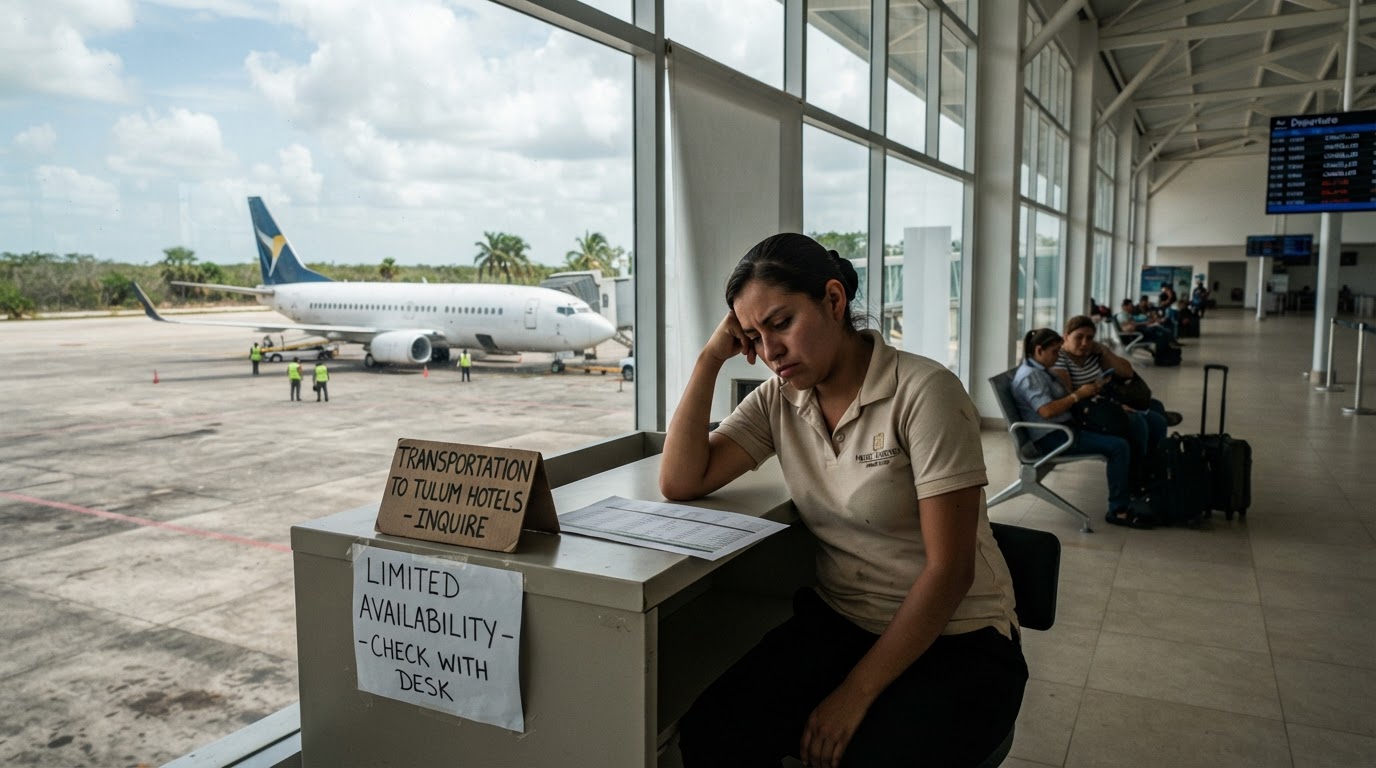
Runways can be poured with public debt in months, but profitable seat yields take years to establish. In Quintana Roo, satirical outlet El Jalapeño exposed that raw nerve by joking that ride-hailing company Uber would replace suspended flights to Felipe Carrillo Puerto International Airport with direct, 22-hour road journeys from the United States in 2018 Nissan Versas.
The humor worked because the underlying commercial anxiety is entirely genuine.
Major carriers including American Airlines, Aeroméxico and Volaris have trimmed or paused scheduled services into Tulum, leaving property developers suddenly isolated from expected arrival volumes. Resort pro formas are notoriously unforgiving instruments. When international hospitality groups underwrite coastal inventory, debt service schedules depend upon continuous, high-density inbound seating. Jet fuel burns on narrow corporate margins, and network planners reallocate equipment the instant passenger revenues fail to hit hurdle rates. Regional tourism aspirations do not alter airline fleet math, leaving destination balance sheets exposed to sudden capacity withdrawals.
The Connectivity Equation
Platform mobility cannot bridge that structural divide. While Uber commits capital toward future transport architecture, pledging USD 10000000000 to autonomous vehicle operations alongside collaborations with Zoox and Wayve, such technology serves dense metropolitan cores. Ride-hail platforms extract transactional cuts from brief cross-town journeys, avoiding the heavy capital risks of intercity transit.
When airline networks pull back, hospitality developers discover that highway transit cannot substitute for scheduled aviation.
No passenger platform intends to shuttle holidaymakers across borders.
For hoteliers, the gap between flight schedules and ground transport exposes an operational blind spot. Owners routinely build luxury rooms on the assumption that airport access guarantees sustained occupancy. When direct rotations out of origin markets like Miami or Atlanta disappear, the shock lands squarely on room yields. Drive-in visitors may occasionally fill empty beds during promotional flash sales, yet their average daily spend on food, beverages and spa amenities runs well below the ticket sizes generated by long-haul aviation arrivals.
Yield Versus Access
Industry defenders argue that flight reductions represent normal seasonal adjustments rather than structural market rejection. According to this view, leisure demand will rebound once promotional pricing flushes out excess inventory across regional properties. That thesis ignores the daily reality of hotel cash burn. Debt amortisation, air conditioning maintenance, property taxes and payroll do not contract when aprons empty, forcing asset managers to fund deficits out of existing reserves while waiting for carriers to return.
Airport concrete does not create destination demand. Long-distance holiday leisure either commands profitable airline yields or it stalls. Satirical cross-border road trips resonate because everyone in hospitality understands the alternative. Without sustained commercial air service, no resort operator can outrun the cost of maintaining rooms that nobody can reach.
Sources
Newsletter
Pacific Daily
A curated briefing from Thailand, Asia-Pacific and the world.