A Distant Echo: How Transit Labels Shape Social Landscapes
The consistent listing of countries on drug transit rolls reveals subtle shifts in daily life, far beyond their borders.
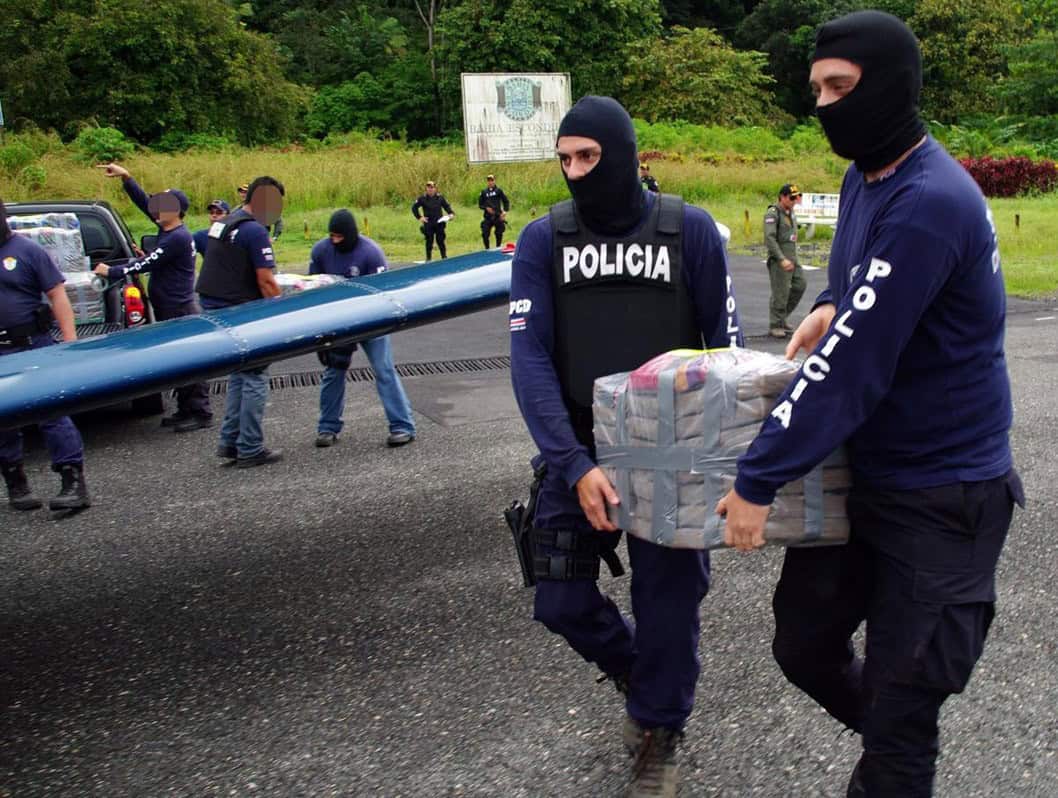
A recurring shadow has fallen over a nation in the Americas: its consistent inclusion on the United States’ annual “Major’s List” of countries considered significant routes or sources for illegal drugs. Announced on September 16, 2026, and submitted by U.S. President Donald Trump on September 15, this designation places one country among 23 nations, reflecting a perceived persistent role in the global narcotics trade. While the specific mention comes from Washington, the patterns it illuminates extend far beyond its immediate region, resonating with subtle, yet significant, cultural transformations that echo in the Asia-Pacific.
The official U.S. label, highlighting a nation as a transit point for illegal drugs and their chemical precursors, functions as a statement about a country's logistical position within a global network. It is not an assessment of domestic consumption, but rather its utility in moving substances between origins and markets. This positioning, while geographical, has a distinct cultural consequence. Nations caught in such a role often find their public spaces and social structures adapting, often subtly, to the pressures and opportunities presented by illicit flows. The very fabric of daily life can be recalibrated, from how local economies function to the informal channels through which information and goods move.
Consider the subtle but profound changes in public behavior and the use of urban and rural spaces. An increase in transient populations, perhaps, or a quiet re-evaluation of specific routes and ports. These are not dramatic, overnight transformations, but rather incremental shifts in communal habits. The fact that the U.S. plans to fund deportations from this country, as a Reuters document noted on August 1, 2025, further illustrates the external pressures shaping internal realities. Such actions are not merely political; they reshape the social geography, influencing where people settle, where they avoid, and how communities perceive outsiders.
While Thailand and the wider Asia-Pacific do not face this specific U.S. designation from the Americas, the underlying dynamic of external forces shaping internal cultural and social landscapes is a familiar one. The region is no stranger to being identified as a transit point for various illicit goods, facing its own set of international pressures and internal adjustments. The quiet re-routing of supply chains, the emergence of new, seemingly innocuous businesses, or shifts in demographics in certain port cities or border towns – these are all cultural signals of deeper currents at play. These are habits that change first, often unnoticed by official narratives, but keenly observed by those whose daily lives are subtly altered.
For an observer of culture, the enduring inclusion of a nation on the “Major’s List” is less about the drug trade itself and more about the enduring imprint it leaves on a society's culture and its relationship with its physical environment. It forces a cultural lens onto what appears to be a purely geopolitical issue. What changes when a nation is repeatedly labeled as a 'route'? How do its citizens, over time, adapt their interactions with public infrastructure, their trust in specific institutions, or their understanding of their nation’s place in the world? These are the questions that ripple through communities, quietly reshaping their character, irrespective of geography. The specific label may be unique to one country, but the cultural phenomenon of adaptation to such designations is a global constant.
Sources
Newsletter
Pacific Daily
A curated briefing from Thailand, Asia-Pacific and the world.