Korean Air's Boeing Order: A Bet on Scale and Regional Leverage
The airline's $44.8 billion commitment to 103 new aircraft marks a strategic expansion, but regional dynamics suggest the benefits may not be evenly distributed.
SINGAPORE
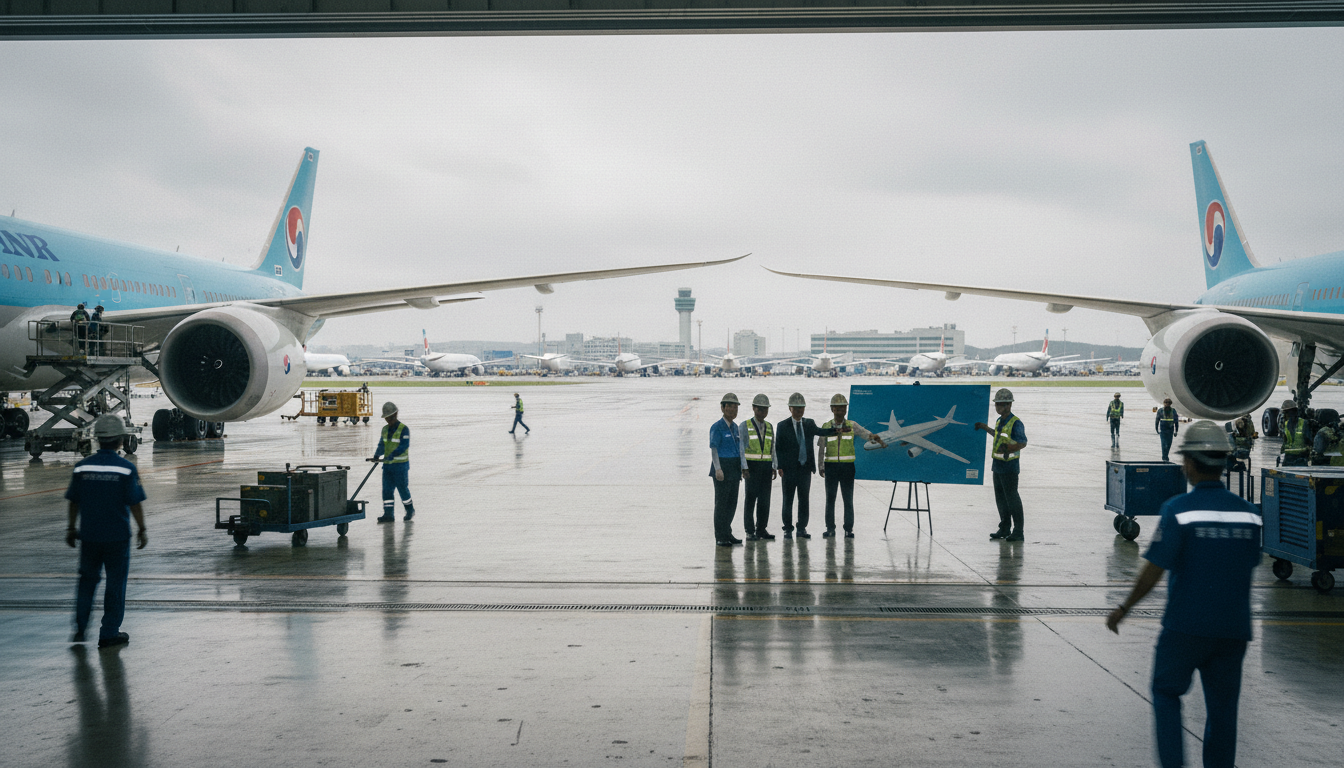
Korean Air’s finalisation of a US$44.8 billion agreement for 103 Boeing aircraft and 21 spare engines, alongside a 15-year maintenance contract with GE Aerospace and CFM International, positions the carrier for significant fleet expansion. This scale of investment, formally signed on September 15, reflects a long-term play for market share and operational capacity.
The purchase, initially anticipated by AP News in August 2025, signals a clear intent to dominate key routes and potentially drive down per-unit operating costs through standardisation. The commitment to a single manufacturer, Boeing, for such a large order also suggests significant leverage in pricing and support, a critical factor for an airline operating on thin margins. The associated 15-year engine maintenance contract further stabilises future expenditure, offering cost predictability over a substantial period.
However, this expansion strategy does not guarantee proportionate gains across the Asia-Pacific region. While increased capacity might translate to more competitive fares for consumers on some routes, it simultaneously intensifies pressure on rival carriers. Smaller regional airlines, or those with less diverse revenue streams, could find it challenging to compete against a significantly enlarged Korean Air fleet offering higher frequency or lower prices. The competitive landscape, as highlighted by Vietnam Airlines surpassing Korean Air in punctuality in June 2026, indicates that operational efficiency remains a crucial differentiator beyond raw capacity.
For destinations like Thailand, the influx of additional Korean Air flights could boost tourism numbers, assuming demand keeps pace. Yet, the primary beneficiary is Korean Air itself, consolidating its position as a major regional player. The question remains: who ultimately pays for this aggressive expansion? While passenger fares contribute, the sheer volume of this investment suggests a calculated risk on long-term growth and market dominance, a risk that competing airlines, particularly those without similar state or corporate backing, may find difficult to absorb. The profitability of such an extensive fleet will depend heavily on sustained high load factors and efficient route management, factors that are not guaranteed in a volatile global economy.
Sources
Newsletter
Pacific Daily
A curated briefing from Thailand, Asia-Pacific and the world.