Ascott’s 210 Million Ringgit Malaysian Bet Tests Asset-Light Conversion Economics
Deploying three distinct brands across 989 rooms reveals the rising cost of squeezing returns from legacy hotel real estate
SINGAPORE
Capital allocation across Southeast Asian hospitality is shifting decisively from greenfield construction to inventory conversion. The financial rationale behind this pivot rests on a simple balance sheet calculation. Taking over existing properties reduces construction lead times, yet substantial capital expenditure remains necessary to reposition aging physical assets and justify higher room rates. When global macroeconomic conditions turn volatile, institutional operators accelerate this asset-light migration to defend operating margins.
In Malaysia, Ascott has committed an estimated 210 million ringgit, equivalent to roughly 50 million United States dollars, to refurbish and convert three legacy Bayview properties. Oriental Holdings moves to seal 411 million ringgit in hotel transactions across Penang and Langkawi under the wider partnership. Across the portfolio, 989 rooms will reopen in phases starting in early 2028 under three separate flags. Under the plans, Bayview Beach Resort Penang will become Ascott Batu Ferringhi Penang Resort. Bayview Hotel Georgetown converts to Oakwood Georgetown Penang, while Bayview Hotel Langkawi transitions to Fox Hotel Langkawi.
Capital Outlay Versus Fee Growth
The arithmetic of this tripartite conversion reflects broader institutional imperatives. Ascott aims to exceed a 500 million Singapore dollar fee target driven by new signings and operational pipeline openings. Stripping out physical real estate ownership allows operators to collect recurring management and licensing fees without carrying long-term property debt on corporate balance sheets. For the global brand manager, fee streams expand regardless of underlying property debt service costs.
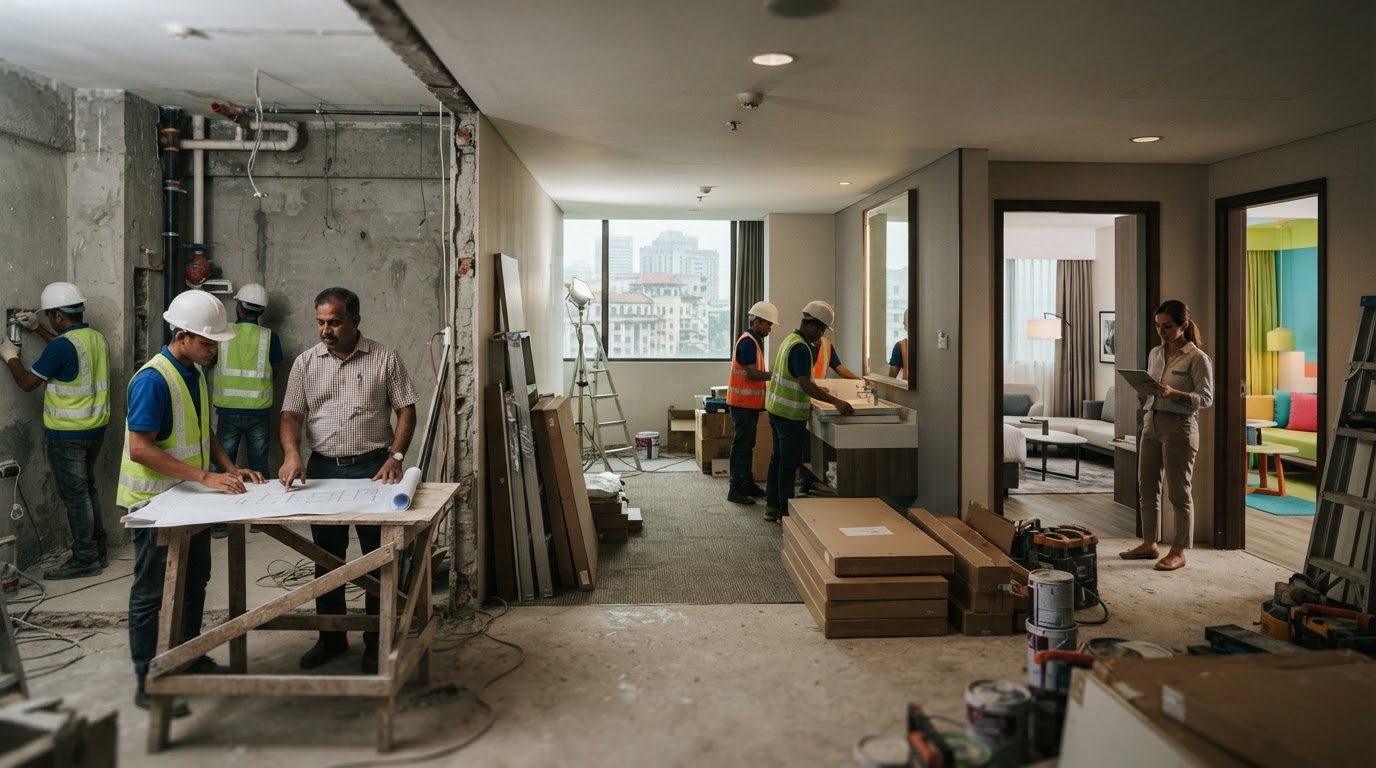
Property owners, however, face heavy capital commitments to meet international brand standards. Committing 210 million ringgit across 989 keys represents an intensive capital upgrade for aging physical structures. Owners must fund mechanical upgrades, interior overhauls, and brand compliance costs out of pocket or via commercial borrowings. That capital outlay demands immediate, durable gains in average daily rates and sustained occupancy once properties reopen in 2028 to prevent yield compression.
Converting existing properties reduces development timelines, but heavy capital expenditure per room leaves owners vulnerable to tourism demand shocks.
Brand segmentation forms the operational core of the project. Ascott is deploying three distinct tiers across two island markets. The Batu Ferringhi property targets upper-tier leisure travellers seeking resort amenities. Corporate and urban demand forms the primary focus for the Georgetown site under the Oakwood banner. Fox Hotel Langkawi targets midscale demand in Kuah. Splitting the portfolio avoids cannibalisation between assets, but it triples marketing overhead and complicates operational procurement.
Regional Exposure and Market Absorption
The strategic rationale assumes intra-regional travel across Asia will absorb this repositioned capacity. Ascott has noted that Asian tourists are staying closer to home amid broader geopolitical disruption, including the conflict involving Iran. Intra-Asian tourism flows provide substantial passenger volume, yet regional holidaymakers demonstrate marked price sensitivity compared to long-haul travelers from western markets. Relying heavily on short-haul demand limits the pricing power required to service major renovation loans.
Market realities in Penang and Langkawi sharpen the underlying execution risks. Penang maintains durable business activity, culinary heritage, and urban connectivity, but Batu Ferringhi faces stiff competition along its coastal strip. Langkawi contends with persistent transport bottlenecks, ferry constraints, and irregular domestic flight schedules. Fox Hotel Langkawi must compete in a price-sensitive resort market without direct beach frontage, constraining its revenue potential.
Macroeconomic constraints further tighten the timeline. A phased reopening through 2028 locks capital into multi-year renovations. During this protracted downtime, the three Bayview properties will generate zero operating cash flow while recurring holding expenses continue. Rising debt financing costs and construction sector inflation threaten to erode projected investment yields before the first guest arrives.
Ascott secures room count expansion toward its institutional fee targets without carrying direct property risk. Oriental Holdings assumes the physical capital burden of 210 million ringgit. The financial return on that investment now depends entirely on whether repositioned brands can command premium room rates in competitive regional destinations.
Sources
Newsletter
Pacific Daily
A curated briefing from Thailand, Asia-Pacific and the world.