The Commercial Retreat into Maritime Archive
Henri-Lloyd revives historical race apparel as Western technical brands substitute archival prestige for contemporary manufacturing leverage across Pacific waters
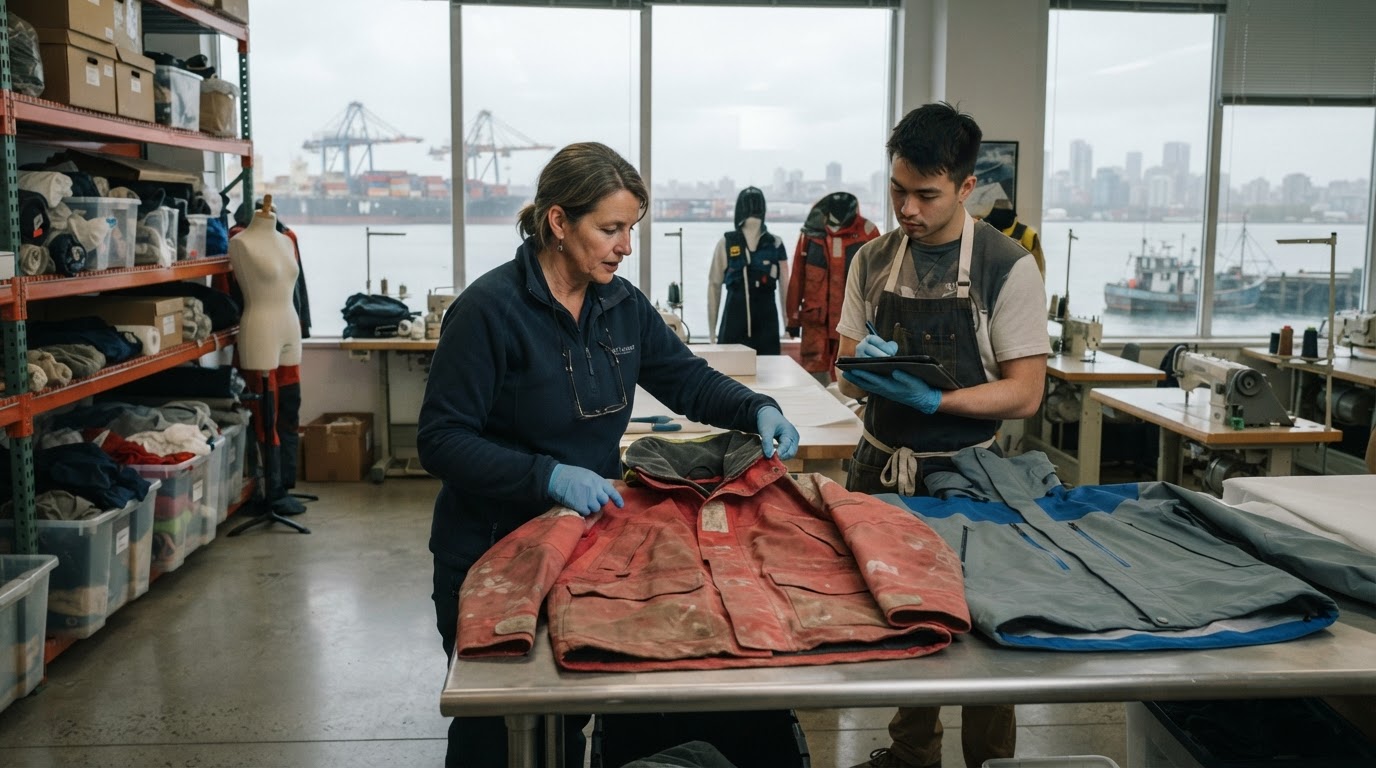
Technical apparel manufacturers rarely turn backward when technical supremacy still commands market share. For decades, competitive ocean sailing functioned as an austere proving ground where performance gear earned credibility through extreme utility rather than historical recollection. In that operational environment, offshore garments built for transoceanic competition served as mechanical insulation against operational failure. Sail World Asia reports that marine outfitter Henri-Lloyd has introduced Originals Vintage, a collection returning historic apparel derived from the America's Cup, the Whitbread Round the World Race, and the Volvo Ocean Race. The release signals an instructive pivot in commercial positioning across the Pacific, moving corporate focus away from iterative textile engineering toward the commercialisation of preserved pedigree.
Historically, the commercial hierarchy in marine outfitting was defined by material advancement rather than retrospective styling. Waterproofing treatments, structural seams, and resilient synthetics emerged directly from the demands of extreme maritime navigation. Crews participating in offshore trials tested garments under conditions where physical failure carried immediate operational penalties. By commercialising past designs rather than premiering new synthetic standards, the brand subtly alters the basis of its appeal. The narrative shifts from present capability to retrospective endurance.
The Strategic Utility of Heritage
Apparel programmes anchored in vintage inventory represent an explicit reassessment of institutional assets. When an enterprise reaches into its archive to recirculate original equipment from the Whitbread Round the World Race or earlier cycles of the America's Cup, it monetises historical exposure that cannot be replicated by modern competitors. Archival garments function as static equity. They convert historical participation in premier international regattas into commercial legitimacy, insulating established labels against lower-cost producers whose current supply networks match baseline protective capabilities. This structural substitution allows legacy entities to protect margin without committing fresh resources to risky product development cycles.
Skeptics of this interpretation might argue that releasing historical pieces simply answers consumer appetite for vintage provenance and authentic utility. In that reading, returning garments from the Volvo Ocean Race to commercial circulation satisfies an organic public preference for apparel that endured documented physical trials. Yet this consumer-focused explanation obscures the primary structural constraint facing traditional marine outfitting firms. Developing new proprietary membranes demands substantial capital, complex supply chain integration, and continual laboratory validation. Re-issuing archival garments bypasses that expenditure entirely, relying on the prestige of past athletic events to establish value rather than funding current technological parity. Consequently, the strategic initiative monetises historical standing at a moment when sustaining technical leadership requires accelerating capital investment.
Shifting Baselines in Pacific Marine Outfitting
For the broader Pacific maritime sector, this reliance on distant sporting history reveals a persistent divergence in commercial leverage. Across modern commercial and recreational fleets, practical demand for marine equipment is shaped by operational efficiency, localized distribution, and competitive circuits that function far beyond the traditional orbit of the United States. When a supplier leans on the legacy of the Volvo Ocean Race or early iterations of the America's Cup to validate its presence, it asserts an established institutional memory over an operational arena whose contemporary buyers increasingly value proximate supply resilience and contemporary material specifications. Regional operators faced with high humidity, equatorial squalls, and intense degradation require documented physical performance rather than imported historical pedigree.
This operational divergence highlights an unresolved friction between inherited reputation and functional competitiveness. Archival prestige carries diminishing returns among mariners who require verifiable garment performance over nostalgic association. While the America's Cup and historical global circuits retain undisputed symbolic resonance, an enterprise cannot indefinitely trade on the physical durability of garments manufactured decades ago to defend its regional relevance. A deeper vulnerability lies in the gap between commemorative retail and commercial fleet requirements, where unproven archival reissues cannot displace modern functional standards. The critical tension governing this commercial deployment remains whether archival equity can successfully shield historic brands, or if it merely marks an inability to define the next generation of maritime utility.
Sources
Newsletter
Pacific Daily
A curated briefing from Thailand, Asia-Pacific and the world.