Singapore's Maritime Metamorphosis: Navigating New Global Currents
Amidst geopolitical eddies and re-drawn trade lines, the Port of Singapore deploys a digital-first strategy and audacious infrastructure to secure its perch as the world's preeminent maritime hub.
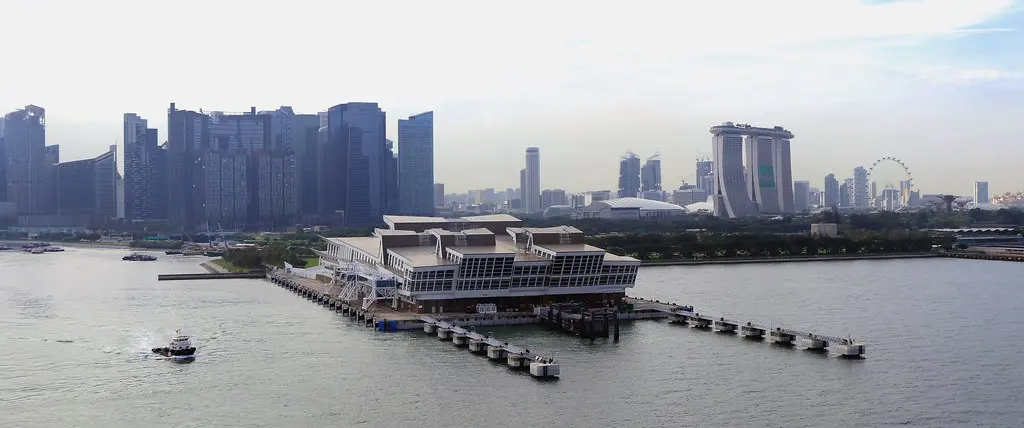
SINGAPORE
SINGAPORE — The tropical humidity clings, even inside the air-conditioned confines of the Maritime and Port Authority of Singapore’s (MPA) command centre, a stark contrast to the relentless efficiency unfolding on the monitors before me. Here, a panoramic digital twin of the Singapore Strait hums with data, tracking every ship, every container, every ebb and flow of maritime traffic. This isn't just a control room; it's the nerve centre of a nation acutely aware that its economic lifeline depends on its ability to outmaneuver global uncertainty.
Singapore, a city-state smaller than many major ports, has long defied its geographical constraints to become the world’s busiest transshipment hub. But the placid waters of economic growth are increasingly choppy. Geopolitical rivalries, particularly between Washington and Beijing, are re-drawing global supply chains, while climate change threatens traditional routes. The once-unquestioned supremacy of routes through the South China Sea, for instance, faces potential disruption. This evolving landscape demands more than just maintenance; it requires a radical re-imagining of port operations.
“Our competitive edge isn't just about handling volumes, though we remain the world leader in transshipment,” remarked Ms. Lena Seow, a Senior Manager at the MPA, during a recent briefing at their Tanjong Pagar complex. “It’s about intelligence, resilience, and sustainability. Our long-term vision for Tuas Port isn't merely an expansion; it’s an evolution into a fully automated, digitally integrated mega-port designed to be future-proof.”
Tuas Port, Singapore’s audacious multi-billion-dollar project, is the most tangible manifestation of this strategy. Already partially operational, its sheer scale is breathtaking. When fully completed by the 2040s, it will consolidate all of Singapore’s container operations, boast 26 kilometres of deepwater berths, and handle an astonishing 65 million Twenty-foot Equivalent Units (TEUs) annually – nearly double the current capacity of all existing terminals combined. The automation here is not just an efficiency play; it’s a direct response to Singapore’s perennial labour constraints and a statement of technological prowess. Automated guided vehicles (AGVs) silently ferry containers, while quay cranes operate with surgical precision from remote control rooms, a scene I observed firsthand through a viewing gallery at Tuas.
But hardware is only half the battle. The digital transformation is where Singapore is truly cementing its advantage. The MPA has launched initiatives like the Maritime Single Window (MSW), streamlining port clearance and regulatory submissions for vessels by providing a single digital portal. This dramatically reduces paperwork and turnaround times, a critical factor for shipping lines facing tight schedules and rising fuel costs. They are also heavily investing in AI and data analytics to predict vessel movements, optimize resource allocation, and even anticipate potential disruptions from weather patterns or geopolitical shifts.
This proactive digital posture challenges the notion, sometimes floated in Western shipping journals, that Singapore's dominance is simply a legacy of its strategic location. That narrative overlooks the relentless innovation. The port’s digital twin, a real-time virtual replica of the physical port, allows for predictive maintenance, traffic optimization, and even scenario planning for potential crises – capabilities far beyond simple geographic advantage. It's an active, intelligent management of a complex ecosystem.
The global trade map is indeed shifting. Geopolitical tensions are pushing some companies to diversify supply chains away from a singular focus on China, leading to increased interest in Southeast Asian manufacturing hubs like Vietnam and Thailand. While this decentralization might theoretically dilute Singapore’s concentration of transshipment, the MPA sees it differently. By positioning itself as the most reliable, efficient, and technologically advanced node, Singapore aims to become the essential orchestrator of these diversified flows, a neutral and hyper-efficient gateway for goods entering or leaving the region, regardless of their ultimate origin or destination.
"Our competitive edge isn't just about handling volumes... It’s about intelligence, resilience, and sustainability."
Concerns about climate change are also driving new imperatives. The Port of Singapore is actively exploring alternative marine fuels, supporting the development of a green hydrogen and ammonia bunkering ecosystem. They’ve mandated that new harbour craft must be electric or run on low-carbon fuels by 2030, a clear signal of their commitment to decarbonization. This isn't altruism; it's pragmatism. As global shipping increasingly faces carbon taxes and stricter environmental regulations, ports that can offer sustainable solutions will capture future market share.
The challenges are formidable. Regional competitors like Malaysia’s Port Klang and Tanjung Pelepas are also expanding, vying for a slice of the transshipment pie. Yet, as I watched a colossal container ship, its stern emblazoned with the logo of a major shipping line, glide effortlessly through the strait, guided by unseen digital hands, it became clear that Singapore isn't resting on its laurels. It is actively redefining what a global port can and must be in the 21st century: not just a point of passage, but a nexus of technology, sustainability, and strategic resilience.
Newsletter
Pacific Daily
A curated briefing from Thailand, Asia-Pacific and the world.