The Global Reach of Local Catastrophe: When Gold Extraction Outstrips Safety in a Connected World
A goldmine collapse in the Central African Republic spotlights a persistent pattern of resource extraction's human cost, with economic ripples that extend to distant markets.
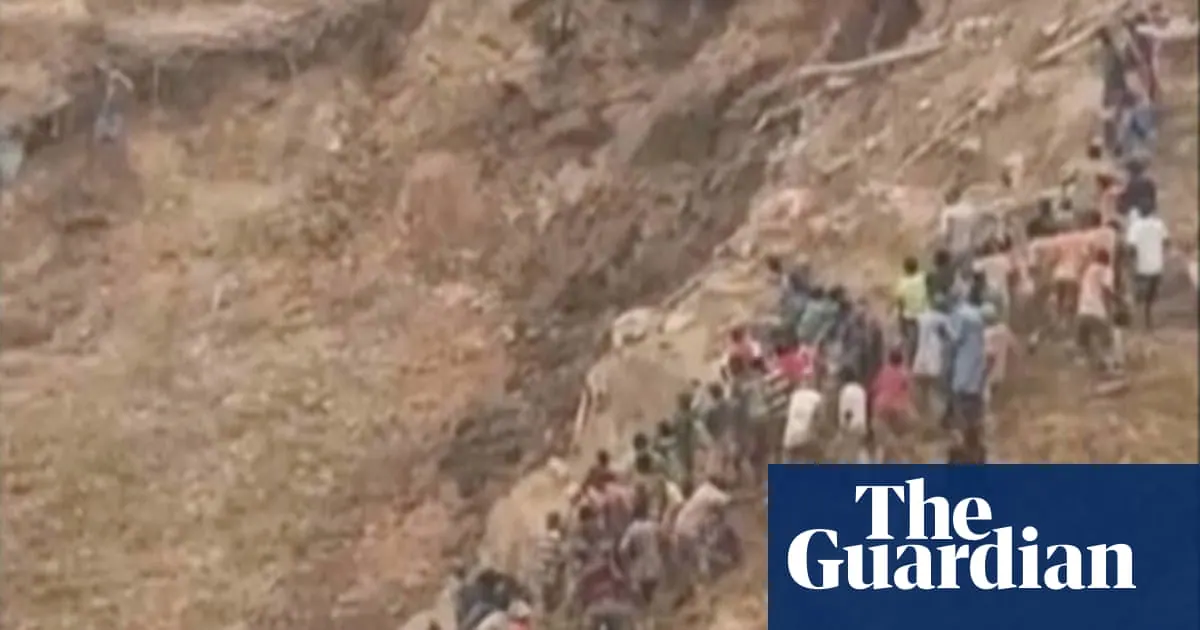
The collapse of an artisanal goldmine in the Central African Republic (CAR) on Tuesday afternoon, resulting in more than 100 reported deaths in Zamboye village, foregrounds a tension between immediate economic necessity and systemic safety failures. The reported landslide, which engulfed miners near the Cameroon border, is not an isolated event but a grim repetition of patterns where the drive for resources, often informal and unregulated, bypasses critical safeguards.
This incident, occurring 50km from Baboua, extends beyond its immediate, tragic impact in CAR. The demand for gold, a commodity with enduring global value, creates a supply chain that reaches from precarious, hand-dug pits to international markets, including those in Asia-Pacific. While the direct link between this specific mine and major Asian markets might not be immediately apparent, the underlying dynamics are consistently connected. Global commodity prices, driven by diverse consumer and investment behaviors, influence the urgency and methods of extraction in resource-rich but economically vulnerable regions. When the price of gold rises, the incentive for high-risk, informal mining operations often intensifies, pushing individuals into dangerous environments with minimal oversight.
Historically, resource extraction in many developing nations has been characterized by cycles of boom and bust, often without developing robust regulatory frameworks or reinvesting adequately in local infrastructure and safety. This specific disaster illustrates the human cost when such conditions persist. The reported death toll, which local officials suggest is likely to rise, underscores the profound precarity faced by individuals reliant on informal mining for their livelihoods. These operations often lack the capital for proper geological surveys, structural reinforcement, or emergency response protocols that are standard in regulated industries.
For the Asia-Pacific region, particularly nations like Thailand, the connection to such events may seem distant. Yet, Thailand is a significant player in the global gold market, both as a consumer and a hub for refining and trade. Local jewelry markets, investment demands, and industrial applications all contribute to the aggregated global pull for the metal. When the supply chain is fractured by such incidents, or when the ethical provenance of the gold becomes a concern, there are potential repercussions for regional markets and businesses. Consumers and investors, increasingly aware of ethical sourcing, may exert pressure that eventually reaches back to the point of origin, even if informally.
An alternative perspective might argue that these artisanal operations are entirely localized, driven by internal economic conditions and offering the only available livelihood for many. From this viewpoint, the influence of distant markets is marginal compared to the immediate push factors of poverty and lack of alternative employment. The informal nature of these mines means they operate largely outside global regulatory purview, making external market pressures less effective in improving safety. This argument holds weight regarding the immediate operational realities of Zamboye village, where daily survival dictates risk tolerance.
However, this perspective overlooks the systemic nature of global commodity markets. Gold does not exist in an economic vacuum. While local conditions are critical, they are often exacerbated by the external valuation of the resource. The pattern this event interrupts is one of relative market stability, where the human cost of extraction in distant locales often remains unacknowledged by final consumers. The constraint that remains unresolved is the persistent disconnect between the global demand for precious metals and the regional, often fatal, lack of safety and regulation at the point of primary extraction. Without a more direct linkage between market forces and on-the-ground safety standards, such tragedies are likely to recur.
Sources
Newsletter
Pacific Daily
A curated briefing from Thailand, Asia-Pacific and the world.