Remembering a Massacre, Redrawing a Map
The annual commemoration of Mexico City's 1968 student massacre, marked by a recent protest tying historical grievances to the Gaza conflict, reflects a broader pattern where local memories intertwine with global events.
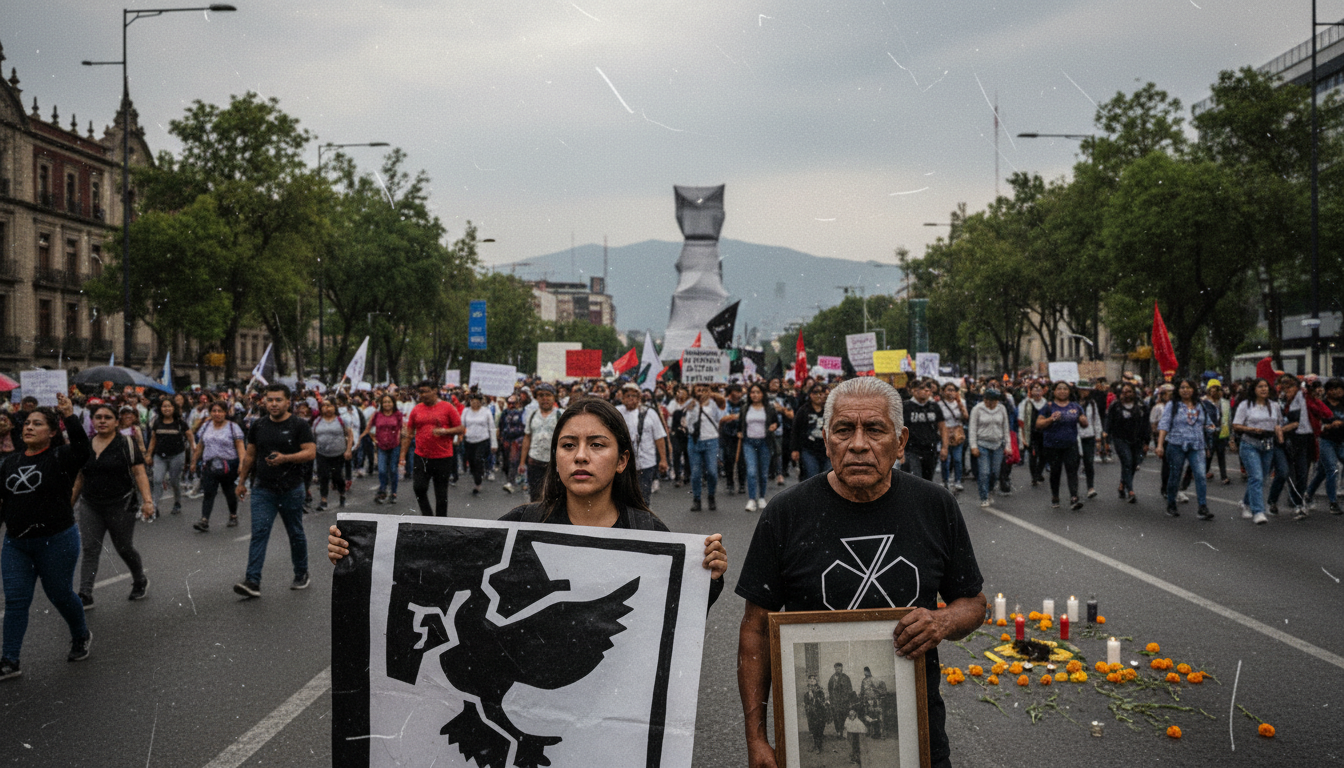
Each year in Mexico City, a march remembers the Tlatelolco student massacre of 1968. Fifty-eight years ago yesterday, government forces killed hundreds on a day that, according to Mexico News Daily, changed Mexico forever. The initial spark was a fracas between two rival public vocational high schools that erupted into an out-and-out brawl in a Mexico City marketplace built for the upcoming 1968 Olympics. Riot police arrived the following day, wielding clubs and beating anyone within reach, attacking students and faculty with equal brutality. The following day, students took to the streets in protest of the previous day’s beating, which then, in turn, drew the police out for more violent confrontations.
This annual remembrance is not confined to the past. In 2025, the Gaza crisis featured in the march, linking a specific national trauma to a contemporary global conflict. This connection illustrates how local historical memory can absorb and reflect international tensions, shifting the focus from a purely national narrative to one with global echoes. The continuity of civic engagement suggests itself in the involvement of generations of students in these marches through Mexico City, as observed in 2023.
The Tlatelolco massacre, dubbed "Mexico's Tiananmen Square" by the National Security Archive organization, stands as a pivotal event in modern Mexican history. Its annual commemoration serves as a point of convergence for historical reflection and current social concerns. The presence of international issues, such as the Gaza crisis, within a demonstration primarily focused on a historical domestic event, shows a conscious broadening of activist scope.
This phenomenon extends beyond Mexico. Across the Asia-Pacific, similar processes occur where local historical anniversaries or sites of memory become venues for expressing solidarity with distant struggles. Protests against economic policies in one nation might find common ground with environmental movements in another, or historical injustices might be invoked to highlight contemporary human rights concerns elsewhere. This linking of disparate events demonstrates a globalized consciousness that uses historical touchstones as anchors for broader advocacy.
Such acts of connection suggest a subtle but significant redrawing of political and social maps. The physical space of a national capital's streets, historically a stage for domestic concerns, now acts as a canvas for global narratives. The meaning of a place, or the significance of a date, expands to include issues far beyond its immediate geography or original context. For observers in the Asia-Pacific, understanding these evolving layers of meaning is key to grasping how local dissent can acquire global resonance.
The Tlatelolco massacre, therefore, is not merely a historical footnote. It is a recurring event that, through its ongoing remembrance and the inclusion of new concerns, illustrates how past tragedies can become lenses through which to view present global challenges. The act of remembering, when combined with contemporary issues, turns a specific national memory into a commentary on wider global currents, reflecting how communities choose to interpret their past in light of their present concerns.
Sources
Newsletter
Pacific Daily
A curated briefing from Thailand, Asia-Pacific and the world.