Water's Cost in Asia: Lessons from Mexico City's Four-Century Trade-off
The region's hospitality sector faces looming water scarcity, a risk often overlooked until crisis point. Mexico City's history offers a stark financial precedent.
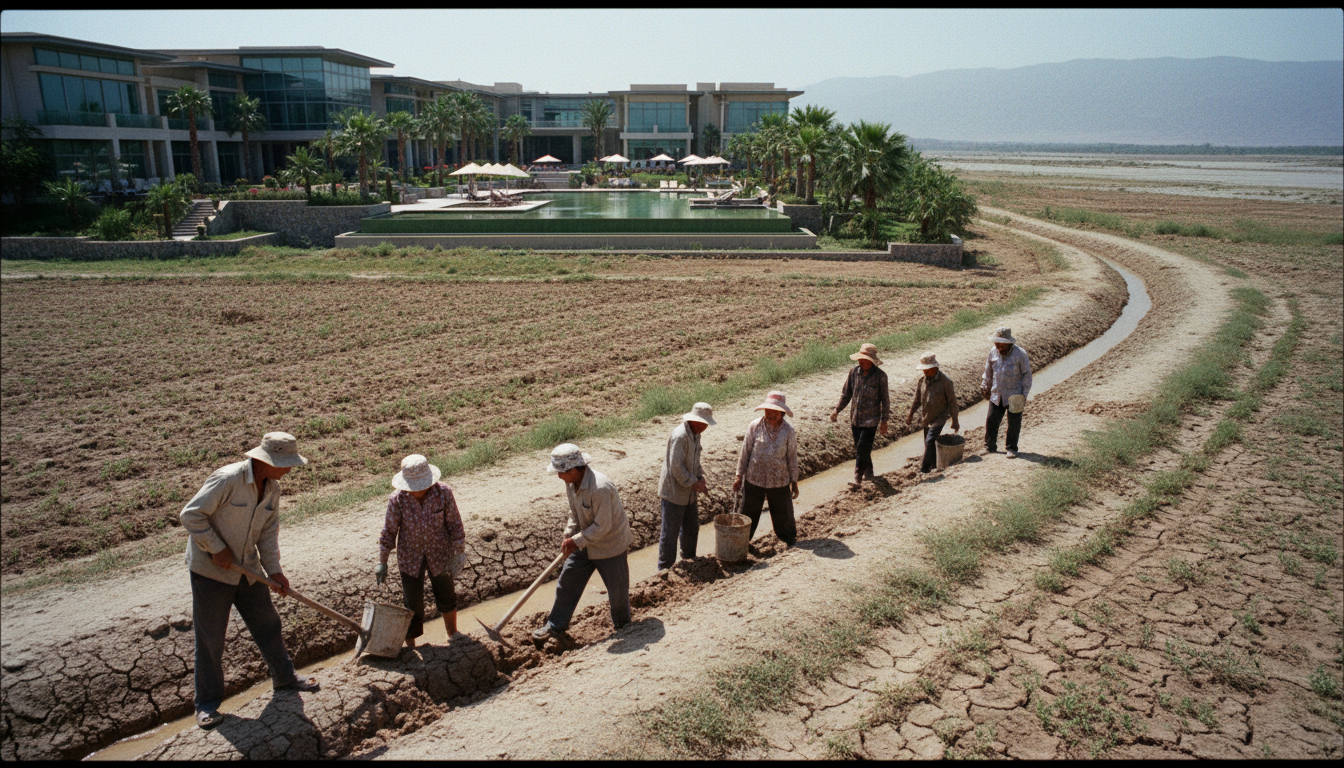
Mexico City's water problems date back 400 years, a fact that should resonate across Asia-Pacific boardrooms. According to Mexico News Daily, its residents have grappled with systemic water issues for nearly four centuries. A specific instance in September 1629 saw the city flooded for years, leading to over 30,000 deaths, primarily from disease in sewage-laden water, despite a 22-year drainage project, the Desagüe de Huehuetoca, meant to solve excess water accumulation. The city has, for centuries, made a trade: draining water to survive, only for each solution to create new, worse problems.
This is not a historical curiosity; it is a financial warning for water-stressed economies. The fundamental issue in Mexico City, a closed, mountain-ringed basin, is that there was 'nowhere for excess water to go,' a description that resonates with similar hydrological pressures in many Asian urban centers. The costs associated with such systemic failures — disease, population displacement, infrastructure decay — are difficult to quantify fully but represent a significant drag on economic output and social stability. While some solutions, such as the 'ethereal art of fog-catching' noted by the BBC, offer local mitigation, they do not address the scale of regional demand.
The hospitality sector, often a significant water consumer, operates on tight margins where occupancy rates dictate viability. Hotels and resorts rely on consistent, high-quality water supply not just for guest services, but for basic operational continuity. A disruption due to scarcity or contamination, as seen in Mexico City's past, directly impacts revenue, reputation, and investment appeal. The US, for instance, faces its own water challenges; The Guardian reported in August 2026 that the plan to save the Colorado River would likely be insufficient, indicating the widespread nature of the problem.
The incentive for local governments and private sector entities is clear: proactive investment in water infrastructure and conservation far outweighs the reactive costs of crisis management. Who pays for this? Ultimately, consumers, businesses, and taxpayers. The challenge is that short-term economic incentives often conflict with long-term ecological necessities. Who is not being quoted? The small business owners and residents whose livelihoods are destroyed when water systems fail, a cost rarely fully tabulated in national accounts. The argument that new technologies or supply solutions will simply appear is often taken on trust, but concrete, large-scale results remain elusive.
For the Asia-Pacific, where rapid urbanization and tourism growth converge with increasing climate variability, Mexico City's predicament highlights an unresolved constraint. The outcome for many emerging hospitality markets will depend not on marketing prowess, but on the capacity to secure and sustain fundamental resources like water. Without a clear, long-term strategy for water resilience, the perceived luxury of a destination may become financially untenable. This represents a significant, underpriced risk for investors and operators across the region.
Sources
Newsletter
Pacific Daily
A curated briefing from Thailand, Asia-Pacific and the world.