Pattaya Balcony Fall Highlights Unseen Daily Risks for Visitors
A German man's severe injuries in Nong Prue show that even routine activities abroad carry unforeseen dangers, raising questions about individual awareness.
SINGAPORE
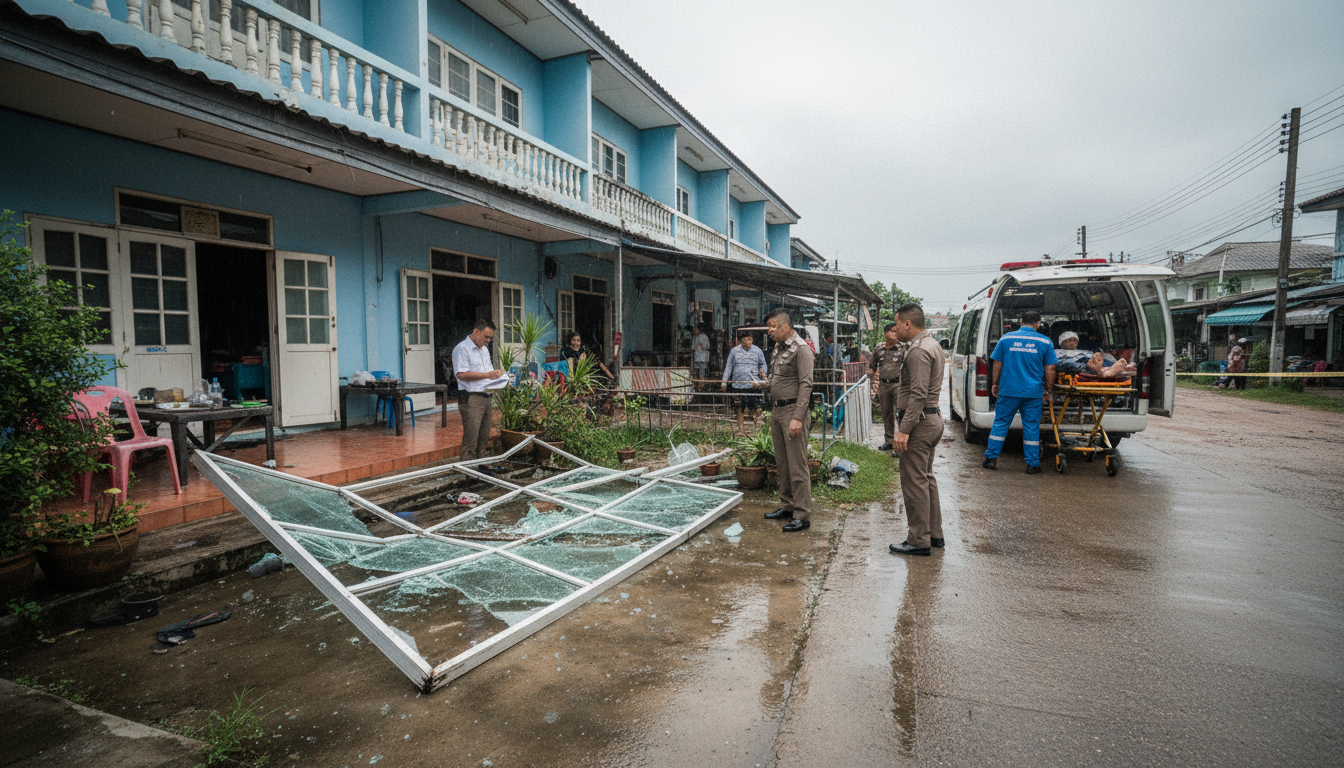
A German man sustained a severe head injury and heavy bleeding after falling from a hotel balcony in Pattaya early on October 1. Philipp Hohmann, 33, was reportedly smoking outside when he fell backward from the balcony. Emergency services responded to a hotel in Nong Prue subdistrict, Bang Lamung district, Chon Buri, at approximately 3:16 AM, providing first aid before transporting him to a hospital. Rescuers found broken tree branches, Mr. Hohmann’s shoes, and blood at the scene.
This incident, while seemingly isolated, underscores the often-overlooked risks international travelers face in everyday situations. While tourist numbers are a common metric for economic activity, individual well-being can be less prominent in discussions. Even a simple act like smoking on a balcony can lead to serious consequences, particularly when unfamiliar environments introduce subtle differences in design or safety standards. The incident occurs amidst growing German engagement with the wider Asia-Pacific region, reflected in German Chancellor Merz's anticipated trip to Japan in October and Germany's expanded partnership with the Asian Development Bank on nature finance.
The immediate financial and personal impact on Mr. Hohmann and his friend, who was staying with him and provided an account to police, would be significant. Beyond medical costs and potential long-term care, there are indirect costs associated with travel disruption and the emotional toll of such an event. For visitors, a foreign hospital stay presents its own set of challenges, from communication barriers to navigating unfamiliar medical systems.
Local businesses in Pattaya, particularly those catering to international tourists, could also face indirect scrutiny. Such incidents, even if rare, can influence perceptions of safety. Tourists, like Mr. Hohmann, often travel for leisure, and an accident of this nature contrasts sharply with the expectation of a relaxed experience. The incident may prompt some travelers to reconsider safety precautions, or it could be seen as an unfortunate but isolated event.
Nevertheless, assigning responsibility for such an accident is complex. While hotels are expected to provide a safe environment, individual actions also play a part. The friend's account, stating Mr. Hohmann was sitting and smoking, suggests a routine activity. Whether specific safety features were a factor is not detailed. The broader economic implications for tourism in destinations like Pattaya are generally driven by macro trends and policy rather than individual accidents. However, each incident contributes to the overall narrative surrounding visitor safety.
Ultimately, the outcome for Mr. Hohmann will depend on his medical recovery. The broader lesson for travelers, particularly those on a monthly budget, is the need for constant awareness of surroundings and the potential for unexpected risks, even in seemingly safe places. This incident serves as a reminder that personal responsibility for safety remains crucial when navigating new environments.
Sources
Newsletter
Pacific Daily
A curated briefing from Thailand, Asia-Pacific and the world.