Pattaya Drug Arrest Exposes Enduring Trafficking Structures
A local operation against 'pod k' reveals deep-seated channels connecting Europe and Asia's illicit markets, highlighting systemic vulnerabilities.
SINGAPORE
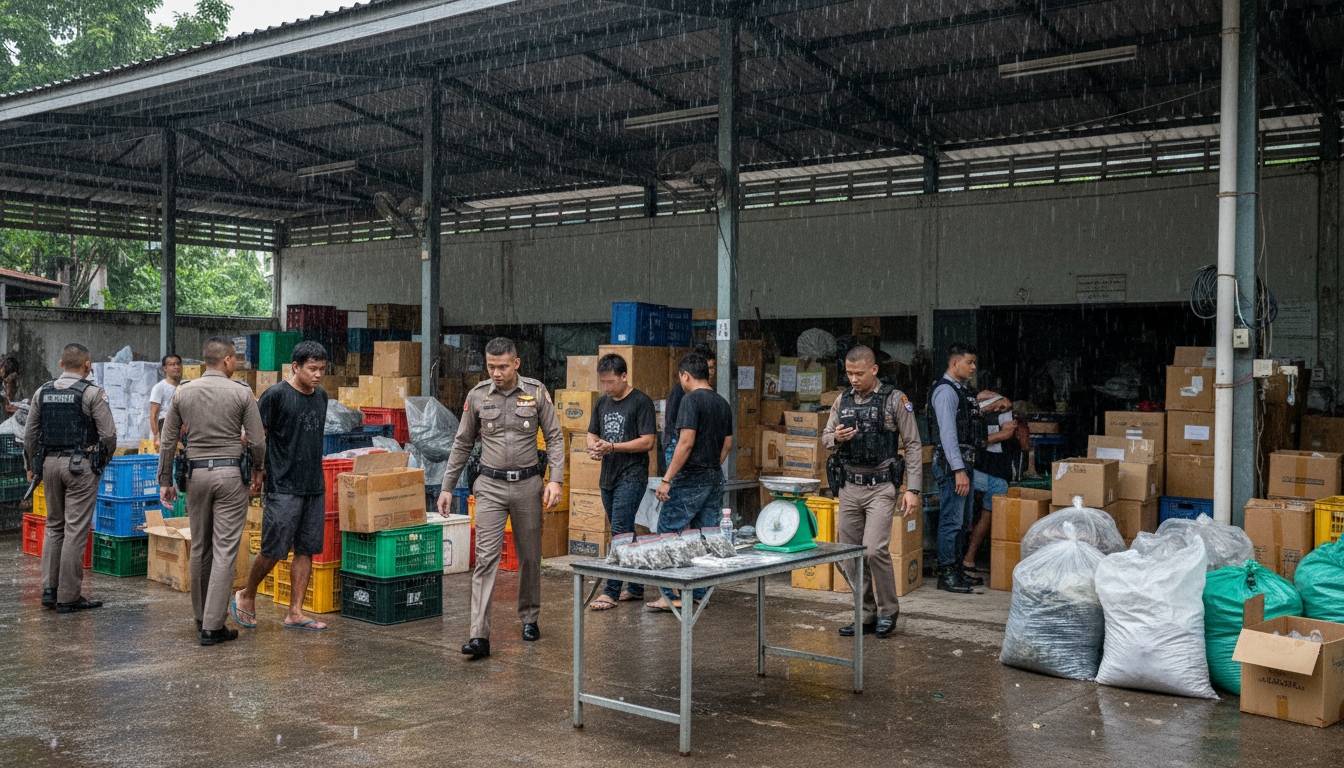
The arrest of a 21-year-old Thai-European man in Pattaya for selling ketamine-laced e-cigarettes, known as 'pod k', on August 26, is an isolated incident on its surface. Officers from Bang Lamung Police Station, acting on a tip from local teenagers, conducted an undercover operation in the Na Kluea area, seizing items from his rented room. This event, reported by The Thaiger on August 27, 2026, appears to be a localised police success against street-level drug distribution.
However, viewing this arrest in isolation risks misinterpreting its broader significance. The presence of a Thai-European individual operating within Thailand’s illicit drug market, particularly with a product like 'pod k' — an e-cigarette format for ketamine — points to a sophisticated supply chain. Such operations are not typically self-contained. Rather, they often represent the visible end of larger, more complex international networks. Khaosod English reported on the exposure of a "Europe-to-Thailand Drug Pipeline" following four arrests of Vietnamese nationals. This earlier report suggests established conduits exist for drug trafficking between the two continents.
The structural implication is that while local law enforcement may target distribution points, the source and transit mechanisms remain largely intact. The fact that a European connection appears in a street-level arrest in Pattaya suggests that the pipeline described previously continues to function, adapting to demand for different substances and delivery methods. The ‘pod k’ phenomenon itself indicates an evolution in drug delivery, catering potentially to a younger demographic or those seeking discreet consumption methods. This adaptation reflects the resilience of illicit trade networks, which are highly responsive to market dynamics and law enforcement pressures.
A counterargument might suggest that this arrest represents effective local policing, disrupting a specific cell. While the Bang Lamung Police Station’s action is indeed a direct intervention against local supply, it does not alter the underlying structural conditions that facilitate the flow of narcotics into Thailand. The demand for such substances, alongside the operational capacity for international smuggling, persists. The recent disruptions to Asia-Europe travel, such as Gulf airspace closures in March 2026, which led to soaring airline ticket prices and diverted passengers to Asian airlines, could be seen as an impediment to such illicit flows. However, criminal networks often leverage such disruptions to their advantage, finding new routes or exploiting increased transport costs to justify higher prices, thereby maintaining profitability.
The unresolved constraint remains the persistent, albeit adaptable, structural pipeline enabling drug movement from Europe into Asia-Pacific. While individual arrests like that in Pattaya address immediate concerns, they do not dismantle the broader trafficking architecture. The outcome depends less on isolated busts and more on international cooperation to disrupt the financial and logistical underpinnings of these enduring illicit trade routes.
Sources
Newsletter
Pacific Daily
A curated briefing from Thailand, Asia-Pacific and the world.