The Vote Behind Thailand’s Social Contract: Why the 2026 Social Security Election Matters
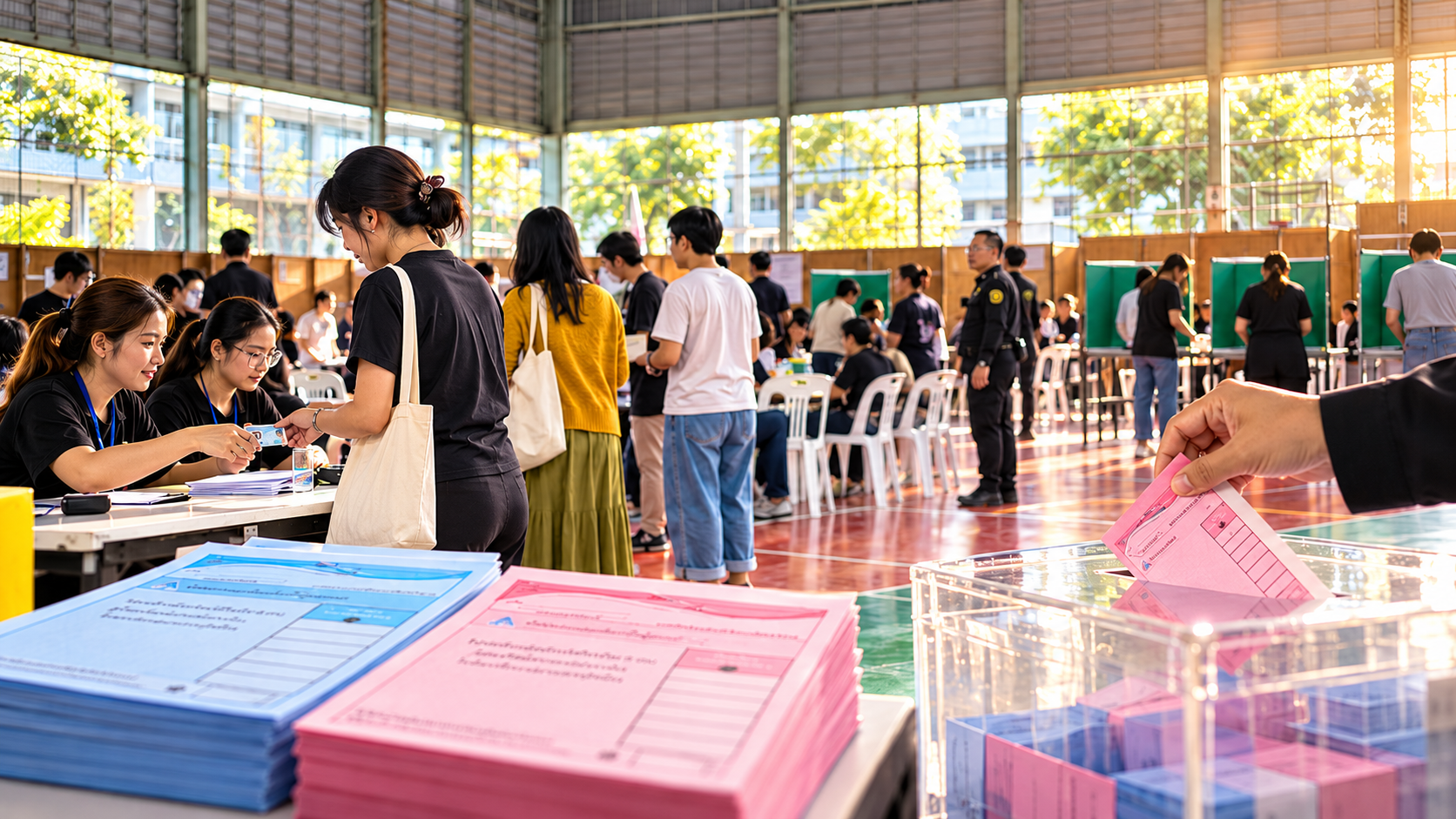
On 11 October, Thailand’s workers and employers are casting ballots in an election that may attract less international attention than a national political contest, yet carries consequences that reach deep into everyday life.
At stake is representation on the Social Security Board, an institution involved in shaping the policies and administration of a system that supports millions of people through healthcare, income protection and retirement benefits.
The election raises a question larger than the names appearing on the ballot: who should have a meaningful voice in determining the future of the social protection system?
A Rare Opportunity for Direct Representation
Thailand's 2026 Social Security Board election is only the second direct election of representatives from insured workers and employers, following the country's first such vote in December 2023.
Seven representatives from each constituency will join the board alongside government representatives, bringing the perspectives of employees and businesses into an institution responsible for important social insurance decisions.
Originally scheduled for 27 September, the nationwide vote was postponed to 11 October because flooding threatened access to polling locations and the equal exercise of voting rights.
Polling stations opened at 8 a.m. and are scheduled to close at 4 p.m.
Although the election may lack the spectacle of a parliamentary contest, its significance is considerable. The board operates within a framework that affects medical benefits, old-age pensions, contribution policies and the governance of a multi-trillion-baht social security fund.
Beyond the Ballot: A Question of Financial Trust
For many insured workers, social security contributions are an unavoidable part of working life. The money deducted from monthly earnings represents more than an administrative obligation. It is an investment in the expectation of protection when illness, unemployment, disability or old age changes a person's circumstances.
This creates a fundamental relationship of trust between contributors and the institution managing their collective resources.
That trust cannot be sustained by promises alone.
It depends on transparent decision-making, effective oversight, credible financial management and the ability to explain how policies serve contributors over the long term.
A pension system must remain sustainable without losing sight of the people it exists to protect. Healthcare benefits must respond to changing needs, while investment decisions must balance appropriate returns against the responsibility to safeguard public resources.
The elected board members will not possess unlimited authority to redesign the system. Their work remains subject to legislation, financial constraints and the wider institutional structure.
Nevertheless, representation matters because decisions about social protection are not purely technical. They involve competing priorities and judgments about fairness across generations, occupations and income groups.
Democracy Beyond Parliament
The election also illuminates an important dimension of democratic participation that is often overshadowed by national politics.
Democracy is not confined to choosing a prime minister or members of parliament. It can also involve the governance of institutions that exercise substantial influence over citizens' economic security.
An employee approaching retirement, a self-employed worker concerned about future protection and a business owner managing contribution costs may have different expectations of the same system.
A representative board cannot eliminate those differences. It can, however, create a formal space in which they are heard and examined.
The more difficult test begins after the votes are counted.
Will elected representatives communicate consistently with the constituencies they serve? Will financial and policy decisions become easier to scrutinize? Will the institution demonstrate that participation produces meaningful accountability?
These questions will ultimately matter more than the excitement of election day.
The Meaning of 11 October
Thailand's Social Security Board election should be understood not simply as an administrative exercise but as part of an evolving conversation about the relationship between workers, employers and the state.
A ballot cannot guarantee better pensions, improved medical coverage or stronger fund performance.
It can, however, give contributors a direct role in selecting those who help oversee the institutions on which their future security depends.
For Thailand, the deeper measure of this election will not be found solely in turnout or the final distribution of seats.
It will be found in whether representation translates into better governance, greater public confidence and a social security system capable of fulfilling its promises across generations.
Newsletter
Pacific Daily
A curated briefing from Thailand, Asia-Pacific and the world.