Thai Data Security: The Human Cost of Unregulated Growth
As foreign investment expands in critical digital infrastructure, a party spokesperson warns that current oversight risks public data falling beyond national control.
SINGAPORE
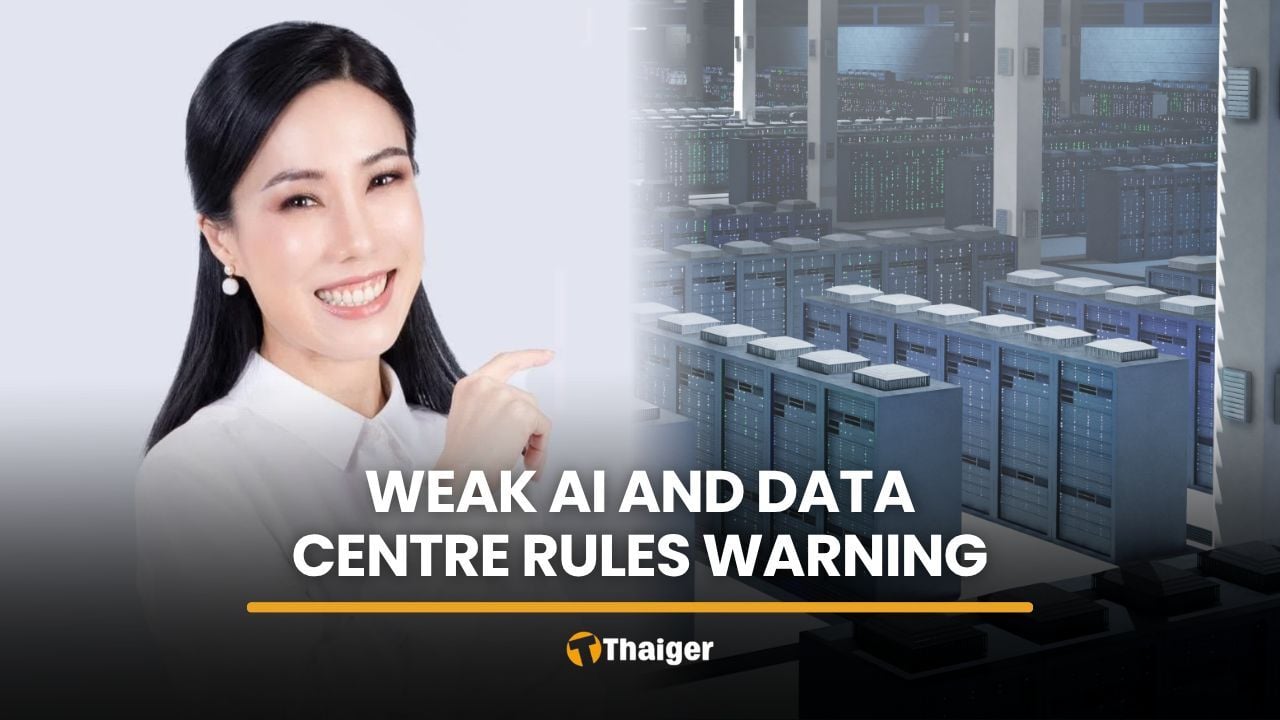
The United Thai Nation Party spokesperson, Sasikarn Wattanachan, issued a public warning on September 15 concerning Thailand's regulatory framework for AI and data centres. Her statement suggests that if oversight remains weak, sensitive Thai data could eventually come under foreign control. This arises from the observation that some Thai data centre firms, which hold substantial amounts of personal data, already permit foreign shareholders. Ms. Wattanachan's warning highlights the tension between attracting investment and protecting national data.
Yesterday, Ms. Wattanachan urged the government to expedite rule-making for these sectors. She welcomed existing state agency efforts to slow construction approvals and tighten oversight of data centre development. However, she maintained that data centre projects should not proceed without clearly explaining their plans to the public. The spokesperson indicated that the concerns extend beyond typical considerations such as electricity and water usage or the waste and environmental impact generated by large facilities, focusing instead on data governance and control.
The expansion of data centres and the increasing integration of AI technologies signify a growing reliance on digital infrastructure. This reliance can attract economic activity, as evidenced by JP Morgan's upgraded Nikkei year-end target to 70,000, partially attributed to an AI boom. Yet, this dependency also carries risks. An Amazon Web Services outage, for instance, exposed the UK state’s £1.7 billion reliance on a single technology provider, demonstrating how infrastructure vulnerabilities can lead to significant disruptions. For Thailand, the immediate risk concerns data sovereignty, especially when foreign entities hold equity in companies managing personal data.
There is a clear challenge in balancing the impetus for economic growth with the necessity of safeguarding national interests. Allowing foreign ownership in data centre companies can bring in capital and expertise, potentially accelerating Thailand's technological advancement. This situation mirrors trends across the region, where countries like Singapore are assessing their cyber defence capabilities against AI threats. Conversely, an absence of clear, robust regulations creates channels for foreign entities to exert influence over, or gain access to, national data, raising questions about control and security. The reported decline in Asian tech stocks, with Samsung and SK Hynix falling over 8% due to what was described as 'tech weakness,' points to a global market where stable and secure tech infrastructure is increasingly critical.
The core of the challenge is to establish a regulatory framework that facilitates technological advancement while ensuring robust data protection. The current situation, where data centre firms managing personal data can have foreign shareholders under potentially weak rules, suggests that the cost of this decision may fall upon the individuals whose data is being managed. Ensuring public transparency in project plans, as advocated by Ms. Wattanachan, could be a foundational step towards public accountability. A broader pattern of governments approving such projects without full public disclosure, as seen in the US with an EPA proposal that could leave the public uninformed on data centre plans, underscores a global tendency towards opacity in critical infrastructure development. The decision to prioritize rapid development over comprehensive regulation means that the daily cost of inadequate oversight is often borne by the individuals whose personal information resides within these systems.
Sources
Newsletter
Pacific Daily
A curated briefing from Thailand, Asia-Pacific and the world.