Missed Flood Warnings Signal Broader Governance Gaps in Bangkok
The Bangkok Metropolitan Administration's failure to act on climate expert warnings highlights how official inaction impacts daily life in Thailand's capital.
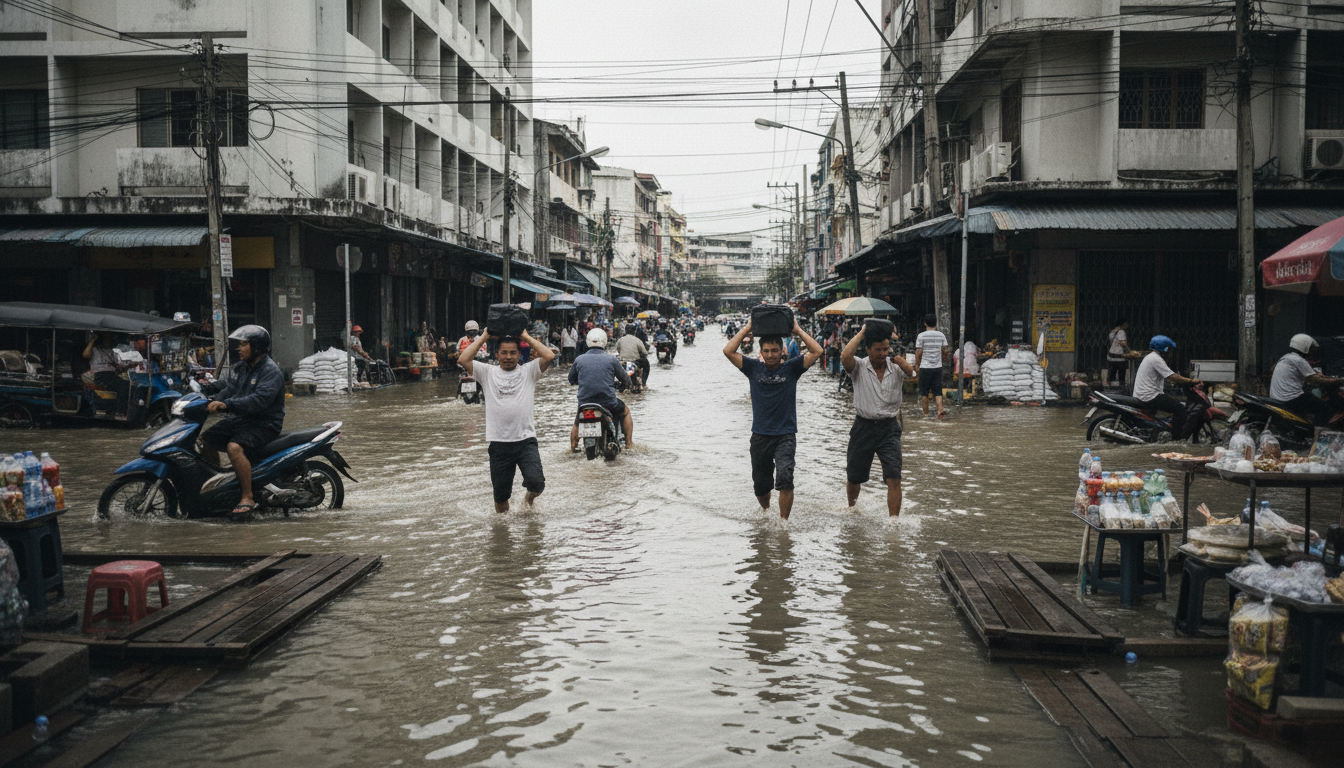
BANGKOK
The Bangkok Metropolitan Administration (BMA) did not respond to advance warnings regarding a potential flood crisis, according to climate expert Assoc Prof Seree Supratid. This oversight, as reported on October 3, 2026, occurred despite prior notification of serious flooding risk in the capital between September 22 and September 26. Assoc Prof Seree, who is a member of the National Disaster Warning Center and from Rangsit University’s Center for Disaster and Climate Change, stated that BMA representatives did not attend center meetings to discuss the developing situation or receive updates.
This lack of engagement by the BMA carries direct consequences for the city's residents. When warnings from experts are not integrated into immediate planning and action, the burden of neglected infrastructure and poor communication falls heavily on individuals navigating flooded streets and disrupted routines. The city’s resilience to predictable environmental challenges diminishes, affecting personal safety and economic activity alike.
The implications extend beyond just the BMA’s immediate responsibility. This event underscores a recurring pattern in how warnings are sometimes perceived and acted upon by local administrations. While technical expertise and data exist, the pathway from a scientific alert to administrative action often remains unclear. Effective disaster preparedness relies not only on accurate predictions but also on robust, responsive governance that ensures information translates into protective measures. Without this crucial link, the practical impact of such warnings on someone's daily life remains negligible, or worse, negative.
The political fallout of flood mismanagement can be significant. Reuters reported on December 1, 2025, that floods in Thailand hit PM Anutin's popularity ahead of snap polls. This suggests a direct link between effective flood response and public perception of leadership. While the immediate reporting focuses on the BMA, it reflects a broader challenge for public authorities across the region: how to integrate scientific warnings into actionable policy in a timely manner. The failure to do so risks not only property and livelihoods but also public trust in governmental bodies tasked with civic protection.
The outcome of future flood events in Bangkok will depend on whether this incident prompts a re-evaluation of communication protocols and responsiveness within the BMA. It is a test of whether expert warnings will truly inform administrative decisions, or if they will continue to be sidelined, leaving residents to contend with preventable disruptions.
Sources
Newsletter
Pacific Daily
A curated briefing from Thailand, Asia-Pacific and the world.