Individual efforts in service illuminate broader economic gaps
An airline's adaptation for a deaf passenger highlights uneven accessibility and market potential in Asia-Pacific service.
SINGAPORE
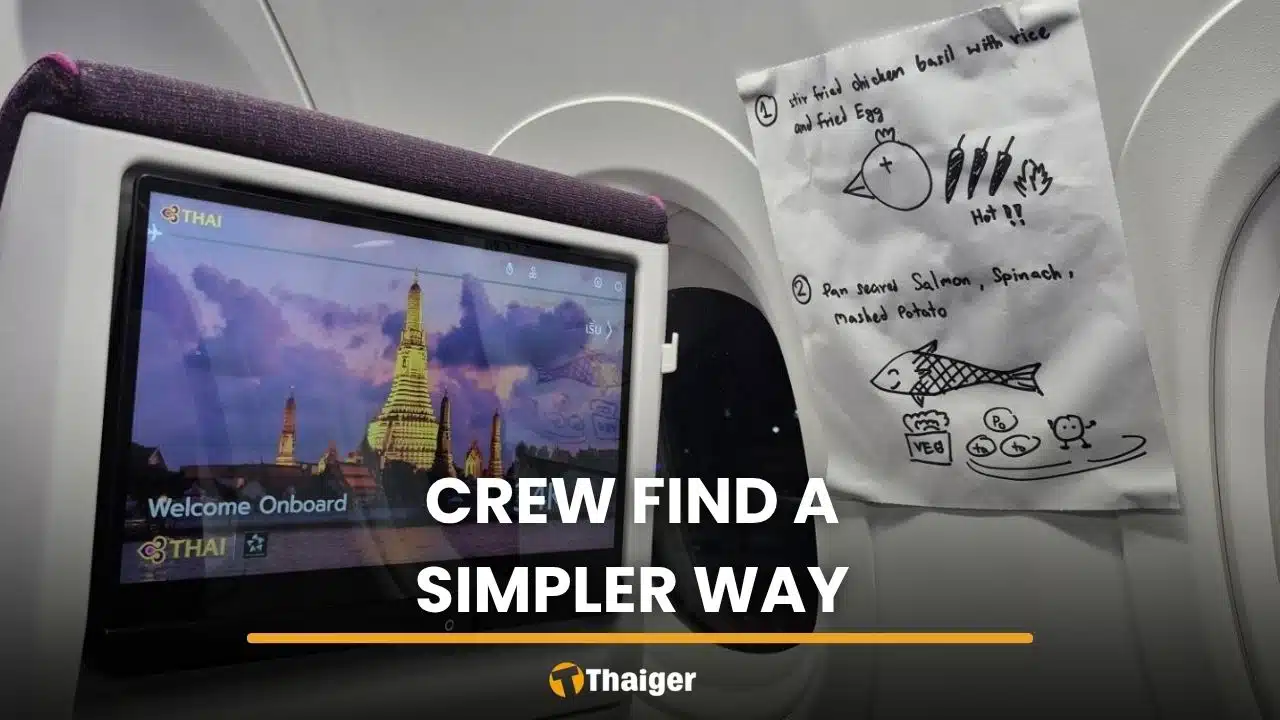
The report of a Thai Airways cabin crew drawing meal options for a deaf passenger on a flight to Bangkok offers a lens into service adaptability, but also points to the inconsistent application of accessibility standards across the Asia-Pacific region.
Jose Irish Pascual, the passenger, shared his experience on Facebook, stating it was the first time he had encountered such an approach while travelling. The crew’s action—illustrating choices and placing them by his seat—enabled communication without reliance on spoken language. This incident, reported by The Thaiger on September 18, 2026, occurred on a flight from Manila to Bangkok. While seemingly a simple solution, it suggests a persistent gap: such tailored communication is not yet a standard.
From an economic perspective, such instances illustrate the potential for service industries to expand their market reach. Addressing specific needs, even for a single passenger, can build loyalty and reputation. For a traveler, clear communication around basic services like meal selection directly impacts the quality of the journey. The absence of a standardized, region-wide approach means that the experience remains largely dependent on individual crew initiative rather than systematic corporate policy. This lack of predictability could impose an invisible cost on deaf travelers, who might choose providers based on past positive experiences or avoid certain routes altogether. This could, in turn, limit their economic participation as consumers.
However, attributing these one-off acts of service solely to a broad, conscious strategy for inclusion would be premature. There is no evidence from the fact sheet that Thai Airways has a formalized policy for this specific type of communication. The action, while commendable, appears to be an improvisation. The passenger's statement that it was the first time he had encountered such an approach suggests this level of accommodation is not common.
This incident occurs within the broader economic context of the aviation industry, which has faced significant challenges. For example, reports from Reuters and The Japan Times in July 2026 highlighted issues such as drug gangs recruiting Thai air crew as couriers. Such systemic vulnerabilities demonstrate the need for robust operational integrity alongside service improvements. While adapting for deaf passengers reflects positively on individual crew members, it does not inherently address the larger structural and financial pressures faced by airlines.
Ultimately, the sustainability of such passenger-centric innovations depends on their integration into routine operations and training. If these individual acts of care are not scaled, they remain isolated incidents. For the Asia-Pacific region, where diverse populations represent significant market potential, consistent accessibility could translate into tangible economic benefits for both service providers and consumers. The question remains whether airlines will invest in systematizing these ad hoc solutions, moving beyond individual resourcefulness to a more predictable and inclusive service model that benefits a broader segment of the flying public's monthly budget.
Sources
Newsletter
Pacific Daily
A curated briefing from Thailand, Asia-Pacific and the world.