Chiang Mai Waterfall Closures Signal Deeper Environmental Costs for Locals
While authorities issue warnings, local communities often bear the immediate consequences of heightened natural hazards in the region.
CHIANG MAI
On Tuesday, Doi Suthep-Pui National Park closed access to two waterfalls, Mok Fa and Huay Tueng Thao, in Chiang Mai. Provincial authorities, led by Governor Rattaphon Naradisorn, issued an urgent instruction to district officials, advising vigilance for sudden natural hazards arising from heavy accumulated rainfall. These closures, reported by the Bangkok Post, followed a period of intense rain, leaving waterfalls rain-swollen and murky.
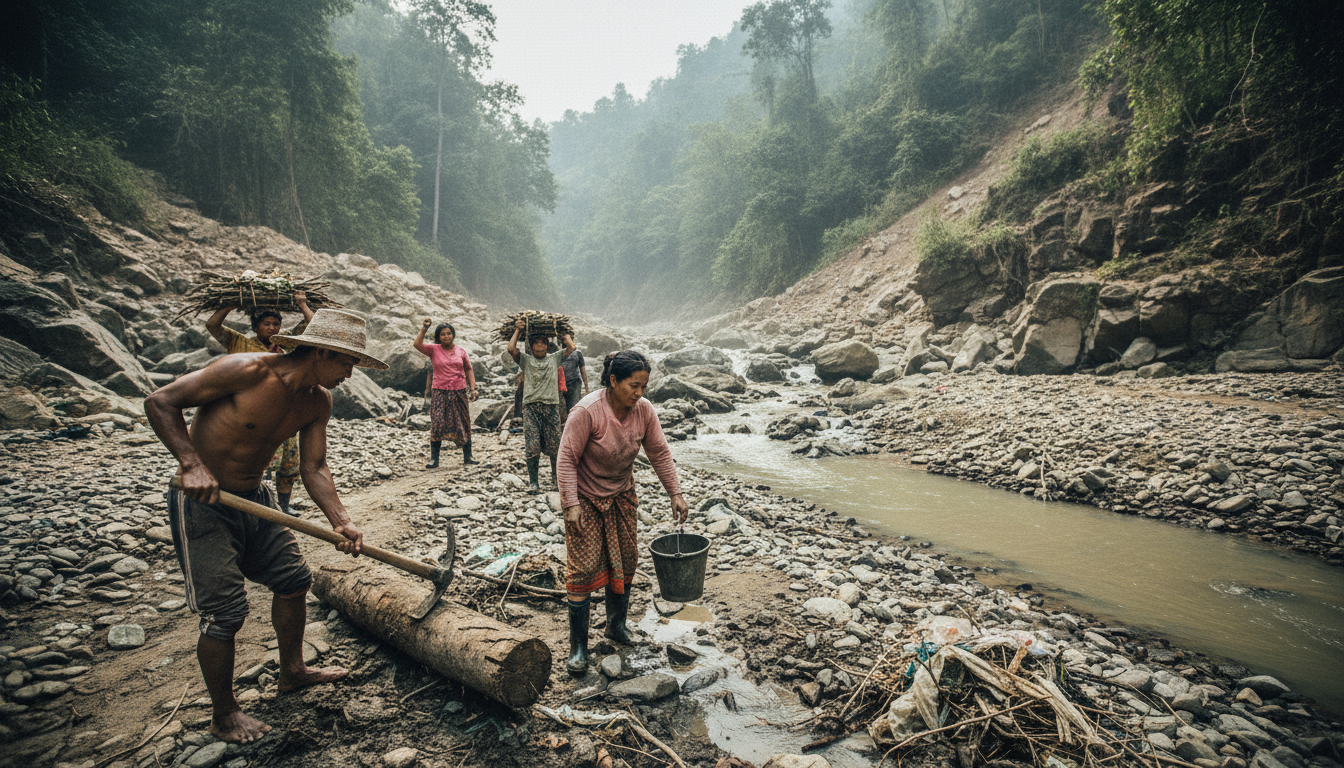
The immediate decision to close public access to natural sites like these waterfalls is a direct response to a clear and present danger. It protects tourists and ensures public safety, which is a primary concern for local officials. However, the closures also highlight a recurring pattern where environmental shifts, exacerbated by factors like deforestation, translate into tangible, daily costs for those living closest to affected areas.
Communities near these national parks, often relying on tourism directly or indirectly, face disruptions. When attractions like waterfalls become inaccessible, the flow of visitors diminishes, impacting local vendors, guides, and hospitality services. While the governor’s directive focuses on hazard preparedness, it implicitly acknowledges that current conditions—heavy, accumulated rainfall—are producing immediate, localized risks.
The region has grappled with significant environmental pressures. Pollution, linked to agricultural practices and deforestation, has been a persistent issue. The Japan Times reported earlier in 2026 on blood clots and burning eyes linked to pollution in Thailand. This ongoing struggle suggests a broader context for the current rainfall issues: weakened forest ecosystems may be less capable of mitigating the effects of heavy rain, increasing the risk of flash floods and other hazards.
Conversely, efforts are being made to address these environmental challenges. The Food and Agriculture Organization (FAO) hosted forestry leaders in Chiang Mai in November 2025 to advance a ‘Healthy Forests Feed the Future’ agenda. Separately, Indigenous firefighters, equipped with technology, have been protecting Thai forests, as documented by The Japan Times in March 2026. These initiatives suggest an awareness of the need for long-term solutions that extend beyond reactive closures.
The current closures are a precautionary measure, aiming to prevent immediate harm. Yet, they underscore the vulnerability of a region where economic activities and daily life are intrinsically linked to its natural environment. While authorities focus on safety and preparedness, the underlying question remains: who ultimately carries the cost of these necessary but disruptive decisions? For those whose livelihoods are tied to the steady flow of tourism or the health of local ecosystems, the consequences of such events are more profound than a temporary inconvenience. The tension between short-term hazard management and long-term ecological stability continues to shape the daily realities in Chiang Mai.
Sources
Newsletter
Pacific Daily
A curated briefing from Thailand, Asia-Pacific and the world.