Mexico's Past and Present: A Lesson in Tourist Resilience
While new attractions vie for attention, the enduring appeal of Mexico City’s historical depth highlights an overlooked pillar of its tourism economy.
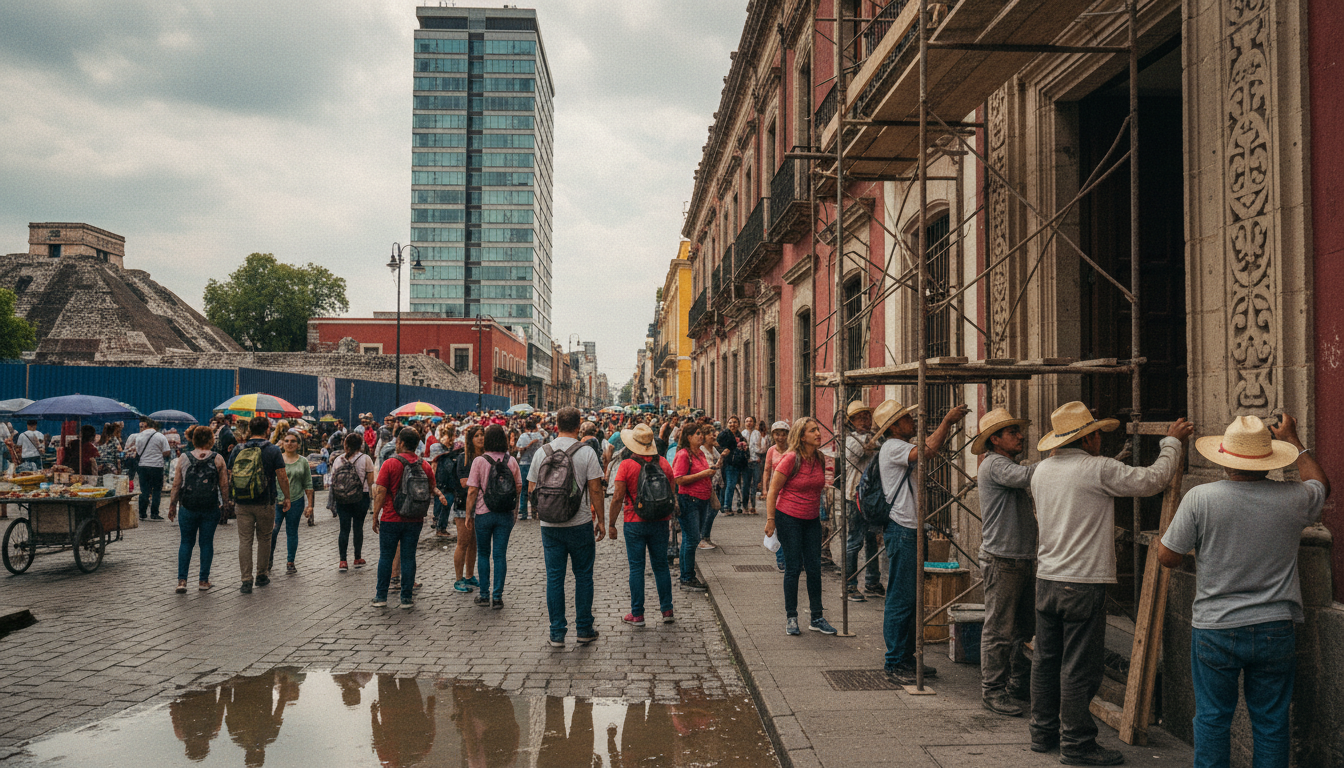
The Mexico News Daily’s recent focus on the 1968 social protests in Mexico City, specifically the Tlatelolco student massacre, suggests a continuing engagement with national memory. These historical events, documented through five books and five films, form a distinct cultural layer beneath the more commonly advertised tourist experiences. For hospitality operators, this enduring narrative of a turbulent past, rather than just beach resorts or culinary trends, indicates a different kind of visitor motivation.
The Tlatelolco event, occurring on October 2, 1968, remains a touchstone in Mexican history. Elena Poniatowska’s “La noche de Tlatelolco,” identified as a foundational work, dissects the period leading up to and following that night. Such works offer visitors a deeper engagement with the destination, moving beyond superficial encounters. This kind of historical depth serves as a distinct draw, particularly for travelers seeking cultural immersion and educational experiences.
Mexico’s Pacific coast, frequently affected by natural events such as tropical storms and earthquakes, presents a different set of challenges. Tropical Storm John caused flooding in 2024, and a M7.0 earthquake struck off Acapulco’s coast in 2021. The Guardian reported another earthquake rocking the Pacific coast in 2012. These recurrent disruptions demand resilient infrastructure and adaptable business models from hospitality providers in coastal regions. Investments in rapid recovery and safety protocols become critical for sustained visitor confidence.
Yet, Mexico City's urban resilience, particularly concerning its historical sites, offers a contrast. Unlike coastal areas focused on recreation, the capital’s appeal is often rooted in its cultural and historical significance. The ongoing discussion of 1968 suggests that political memory itself can become an attraction, drawing a segment of tourists interested in the complexities of the destination. This is not about celebrating trauma, but acknowledging its place in the national identity, which can translate into demand for specific cultural tours, museums, and historical sites.
For the Asia-Pacific hospitality sector, Mexico’s dual appeal offers insight. While destinations across Asia often highlight rapid development and pristine natural beauty, there is also an opportunity to cultivate historical narratives. Countries like Thailand, with rich and sometimes challenging histories, could learn from Mexico’s approach to preserving and presenting its past. This might involve supporting local historians, integrating historical interpretation into tourism products, and fostering arts that reflect national experiences, rather than solely focusing on new resorts or luxury offerings.
However, monetizing historical trauma carries ethical considerations. The focus remains on educational and cultural appreciation, not exploitation. Moreover, the demand for such profound historical engagement might not align with the mass market appeal typically sought by large-scale hospitality developments. The visitor who seeks out the narrative of Tlatelolco is distinct from the one planning 36 hours in Mexico City primarily for leisure, as highlighted by a 2014 New York Times travel piece. Balancing these different segments requires strategic market positioning and product diversification.
The essential question for developers remains: what occupancy rates and pricing structures can such niche cultural tourism sustain? While new developments in Mexico might prioritize modern amenities or natural landscapes, the sustained engagement with its history provides a stable, if smaller, revenue stream. The challenge is in determining how best to integrate this deeper engagement with national identity into a viable economic model, without compromising either historical integrity or commercial sustainability.
Sources
Newsletter
Pacific Daily
A curated briefing from Thailand, Asia-Pacific and the world.