Beneath the Surface: Mexico City's Deepest Echoes in the Asia-Pacific
The urban fabric of cities like Mexico City, built upon historical vulnerabilities, offers a stark mirror to similar seismic risks across the Pacific Rim, reshaping how residents perceive their own ground.
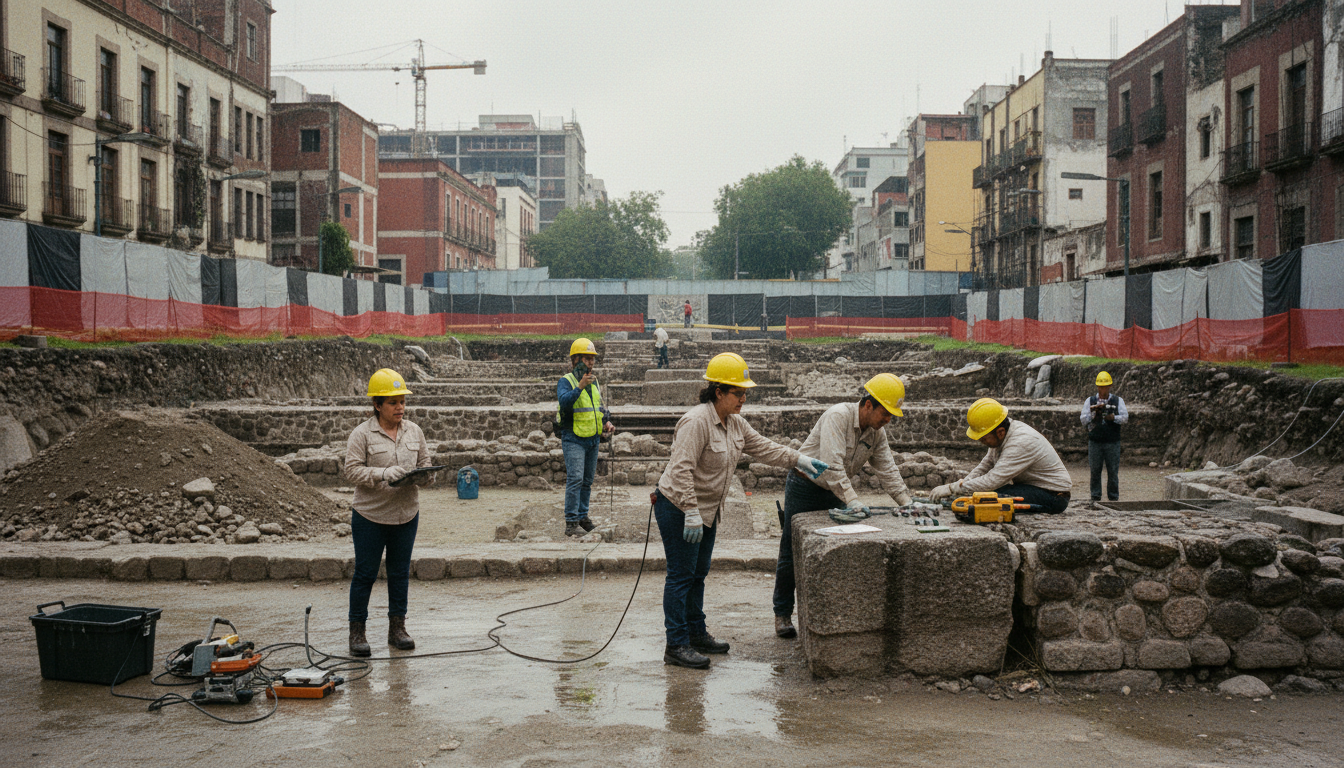
The earth beneath Mexico City carries a persistent tremor, not just from its geology but from a collective memory. September, in particular, resonates with a profound unease for its residents. While scientists affirm that ‘Earthquake Month’ is a psychological construct rather than a geological reality, the city has faced devastating earthquakes on September 19 in different decades, leading to a palpable anxiety as the date approaches (Mexico News Daily, 2026-09-18). This isn't merely about the tremors themselves, but how a city's foundation – both physical and cultural – is perpetually influenced by its environment.
Mexico City's vulnerability is rooted in its ancient lakebed geology; certain areas face greater risk when seismic events occur (Mexico News Daily, 2026-09-18). This inherent instability, combined with recurrent seismic activity, generates a unique cultural response. Residents cannot ‘shake the thought’ that a major quake might hit on a specific date (Mexico News Daily, 2026-09-18). This isn't a prediction, but an observed behavioral pattern, a shadow cast by history. The city's history of rebuilding after severe quakes (Forbes, 2017-09-28) demonstrates its resilience, yet the psychological imprint of such events continues to shape daily life, influencing urban planning, architecture, and even the collective consciousness.
This phenomenon echoes across the Pacific Rim, where cities like those in Japan exist under similar geological pressures. Japan, for instance, maintains a ‘high alert’ for major seismic events after lifting tsunami warnings (BBC, 2026-04-21). While the specifics differ—Japan's advanced seismic warning systems and building codes are widely acknowledged—the underlying human experience of living on geologically active ground remains constant. The cultural adaptation to, and psychological impact of, such persistent risk transforms the lived experience of millions. In Mexico City, this has manifested in a peculiar temporal anxiety; in Japan, it might be a heightened sense of preparedness or a quiet acceptance of nature's power. The common thread is how a seemingly neutral geological fact becomes deeply interwoven with a city's identity and its people's habits.
The critical aspect here is how residents integrate this constant threat into their daily rhythms. The casual mention of ‘dark humor’ regarding ‘Earthquake Month’ (Mexico News Daily, 2026-09-18) is a cultural signal. It denotes a shared understanding, a way of coping with an undeniable reality. It is a subtle shift in perspective, where the ground beneath is not just soil and rock, but a living entity with a memory of its own, capable of disrupting the most fundamental human patterns. This is not about impending disaster, but about the enduring ways a city's past literally informs its present and frames its future through the lens of its inhabitants.
Sources
Newsletter
Pacific Daily
A curated briefing from Thailand, Asia-Pacific and the world.