Lopburi Lottery Win Highlights Economic Stasis, Not Upward Mobility
A minimart worker's 12 million baht lottery win, and his decision to continue employment, points to structural economic realities in Thailand that remain unchanged.
SINGAPORE
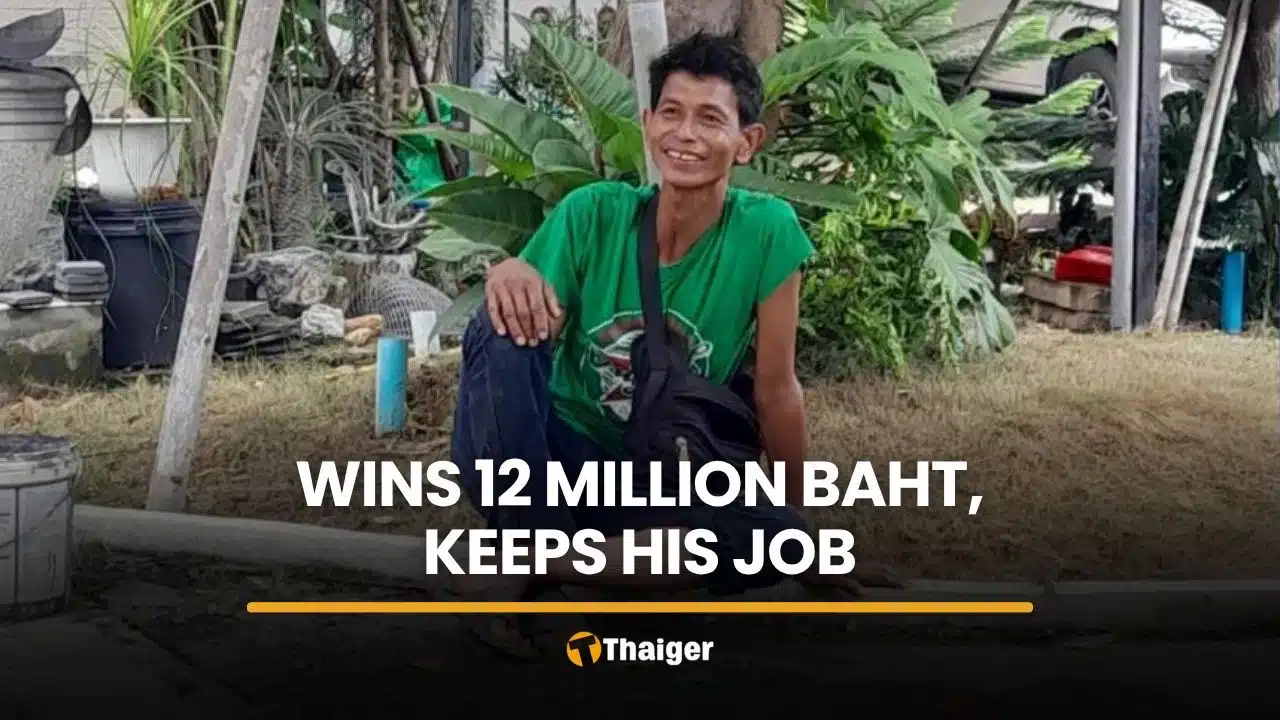
A minimart worker in Lopburi, Sompong Phusakul, recently secured a 12 million baht lottery prize. The reported detail of his immediate return to work, cutting grass at the minimart, is not an anomaly of personal character but an implication of underlying economic structures. While Mr. Sompong's stated intention is to use some winnings for a new home, his continued employment, despite a sum that represents a significant capital injection, suggests a wider constraint on financial security in segments of the Thai economy.
The fact of the win, reported on September 18, 2026, places Mr. Sompong among a small number of individuals to experience such a sudden wealth transfer. However, the subsequent decision to maintain his minimart employment, rather than to disengage from wage labor, speaks to a cautious assessment of long-term economic stability. The sum, while substantial, may not be perceived as sufficient to fundamentally alter a multi-decade financial trajectory for an individual without existing capital or a clear path to generating sustained passive income. This prudence reflects a common understanding among many in Thailand that even significant windfalls require careful stewardship to avoid eventual dissipation.
Indeed, some might argue that Mr. Sompong's choice exemplifies a strong work ethic or a personal attachment to his job. This interpretation, while plausible at an individual level, risks overlooking the structural forces that shape such decisions. In a landscape where social safety nets may not be universally perceived as robust, and where inflationary pressures can erode purchasing power, a 12 million baht prize, though considerable, might realistically be viewed as capital to be preserved and augmented, rather than a definitive exit from the labor market. The building of a new home, for instance, represents a conversion of liquid assets into a fixed asset, a common strategy for wealth preservation, but one that does not inherently generate new income streams.
Lopburi itself, while not directly tied to Mr. Sompong’s economic situation, has experienced its own structural shifts. The city, known for its macaque population, saw increased challenges related to its monkey populations, with reports from 2020 and 2022 detailing issues from tourist reliance and population changes to public safety concerns, culminating in plans for enclosures by 2024. These dynamics, though distinct, underscore the variable nature of local economies and the reliance on foundational employment for many residents.
The critical implication here is that even a lottery win of 12 million baht, equivalent to many years of minimart wages, does not necessarily translate into a perception of complete financial independence. For many, it remains a buffer, a means to upgrade living conditions or secure assets, but not a structural reordering of their economic participation. The decision to clock in as usual highlights a prevalent caution rooted in an awareness that even significant capital injections may not fundamentally alter one's position within a wider economic framework, where sustained income remains paramount. The unresolved constraint lies in the absence of broader structural pathways for economic mobility that would allow such a windfall to truly redefine an individual's financial standing without continued reliance on wage labor.
Sources
Newsletter
Pacific Daily
A curated briefing from Thailand, Asia-Pacific and the world.