Electoral Consensus Across Asian Football Conceals Deepening Institutional Friction
Takeshi Okada's departure from Japan's football hierarchy exposes an unresolved rift between regional governing unity and domestic institutional accountability.
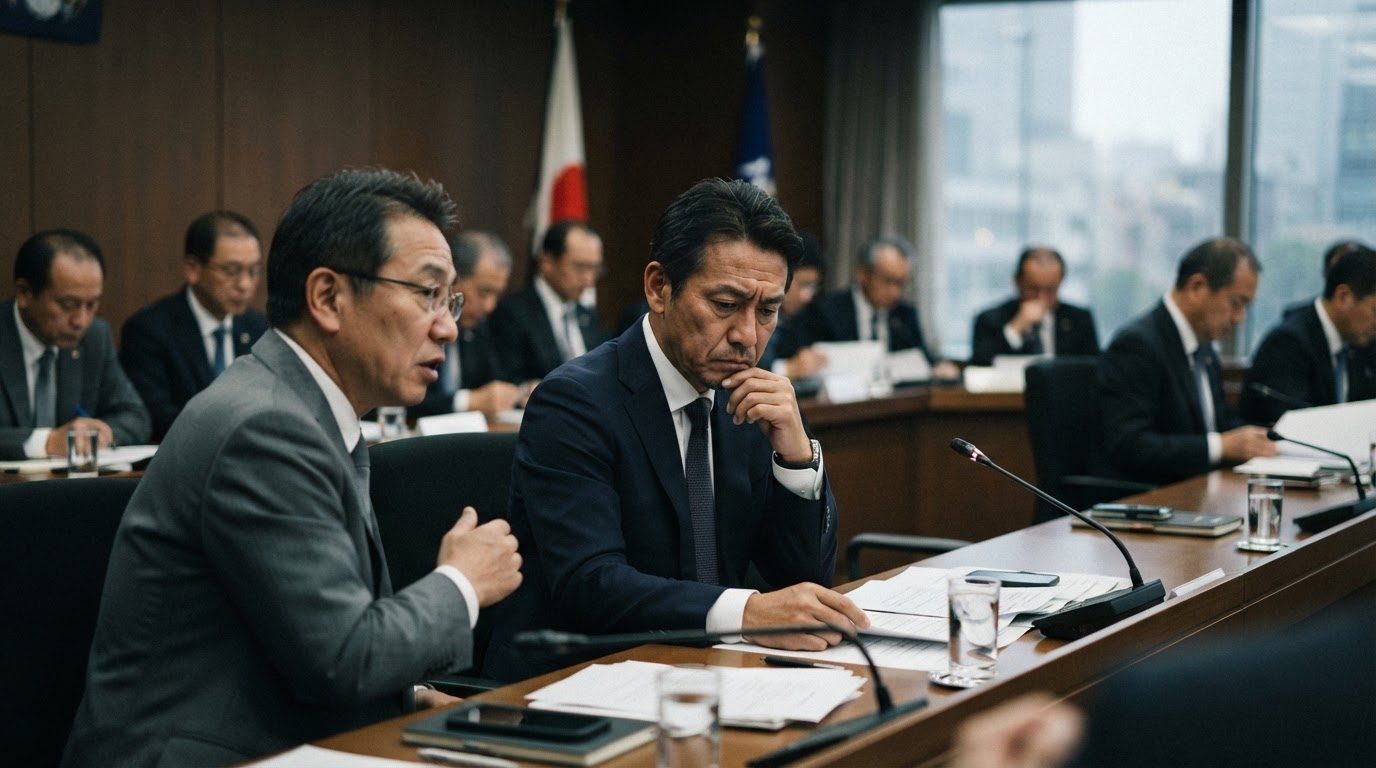
SINGAPORE
Continental sports administration rarely displays overt discord when international mandates are negotiated. Institutional hierarchies across Asia typically present unanimous solidarity behind governing bodies, insulating leadership balloting from regional debate. That pattern ruptured when Takeshi Okada, vice president of Japan's football association and former national team manager during the 1998 and 2010 World Cup campaigns, resigned on a Wednesday in Tokyo. His stated justification pointed directly at an administrative fault line: the series of responses to controversies surrounding the World Cup failed to align with his personal values.
His resignation materialized exactly one week after the Asian Football Confederation gathered in Tokyo to declare unconditional solidarity behind FIFA president Gianni Infantino. Delivering that declaration, AFC president Sheikh Salman bin Ebrahim al-Khalifa affirmed unanimous regional support for Infantino's re-election bid. The contrast between executive pageantry and domestic repudiation could hardly be sharper.
The Mechanics of Enforced Alignment
Bureaucratic unity in regional football functions primarily as a bargaining instrument. Member federations aggregate their voting power behind global leadership in exchange for continental leverage, tournament allocations, and institutional access. The Tokyo endorsement was designed to project absolute Asian cohesion behind Zurich's prevailing administration.
Okada's public departure demonstrates that such regional unanimity remains an administrative assertion rather than an authentic consensus. In national federations with deep professional structures, technical leaders answer to domestic constituencies that do not view international compromises through the same transactional lens. When tournament operations generate sustained ethical and organisational controversy, the reputational burden falls on national officials rather than the continental apparatus that brokered the arrangement.
Institutional stress across Asian football is neither isolated nor theoretical. Across the region, technical structures have shown acute vulnerability to external political pressure and executive backlash following tournament disappointments. South Korea experienced its own structural turmoil when presidential criticism over a World Cup exit prompted an administrative crisis and managerial resignation. Across international competitions, nearly 27 percent of managers departed their positions following the 2026 tournament cycle, illustrating how executive vulnerability routinely shifts downward while governing elites protect their mandates.
Sovereignty Against the Regional Bloc
National associations confront an escalating contradiction. Global sports federations demand disciplined bloc voting from continental confederations, treating regional federations as uniform voting units. Yet domestic associations must maintain institutional credibility before domestic audiences that increasingly scrutinise global governance failures.
Federations in East Asia possess independent commercial markets, established youth systems, and significant public investment. Their operational requirements diverge fundamentally from centralized directives issued by confederation leaders. Aligning unreservedly with FIFA executive mandates without extracting systemic reform compromises the domestic credibility of local leaders.
The contrast between executive pageantry and domestic repudiation could hardly be sharper.
Defenders of the confederation's strategy maintain that unified voting blocs maximize Asian influence within international governing councils. Fragmented representation, by contrast, risks marginalizing Asian federations within wider global policy negotiations.
That calculation assumes internal discipline can survive indefinitely without domestic accommodation. Okada's resignation signals that veteran technical leaders are no longer willing to underwrite administrative compromises that alienate their domestic sporting communities. Continental solidarity achieved by silencing institutional dissent creates fragile partnerships rather than durable governance. Until regional confederations establish mechanisms that allow individual member associations to register dissent without administrative penalties, the division between centralized football diplomacy and domestic sporting legitimacy will continue to widen.
Sources
Newsletter
Pacific Daily
A curated briefing from Thailand, Asia-Pacific and the world.