The Asian Football Confederation Breaks Ranks to Rescue Zurich
By backing Gianni Infantino after months of revolt, Sheikh Salman trades continental solidarity for institutional leverage inside FIFA.
SINGAPORE
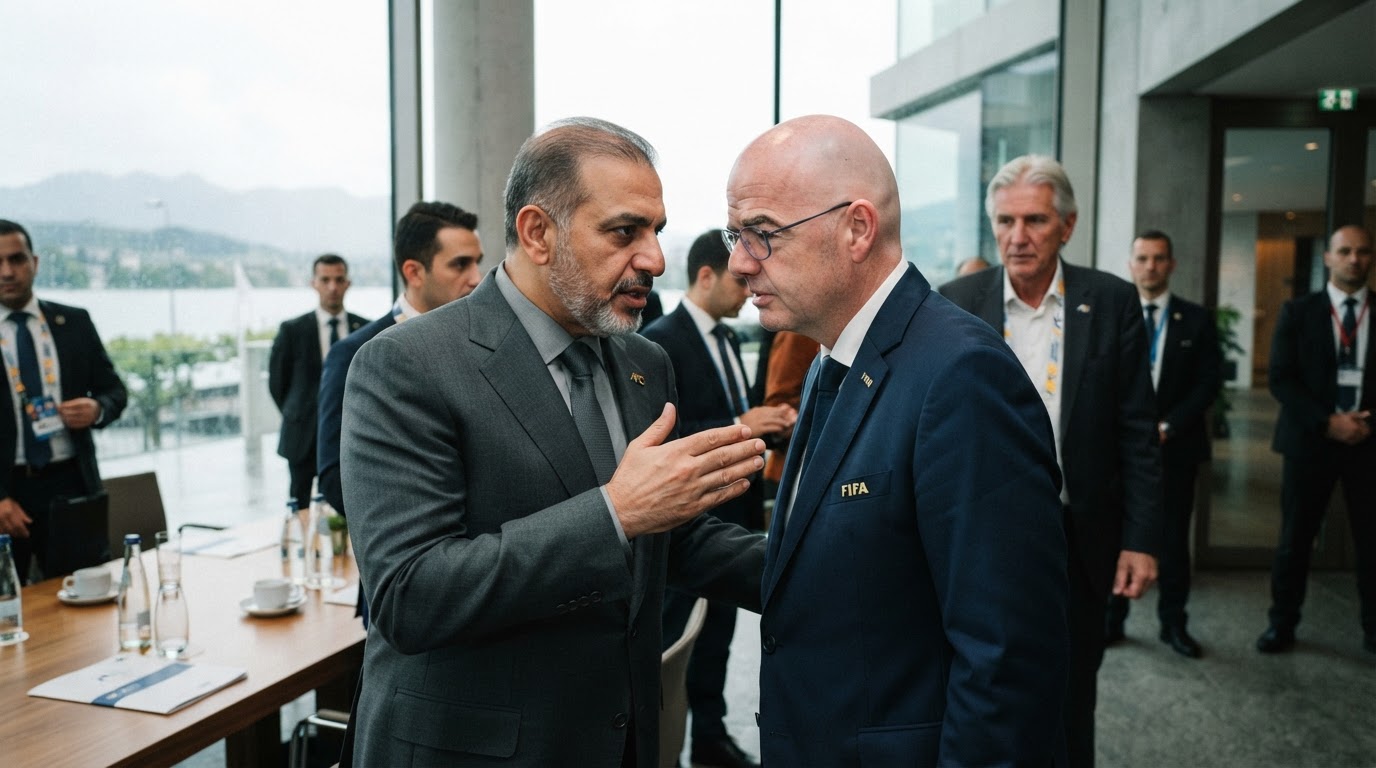
Institutional rebellions in global sports administration rarely survive the arithmetic of an election cycle. When Asian Football Confederation head Sheikh Salman bin Ibrahim Al-Khalifa confirmed in Tokyo that his governing body would back Gianni Infantino's reelection bid, the regional bloc abandoned a fragile united front that had threatened to reshape world football governance.
Only months earlier, the balance of power pointed in the opposite direction. In August, the AFC stood alongside UEFA and CONCACAF in open resistance to Infantino, going so far as to push for his departure while weighing rival international competitions. Sheikh Salman had previously joined with the presidents of UEFA and CONCACAF to oppose Infantino's failed plan to sell off the commercial rights to FIFA tournaments, including the World Cup, to private investors. The collapse of that commercial blueprint exposed vulnerability at the top of FIFA, encouraging federations across continents to demand a deeper overhaul. By September, the French Football Federation had formally withdrawn its backing for the incumbent president, while member federations openly challenged his reform pledges.
The Breakdown of Continental Collusion
The pivot announced on Friday fundamentally fractures that coalition. Continental voting blocs derive their power from collective bargaining, yet individual confederation chiefs face different structural calculations once formal campaigns commence. For UEFA and its European constituents, resistance against commercial restructuring was an effort to protect existing domestic leagues and continental tournament revenue. Inside the AFC, an extended confrontation carried diminishing returns.
The regional bloc abandoned a fragile united front that had threatened to reshape world football governance.
Aligning with European demands offered Asia rhetorical solidarity against commercial overreach, but little administrative control. By detaching from UEFA and CONCACAF, Sheikh Salman secures an indispensable role as Infantino's primary political guarantor. A fractured opposition cannot easily mount a challenge when one of the sport's largest confederations commits its institutional machinery to preserving the status quo. Infantino has repeatedly demonstrated that survival depends on isolating European dissent through commitments delivered across Asia, Africa, and the Americas.
Leverage at the Cost of Overhaul
Critics of this realignment can argue with justification that Sheikh Salman has squandered an unusual opportunity to enforce administrative reform. The joint opposition seen in August represented an unprecedented alignment between UEFA, CONCACAF, and the AFC. Throwing institutional weight behind Infantino just weeks after European heavyweights withdrew support appears contradictory, leaving governance reform stalled at the precise moment international pressure peaked.
That critique overlooks the transactional logic governing confederation leadership. Sheikh Salman chose to extract bilateral advantage from Zurich rather than remain a junior partner in a European-led dispute. By moving first to restore Infantino's viability, the AFC ensures its leadership retains direct access to tournament allocations, executive appointments, and commercial patronage. The failed attempt to sell tournament commercial rights proved that member associations could check presidential ambition on specific financial ventures. Having repelled that privatization push, the AFC leadership determined that securing influence inside the existing hierarchy yielded higher returns than prolonging structural confrontation.
The consequence for the wider international football economy is an entrenched division between European administration and Zurich leadership. With Asia anchored firmly behind the incumbent, European federations will find their leverage dramatically curtailed. The outcome now depends on whether UEFA and CONCACAF attempt to sustain their isolated campaign without Asian support, or quietly acquiesce to a presidential term built on confederation divide-and-rule politics.
Sources
Newsletter
Pacific Daily
A curated briefing from Thailand, Asia-Pacific and the world.