The Gulf Deterrence Gamble Reaches Asian Waters
Diplomatic signals out of Washington point toward military escalation in Tehran, shifting maritime defense realities across the Pacific.
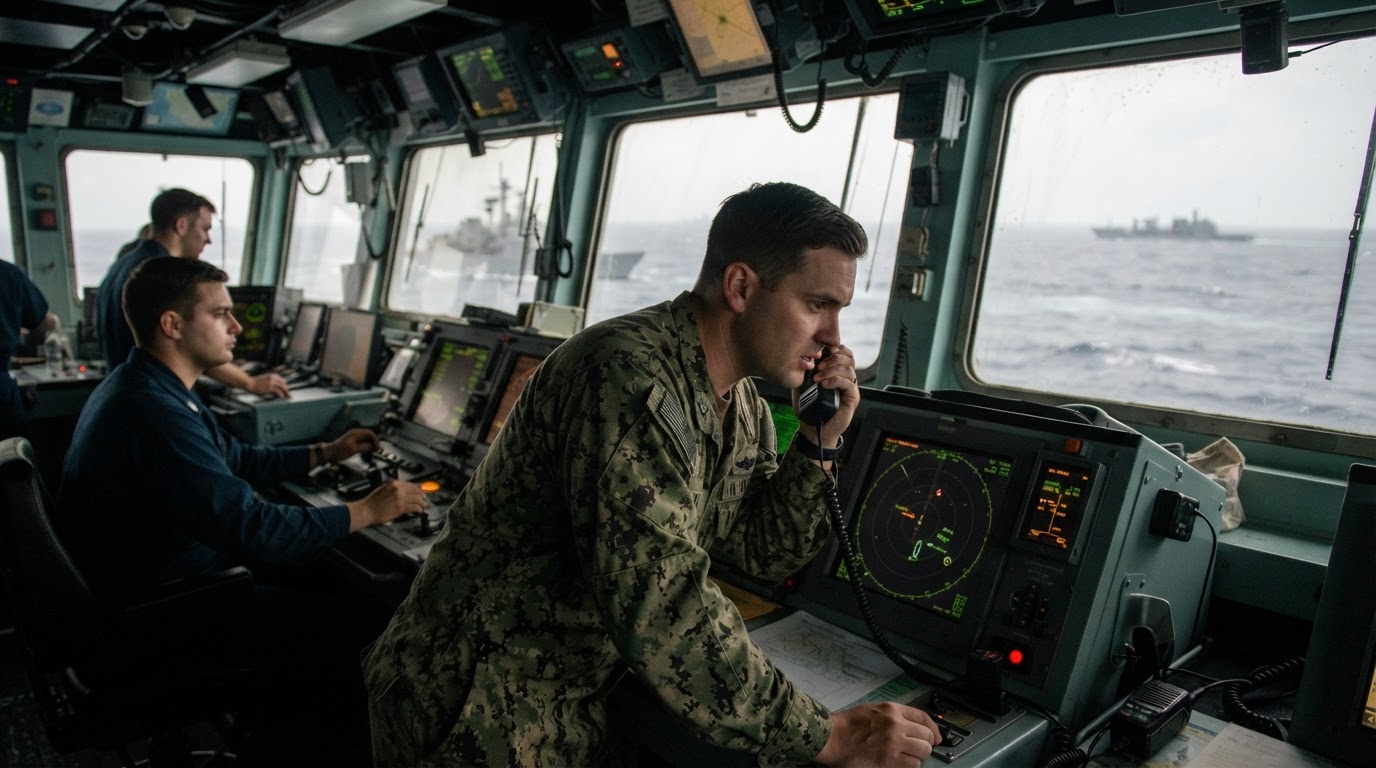
SINGAPORE
Diplomatic brinkmanship usually relies on calculated ambiguity, yet the statements emerging from Washington regarding Tehran have abandoned standard tactical restraint. When Tom Barrack, the United States ambassador to Turkey and regional coordinator on Syria, told podcast host Mario Nawfal on Friday, Oct 23, that an American strike against Iran could occur within days, the assertion bypassed customary diplomatic channels. Barrack acknowledged the paradox directly during his tour through the Gulf, observing that President Donald Trump remains open to negotiations despite prolonged talks. Coercive diplomacy and military mobilization now overlap so completely that the distinction between signaling resolve and initiating hostilities has ceased to exist.
Official circles in Washington maintain that public warnings preserve deterrence by demonstrating immediate willingness to use force. According to this reasoning, mounting threats from Washington and Israel compel Tehran back toward substantive compromises over disputed regional postures. Yet treating combat readiness as an everyday negotiating lever reshapes naval commitments far beyond the immediate theater. Earlier repositioning had already drawn the final American aircraft carrier away from Asia as Trump shifted focus toward Iran and the Western Hemisphere. That structural transfer demonstrated how operational surges in the Gulf extract material security guarantees directly from maritime Asia, leaving allied coastlines to absorb the strategic shortfall.
The Maritime Cost of Distant Entanglements
Every military redeployment away from Asia imposes an unstated deficit on Pacific sealanes. Strategic planners in Washington frequently argue that concentrated deterrence in one theater does not degrade readiness elsewhere. That argument assumes logistical capacity is infinite and fleet availability is elastic. When carrier strike groups shift toward Gulf choke points, surveillance coverage and maritime balance across East Asian straits diminish immediately. Asian economies depend overwhelmingly on secure energy transit through Hormuz, meaning regional capitals bear double exposure. Pacific states face the prospect of severe crude disruption while simultaneously watching allied naval assets thin across their own waters.
"He's open and available and accessible to a deal, and we've been at the table for months and months and months"
Bilateral channels have repeatedly failed to convert operational friction into stable accords. Neighboring states recognize the fragility of the current posture and have urged restraint. Regional intermediaries such as Turkey have warned that renewed attacks on Iran will expand conflict rather than contain it, insisting that diplomatic negotiation remains the only viable path. Previous discussions regarding phased pacts to reopen Hormuz and end blockades have stalled, exposing the limits of transactional bargaining conducted under threat of imminent bombardment. The diplomatic track continues to be treated as an auxiliary instrument rather than the primary mechanism for international order.
Structural Imbalances in Pacific Security
The fundamental contradiction rests in Washington attempting to pivot strategic focus across hemispheres without acknowledging material trade-offs. Projecting continuous naval power around Tehran requires stripping surface fleets from Pacific rotations, creating visible vacuums in deterrence. For Asian defense ministries, this reallocation proves that bilateral security assurances remain vulnerable to sudden crises elsewhere. When operational priorities can be redirected overnight by public remarks on an audio broadcast, long-term security compacts lose institutional predictability and strategic weight.
Pacific capitals must evaluate whether their security assumptions can survive another protracted foreign escalation. American posture now operates under two irreconcilable commitments: guaranteeing maritime order across Asian waters while concentrating decisive force against Iran. Decisions taken along distant coastlines inevitably transfer acute economic and defensive risks to partners who have no seat at the table. Until Washington aligns its military bandwidth with its geographic declarations, Asian sealanes will continue paying for crises decided half a world away.
Sources
Newsletter
Pacific Daily
A curated briefing from Thailand, Asia-Pacific and the world.