Amazon Sells Out Its Cloud Through 2027 as Capital Spending Reaches Fiscal Breaking Point
Andy Jassy confirms severe server constraints through 2028, turning capital expenditure into an outright test of corporate balance sheets.
SINGAPORE
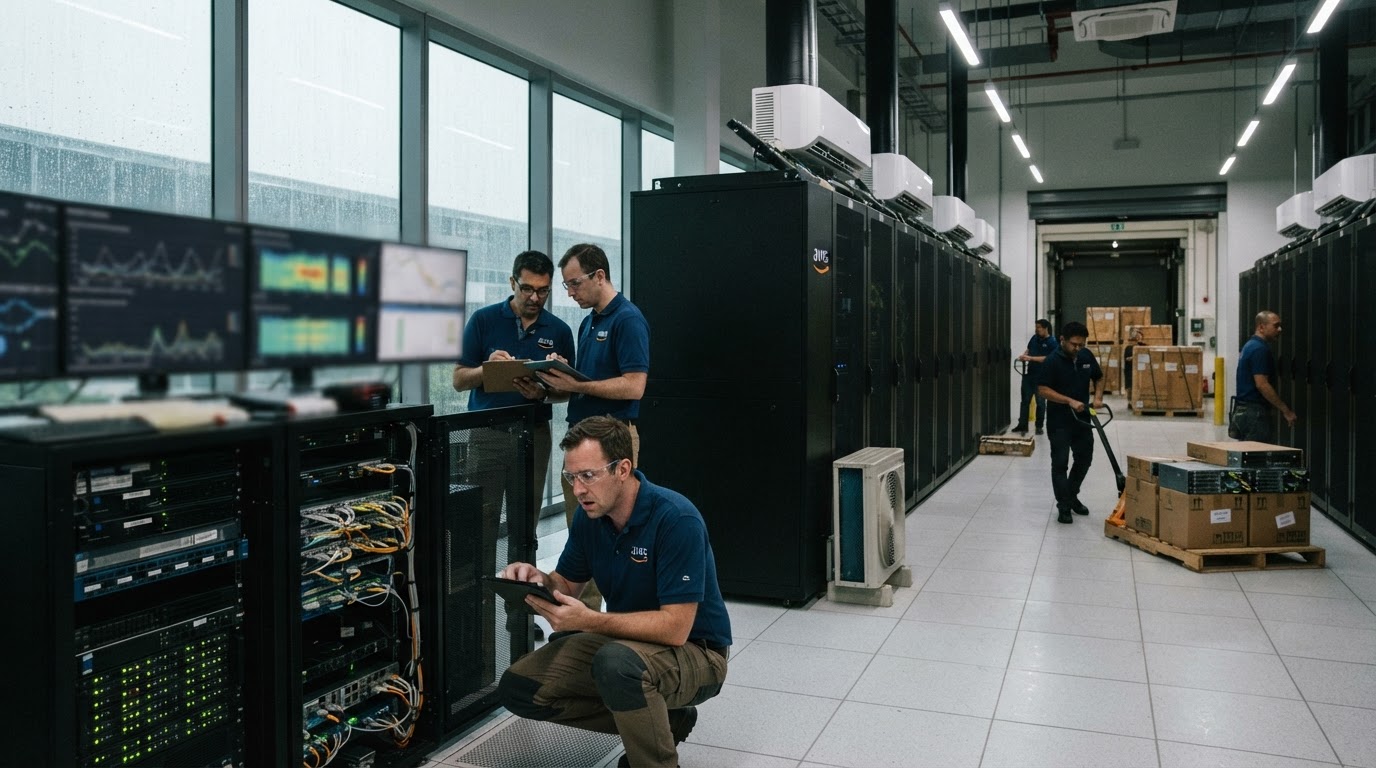
Capital expenditure at scale eventually collides with physical limits. Amazon chief executive Andy Jassy confirmed that reality on Friday, disclosing that Amazon Web Services has largely sold out its cloud computing capacity through 2027. Significant commitments now stretch into 2028. Speaking on a video podcast hosted by Andreessen Horowitz co-founder Ben Horowitz and general partner Erik Torenberg, Jassy acknowledged that the company cannot keep pace with server demand from artificial intelligence laboratories and enterprise clients.
That admission recalibrates how markets must value the current technology expansion. When cloud capacity sells out for three consecutive calendar years, compute ceases to be an elastic utility. It transforms into an allocated industrial commodity. Earlier this year, Amazon disclosed plans to allocate about $220 billion in capital expenditure for 2026 alone. Committing $220 billion to physical infrastructure within twelve months represents an extraordinary balance sheet deployment. Yet even that volume of procurement fails to satisfy forward requirements.
The Price of Capacity Constraints
Corporate balance sheets across the technology sector face an uncomfortable mechanical bind. Cloud operators must fund data centres, high-performance silicon and transmission grids years before related cash flows materialize. Jassy noted that enterprise appetites remain insatiable, but appetite does not guarantee uninterrupted solvency across the broader ecosystem. If physical hardware cannot be provisioned until 2028, smaller software developers face extended operational delays. Hyperscale operators absorb upfront depreciation while end-users wait in line for processing time.
Financial markets greeted earlier phases of this cycle with steady enthusiasm. Strong cloud revenues lifted Amazon shares in April and July of 2026 as operating margins expanded. Investors treated rising capital targets as proof of durable secular growth. The structural equation, however, is shifting from revenue upside to balance sheet drag. When capacity is entirely pre-booked, near-term revenue growth encounters an unyielding ceiling defined by construction and delivery timelines.
Regional allocations highlight where management sees strategic necessity despite these bottlenecks. Amazon lifted its dedicated artificial intelligence and cloud investment commitment in India to $48 billion. Pouring $48 billion into Indian digital infrastructure demonstrates where geographic priorities lie. Emerging markets across the Asia-Pacific region require localized server hubs to process sovereign data and sustain enterprise automation. Yet committing dozens of billions across multiple jurisdictions simultaneously stretches even formidable cash reserves.
When capacity is entirely pre-booked, near-term revenue growth encounters an unyielding ceiling defined by construction timelines.
Limits of the Balance Sheet Engine
Optimists argue that sold-out order books provide absolute revenue visibility. Having contracted commitments through 2027 insulates AWS from speculative demand collapses, guaranteeing high asset utilization once data centres activate. If corporate buyers sign multi-year agreements in advance, the capital expenditure cycle theoretically de-risks itself.
That reading discounts the cost side of the ledger. Long lead times expose capital allocation to severe execution hazards. Constructing and outfitting facilities amidst supply chain congestion drives unit costs higher. Meanwhile, macroeconomic conditions create broader funding headwinds. Surging capital demands from technology firms place upward pressure on long-term borrowing costs, raising hurdles for capital-intensive ventures across all sectors.
Amazon operates with substantial cash flow, yet spending $220 billion in a single year leaves narrow margins for error. A cloud provider cannot convert paper orders into recorded operating profits until chips draw electrical current. With delivery windows locked until 2028, the company has transformed itself from a flexible software platform into a heavy industrial utility. Future returns now hinge strictly on physical construction timelines, grid interconnections, and whether enterprise clients retain the balance sheet stamina to honour advance contracts two years away.
Sources
Newsletter
Pacific Daily
A curated briefing from Thailand, Asia-Pacific and the world.