Capital Structures Bend to the Machine
Meta creates non-voting equity to shield executive control while financing industrial compute
SINGAPORE
Meta created a new class of non-voting shares on Wednesday to absorb the soaring capital costs of its computing expansion without ceding corporate governance. When trading closed, shares of the Facebook and Instagram parent rose more than 4 per cent in extended trading, supported by fourth-quarter revenue projections running ahead of Wall Street estimates. Strong reported adoption for Muse, the consumer AI agent app, provided the public rationale for the balance sheet reorganisation. Behind that operational signal lies a concrete financial reality: deploying autonomous agent software has converted an advertising network into an asset-heavy industrial enterprise.
Capital allocation at this scale alters basic corporate balance sheet priorities. Expanding server clusters, purchasing advanced processors, and building physical data halls requires liquidity that software margins cannot generate alone. Earlier financial filings demonstrated how severely accelerated infrastructure commitments can erode operating cash flow, forcing leadership to devise alternative financing mechanics. By establishing non-voting shares, CEO Mark Zuckerberg secured a dedicated financing vehicle that gathers capital for physical facilities while insulating executive discretion from institutional voting pressure.
Financing Physical Compute
Public markets accepted the transaction because quarterly advertising revenue continues to buffer heavy operational expenses. Yet that equity market enthusiasm rests on an awkward structural contradiction. Non-voting stock deliberately severs financial exposure from managerial control, asking outside investors to finance silicon depreciation while forfeiting governance oversight. When capital intensity increases during technological transitions, conventional share structures allow institutional holders to demand capital discipline or curtailed expansion. Meta's revised capital architecture bypasses that market discipline entirely.
Software distribution creates user volume, but physical compute dictates corporate solvency.
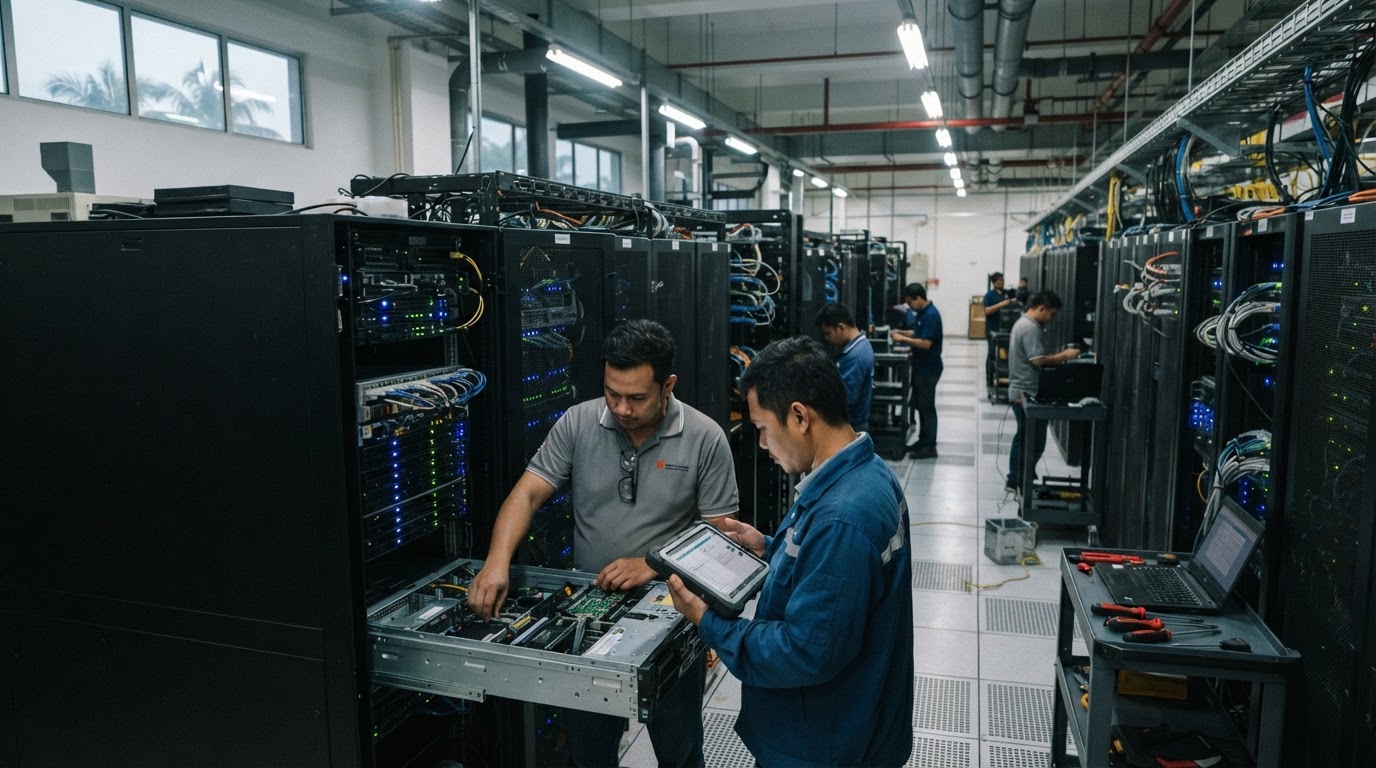
Regional infrastructure commitments illustrate how deeply this fiscal pivot reaches across the Asia-Pacific territory. American tech giants have directed billions into hyperscale server facilities and network nodes across key hubs such as India, seeking to secure regional computing capacity before operational bottlenecks constrain platform execution. Physical assets depreciate on unrelenting cycles regardless of how swiftly consumer user metrics accumulate. Unlike pure code distribution, managing distributed server nodes requires continuous electrical capacity, massive cooling plant investments, and non-negotiable hardware replacement budgets.
Platform Friction and Transaction Reality
Commercial resistance beyond the company's proprietary ecosystem exposes the fragility of current agent valuations. Airbnb has indicated it is unlikely to permit external software agents such as Muse to execute consumer bookings directly across its travel platform. That resistance strikes directly at the economic premise underwriting the current spending surge. Competing aggressively against dedicated machine learning developers such as OpenAI and Anthropic requires continuous computational spending, yet closed third-party networks can block automated software from capturing lucrative transactional fees. If counterparties refuse access, consumer agents generate processing costs without generating proportionate transaction revenues.
Structural hardware depreciation leaves little margin for prolonged commercial experimentation. Issuing non-voting equity resolves the immediate liquidity bottleneck for server procurement, but it merely postpones the accountability demanded by public balance sheets. Meta has insulated executive control from shareholder vetoes while doubling down on physical facilities. The unresolved constraint remains whether consumer software agents can force open closed digital economies and generate cash before the mounting carrying cost of industrial compute overwhelms market forbearance.
Sources
Newsletter
Pacific Daily
A curated briefing from Thailand, Asia-Pacific and the world.