Arterial Friction and the Fragile Mechanics of Transit
An aggressive highway maneuver in the Fraser Valley exposes the vulnerability of agricultural freight lanes under physical repair.
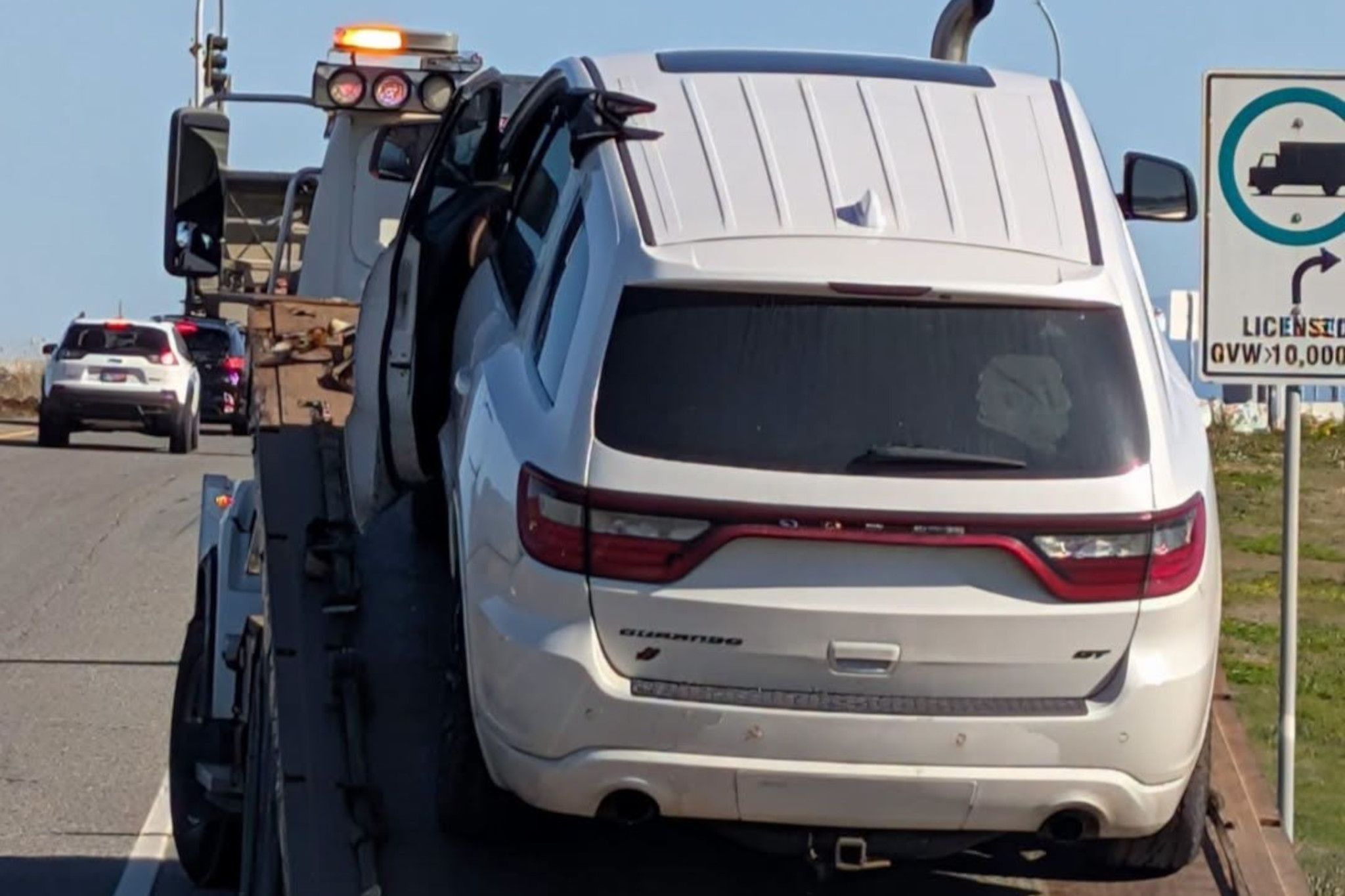
Transport corridors break when drivers refuse to slow down. When the Abbotsford Police Department impounded a vehicle on Highway 1 near Clearbrook Road, the enforcement action addressed an immediate physical hazard. Just before 12 noon on a Tuesday, an aggressive driver accelerated past an active patrol unit in an active highway construction sector. Road crews were working feet away from the live asphalt. Taking the vehicle off the road neutralized a reckless motorist, but it opened a broader window into the structural fragility of high-volume logistics.
The encounter reveals an unyielding logistical reality across the Pacific rim. Agricultural basins like the Fraser Valley depend entirely on uninterrupted arterial movement to connect cultivation fields with urban consuming centres. If a transport spine buckles or stalls, every downstream delivery commitment absorbs the shock immediately. Highway 1 represents that singular conduit. The corridor accommodates heavy commercial hauling, agricultural distribution, and daily labor transit alongside routine commuter flows. It operates under severe space constraints whenever maintenance crews occupy the shoulder. In that restricted space, erratic driving transforms ordinary logistics into acute operational risk. A single collision closes lanes for hours, stranding perishable cargo and eroding the fragile financial margins of commercial carriers who operate on razor-thin delivery windows.
The Friction of Arterial Transit
Law enforcement in work zones reflects a straightforward calculation of physical safety. Frontline officers maintain speed surveillance because roadside maintenance laborers face severe exposure to passing traffic. The Abbotsford Police Department confirmed that targeted enforcement remains a priority precisely because workers inside these active sectors operate under heightened vulnerability. Taking an aggressive driver off the highway resolves the acute legal violation. Yet enforcement addresses the consequence rather than the underlying dilemma of regional transit corridors. Commercial distribution demands velocity. Infrastructure repair demands deceleration.
Skeptics might dismiss the incident as routine municipal friction. An aggressive driver lost a car. That administrative outcome occurs regularly across regional highways, handled as a standard civil infraction without broader economic weight.
Treating such infractions as mere administrative noise overlooks how thin the line remains between fluid transit and corridor paralysis. A single severe wreck inside a narrow work zone halts freight entirely. That disruption forces haulers into circuitous rural diversions, spikes idle fuel consumption, and spoils sensitive freight bound for regional markets. Abbotsford Police Department officers noted that workers in active zones face heightened risk precisely because traffic density leaves zero margin for human error. When traffic funnels into reduced lanes, commercial operators cannot absorb unexpected delays without passing costs along the food and freight chain. The impoundment temporarily neutralizes one reckless motorist, but it leaves the broader structural vulnerability intact.
Labor Security Against Velocity Demands
Regional supply lines survive only through the physical labor maintaining the tarmac. Those crews work within inches of heavy tonnage. When an aggressive motorist disregards posted zone boundaries, that speed gamble places working personnel in direct jeopardy. Highway maintenance cannot be automated away from the asphalt, meaning human safety remains the ultimate constraint on arterial efficiency. Immediate vehicle seizure enforces statutory boundaries, but it cannot resolve the persistent spatial conflict between rapid commercial transit and roadbed preservation.
Highway 1 cannot expand on demand. The roadbed requires continuous rehabilitation to survive commercial freight loads, yet that very maintenance constricts the daily flow of commerce. Transport authorities can penalize reckless drivers, but the structural tension between relentless arterial speed and essential roadwork remains entirely unresolved.
Sources
Newsletter
Pacific Daily
A curated briefing from Thailand, Asia-Pacific and the world.