Commercial Nightlife Absorbs the Shock of Celebrity Immunity
A suspended sentence at Southwark Crown Court shows how premium hospitality venues shoulder operating friction while global touring capital walks away intact.
SINGAPORE
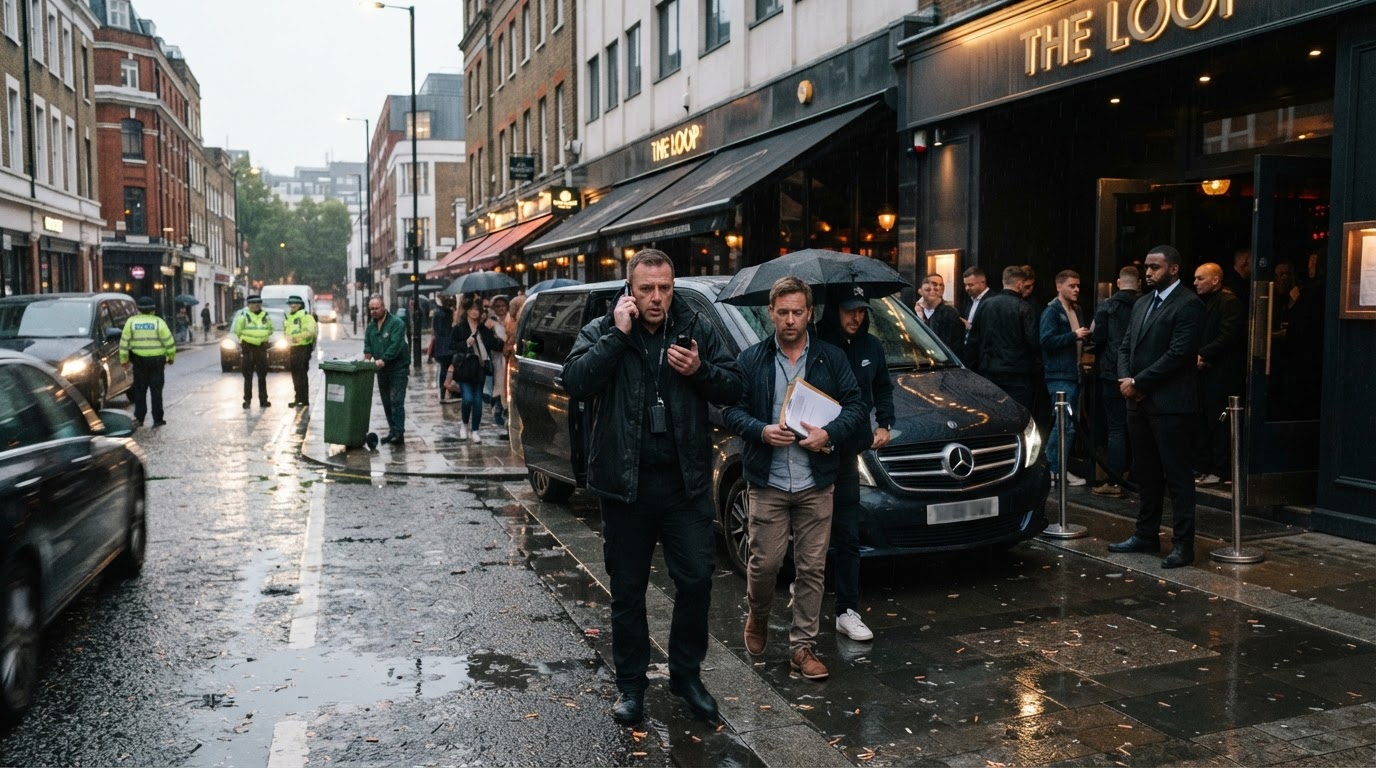
Judicial leniency for high-yield touring talent transfers commercial risk directly onto urban nightlife infrastructure. American singer Chris Brown walked away from Southwark Crown Court in London on Monday, Oct 26, 2026, without serving prison time. A UK court issued an eight-month suspended sentence for his role in a 2023 nightclub brawl, deferring incarceration provided he commits no further offense over the subsequent twelve months. The ruling closes a multi-year legal chapter for the Grammy-winning performer, yet it leaves the physical venues hosting celebrity commerce to absorb the structural fallout of private violence.
Premium nightlife real estate relies on elite celebrity appearances to drive foot traffic, premium table pricing, and brand visibility. When high-profile altercations turn violent, the immediate site of consumption faces severe administrative exposure. Licensing authorities scrutinize physical premises, property owners face increased security overhead, and venue operators carry the burden of civil disruption. Meanwhile, mobile performers retain their global earning capacity almost uninterrupted.
The Asymmetry of Venue Risk
Legal accountability for entertainment figures operates under distinct commercial incentives. Prosecutors and courts, including judge Tony Baumgartner, weigh admissions and cross-border schedules against statutory custodial thresholds. In this proceeding, involving legal figures such as Omololu Akinlolu, the judicial balance ultimately favored a non-custodial resolution. For Brown, whose career has navigated continuous scrutiny alongside past associations including Rihanna, an eight-month suspension represents an administrative condition rather than a business pause.
The physical host venue, by contrast, cannot suspend its institutional obligations. Commercial real estate in major entertainment corridors faces municipal licensing reviews, elevated insurance underwriting premiums, and stringent crowd-control mandates following violent altercations. Standard commercial leases require hospitality operators to maintain safe environments or risk termination, asset depreciation, and neighborhood opposition. Ordinary patrons and local hospitality workers bear the immediate physical danger and long-term regulatory pressure, whereas visiting performers face delayed courtroom resolutions that preserve their personal mobility.
Skeptics may argue that private commercial venues willingly court volatility when contracting high-profile talent. Nightclub operators price celebrity volatility directly into event admission, bottle service, and private hospitality margins. High revenues arguably offset the periodic legal friction that accompanies volatile entourages, framing occasional brawls as a known cost of luxury entertainment operations.
Institutional Costs Beyond the Courtroom
That market defense overlooks who ultimately absorbs the long-term displacement. Independent venue operators and entry-level service staff lack the legal machinery to isolate themselves from reputational damage. When municipal scrutiny tightens across urban entertainment zones from the United Kingdom to Australia and the United States, smaller operators without deep capital reserves are pushed toward licensing insolvency. The physical footprint of nightlife contracts, priced out by rising compliance costs, while the touring figures who trigger the enforcement cycles simply fly out.
This dynamic highlights a wider commercial reality. Global entertainment capital remains completely mobile, drifting effortlessly between international jurisdictions. The urban venues that house entertainment remain fixed to their concrete foundations, bound by local legal codes and vulnerable to physical disruption. Unless municipal authorities align venue accountability with personal financial liability for celebrity entourages, commercial hospitality will continue footing the bill for elite disruption.
Sources
Newsletter
Pacific Daily
A curated briefing from Thailand, Asia-Pacific and the world.