Antonelli Wins in Austin While Mercedes Waits for Title Confirmation
A dominant United States Grand Prix victory proves driver development yields track performance, yet closing the Formula One championship demands sustained mechanical discipline.
SINGAPORE
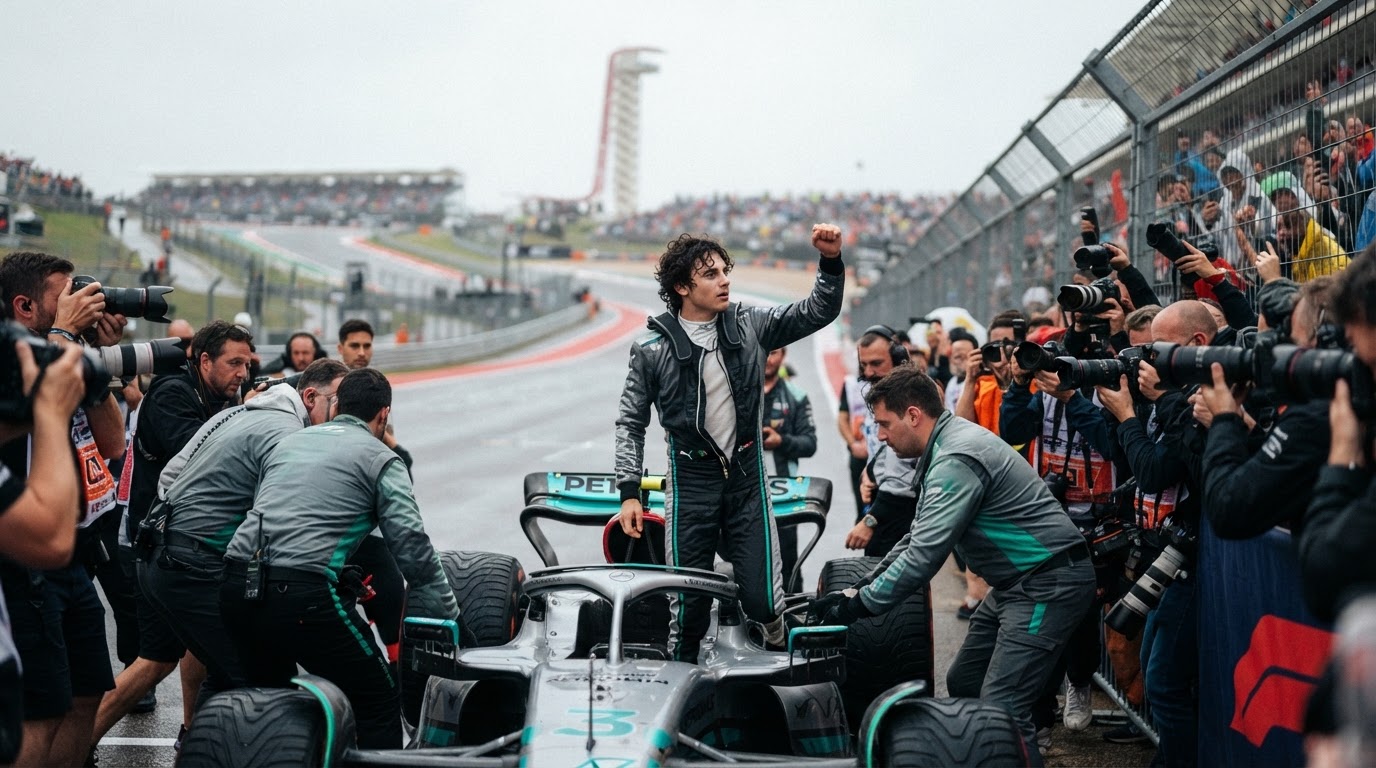
Pole position on October 24 and a race victory on October 25 at the Circuit of the Americas gave Andrea Kimi Antonelli his definitive breakthrough in Texas. Driving for Mercedes, the Italian delivered an authoritative drive across the Austin circuit to take the United States Grand Prix. Yet the outcome stopped short of an ultimate coronation, leaving Antonelli and his team awaiting mathematical confirmation before securing the Formula One world drivers' title.
Corporate motorsport operates on capital commitment and risk mitigation. For an industrial entity like Mercedes, backing a young driver into an elite seat carries immense reputational exposure. Victory at Austin validates that succession plan in purely technical terms. Antonelli demonstrated that the factory can produce race-winning packages around new talent, turning track telemetry into immediate podium returns. Still, the championship ledger requires more than individual Sunday dominance.
The Commercial Weight of Delayed Closure
Title races test organisational stability under sustained public inspection. Winning in Texas without sealing the championship prolongs competitive friction into the remaining rounds of 2026. Formula One commercial structures reward clean, early closures because an unsealed title prolongs operational strain across technical crews, engine allocations, and logistical planning. Every extra round where a championship remains mathematically contested requires conservative component use and elevated financial expenditure.
The victory at Circuit of the Americas proves elite driver execution, but championship math demands error-free corporate endurance across every remaining sector.
Former champion Max Verstappen offered public advice urging Antonelli to celebrate the Austin win rather than focus solely on the broader mathematical chase. That guidance highlights the psychological tension confronting young drivers elevated rapidly into championship contention. Personal celebrations, however, do not resolve the institutional calculations inside team headquarters. For team leadership, an unclinched title keeps engineers tethered to high-stress risk thresholds where an unexpected mechanical fault or tactical error could still complicate the final tally.
Mechanical Reliability and the Final Margin
Critics of the current competitive structure might argue that single-event dominance demonstrates that the championship outcome is already inevitable. A pole position secured on October 24 followed by total control of the race at Austin suggests Mercedes holds sufficient machinery margin to weather any minor setbacks. In elite racing, performance advantages often appear insurmountable when viewed across a single weekend.
That reading understates the volatility inherent to prototype racing. Formula One titles are decided by cumulative consistency, not solitary displays of dominance. An engine failure, a chaotic pit cycle, or unpredictable wet weather in subsequent venues can erase substantial point advantages. Mercedes has built an operational edge around Antonelli, but keeping that lead secure requires faultless quality assurance in testing and fabrication facilities.
Austin rewarded driver aggression and chassis balance, confirming Antonelli as the sharpest performer on American soil this October. The final industrial balance sheet, however, remains unwritten. Until the numbers mathematically eliminate every pursuer, Mercedes must manage its operational supply chain with total precision, knowing that the ultimate prize rests on mechanical reliability rather than mere race pace.
Sources
Newsletter
Pacific Daily
A curated briefing from Thailand, Asia-Pacific and the world.