The Commercialization of Atmosphere: Vancouver's Expanding Christmas Market
An examination of how imported seasonal events find resonance, and the costs of their replication across the Asia-Pacific.
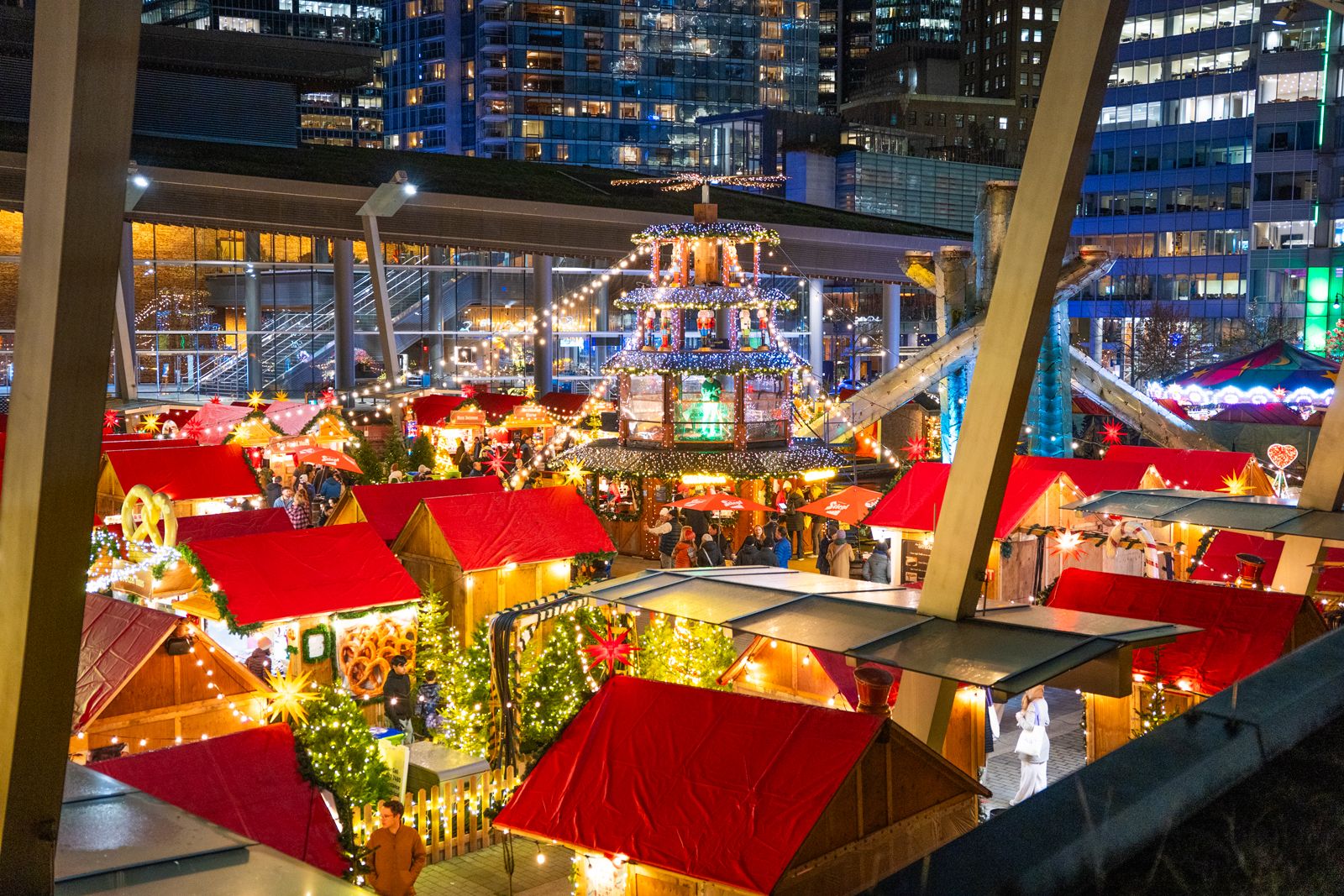
The Vancouver Christmas Market’s "most significant expansion in its history," as reported by Daily Hive Vancouver on September 21, 2026, signals a focused approach to seasonal event management. This German-style market, operational from November 16 to December 24 at Jack Poole Plaza, has grown to feature over 90 wooden huts offering food, drink, and artisanal goods, alongside five new experiences. This is not merely an increase in physical footprint; it represents a strategic amplification of a specific cultural aesthetic, tailored to evoke a European festive atmosphere.
The underlying technique involves introducing a curated cultural experience – a German Christmas market – and scaling it to meet perceived consumer interest. The market is presented as a "popular holiday tradition for locals and visitors alike." Its sustained appeal appears to derive from a concentrated offering of vendors, live entertainment, and themed activities. The expanded offerings, including new experiences, suggest an effort to broaden its draw and extend visitor engagement. The cost of maintaining such an event includes not only the physical infrastructure of huts and decorations but also the careful selection of vendors and entertainment to uphold the thematic integrity of its claimed "German-style."
For regions such as Thailand and the broader Asia-Pacific, this model carries implications. Cities throughout the region increasingly host similar themed events, particularly around Western holidays. While these markets often attract substantial crowds, their efficacy is linked to both authenticity and novelty. The question for local organizers is whether an imported technique can develop into a genuine, self-sustaining tradition, or if it remains an episodic attraction. The expansion in Vancouver suggests that, in certain contexts, the initial novelty has matured into a dependable draw, justifying further investment.
However, the reliance on an external template introduces distinct challenges. While an attributed claim highlights the market's popularity, this popularity operates within the framework of an adopted tradition. The German style, while globally recognized, often presents a cultural distance for many in the Asia-Pacific. The execution of a German Christmas market differs fundamentally from established local cultural practices, which often possess intricate preparation and long-standing community engagement. Replicating the aesthetic is one aspect; fostering the inherent technique and cultural roots that sustain enduring practices is another. The cost here extends beyond financial considerations; it encompasses the potential for cultural assimilation or the creation of events that, while superficially engaging, may lack deeper local resonance.
The enduring interest in these transient spectacles ultimately speaks to a broader consumer pattern: a desire for curated experiences that offer an escape from daily routines, particularly during holiday periods. The "significant expansion" of the Vancouver Christmas Market confirms that, when executed with precision and consistent theming, an imported cultural concept can indeed secure a notable market share. The constraint that remains unresolved for the Asia-Pacific is whether the adoption of such models fosters new, locally integrated traditions, or primarily provides a temporary form of globalized entertainment.
Sources
Newsletter
Pacific Daily
A curated briefing from Thailand, Asia-Pacific and the world.