Australian Rescue Vessel Highlights Persistent Marine Risks
A new search and rescue asset for Australia's coast improves local capability, yet underscores the enduring challenges of maritime safety across the wider Pacific region.
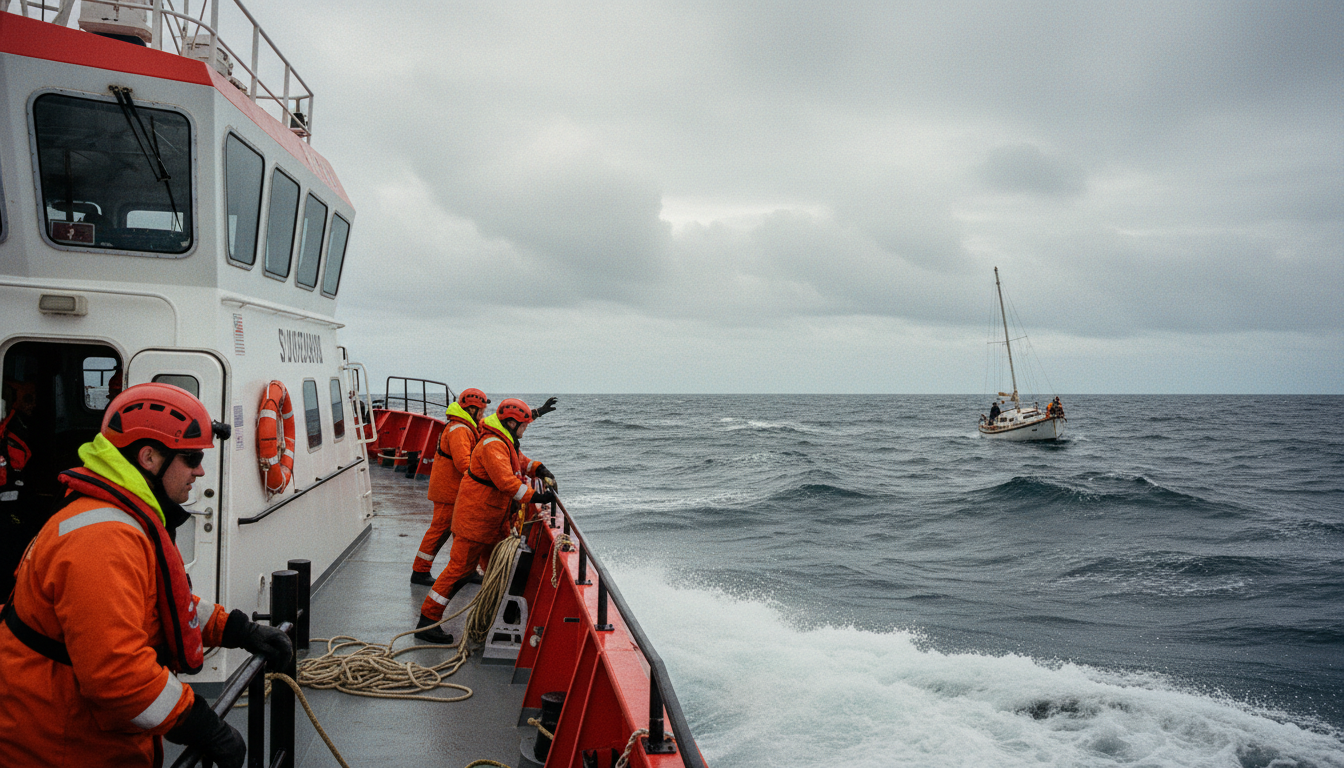
The commissioning of Wooli 30, a new rescue vessel for Marine Rescue Wooli, aims to support volunteers responding to emergencies. This vessel will operate along a stretch of coastline described as one of the state's most exposed. Such an upgrade offers direct operational benefits for local marine users and those involved in search and rescue efforts, reflecting an investment in regional maritime infrastructure.
However, this local improvement takes place within a broader pattern of consistent marine incidents. Along Australia's North Coast, dangers persist. In July 2025, a 19-year-old was found after being swept out to sea, and in March 2024, police recovered the body of a missing rock fisherman. Years earlier, in April 2016, an abandoned yacht washed ashore after months at sea. These instances indicate that while specific rescue assets can enhance response capabilities, the fundamental hazards of marine environments remain. The acquisition of a new vessel addresses the immediate need for improved response, but does not inherently diminish the frequency of maritime distress.
For the Asia-Pacific region, this situation points to a significant, unresolved tension. Nations across the Pacific, including Thailand, depend heavily on coastal and maritime activities for economy, trade, and tourism. The deployment of advanced search and rescue assets, while a positive and necessary step, does not fundamentally change the risks posed by unpredictable ocean conditions, human error, or the sheer scale of the region's vast coastlines and open waters. The financial and operational demands of maintaining such sophisticated equipment mean that comprehensive safety coverage remains a significant challenge for many coastal communities. This is particularly relevant in areas with less regulated recreational boating, informal fishing, or remote island populations.
The investment in Wooli 30 provides a more robust immediate response to emergencies along its operational area. It equips volunteers with a modern tool for aid. Nonetheless, the fact that a dedicated vessel is commissioned for an exposed stretch of coastline highlights that the inherent risks of maritime activity are constant. The allocation of resources for advanced rescue vessels signals a commitment to safety, but it also reflects the ongoing necessity of facing a challenging marine environment. The effectiveness of such initiatives ultimately depends on sustained funding, continuous volunteer engagement, and ongoing adaptation to the evolving demands of maritime safety across the region's varied conditions.
Sources
Newsletter
Pacific Daily
A curated briefing from Thailand, Asia-Pacific and the world.