High-Performance Multihull Racing Confronts Its Equipment Divide at Davis Island
The presence of seventy-nine competitors at the 2026 World Championships exposes how technical bifurcation complicates elite sailing competition
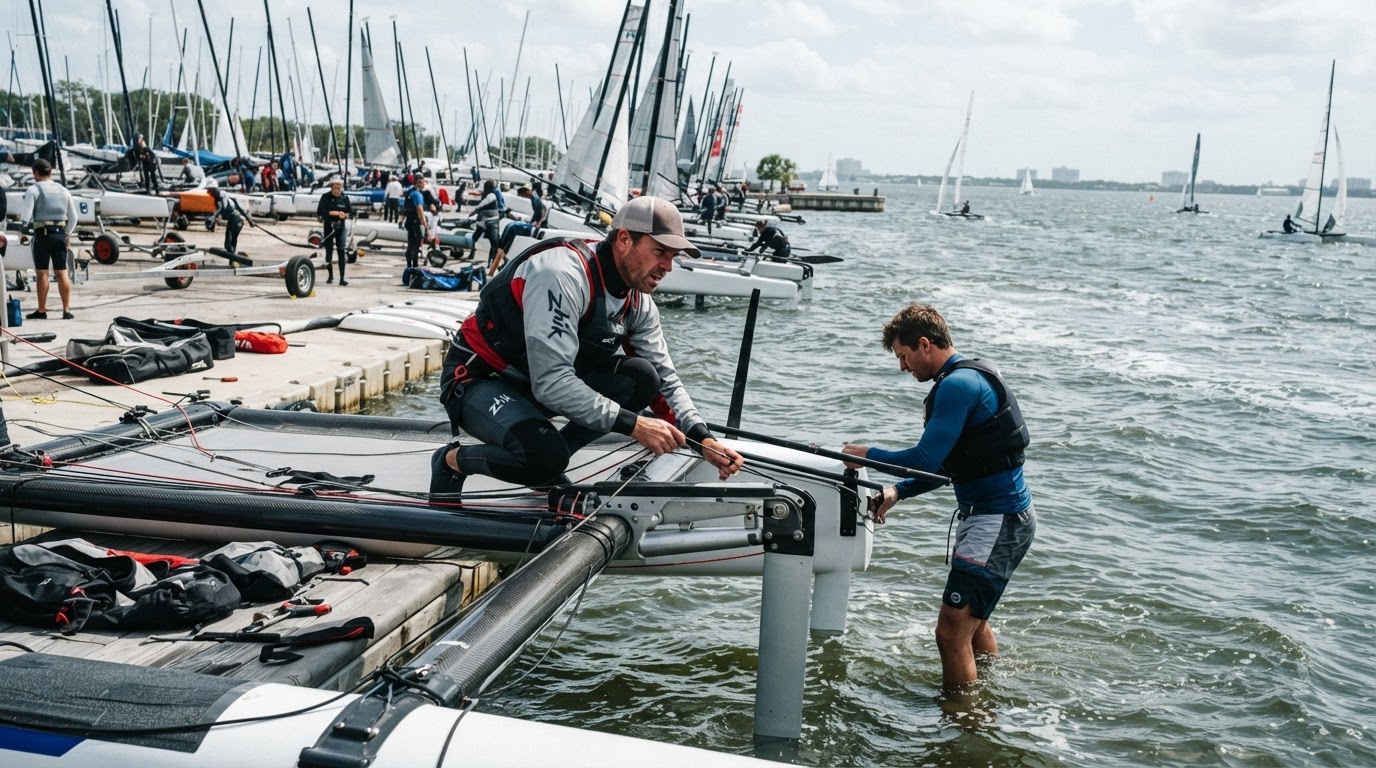
Seventy-nine sailors are assembling at Davis Island YC in Tampa, Florida for the A-Cat 2026 World Championships. Their gathering highlights a persistent structural divide in elite singlehanded multihull racing. The fleet splits directly between traditional displacement hulls and foiling designs, categorised across the discipline as floaters and flyers. That division demonstrates how rapidly equipment divergence can fracture a competitive class even as aggregate participation metrics suggest institutional health.
Sail World Asia published its Florida Preview ahead of the regatta, framing the event around this dual-format competition. On surface review, accommodating both hydrofoiling platforms and conventional displacement craft appears to be a practical compromise designed to preserve fleet size while absorbing hydrodynamic experimentation. Beneath that inclusive surface lies a less comfortable commercial and athletic reality. When a single sailing class attempts to balance legacy configurations against modern foiling systems, it creates parallel competitive hierarchies that contest the same regatta honours.
The Technical Divide
The split between floating and flying hulls represents more than an aesthetic preference. Modern hydrofoiling demands distinct composite engineering, precision foil controls, and sustained capital outlays that separate privateers from heavily financed technical campaigns. By sanctioning championship titles across diverging operational modes, administrative authorities preserve headline fleet figures at the expense of unified competition. The seventy-nine entries registered for the regatta demonstrate that baseline interest remains steady, yet that aggregate figure obscures significant fragmentation within the roster.
Defenders of the dual-format structure maintain that separate classification preserves grass-roots participation without stifling mechanical experimentation. In this view, retaining displacement craft allows experienced sailors to remain competitive without undertaking the steep learning curve and capital requirements associated with hydrofoils. That argument possesses clear operational logic. Without an accessible entry tier, fleet sizes at international championships would contract rapidly toward a narrow cadre of specialised athletes with access to elite development programs.
Dual scoring also helps race organizers maintain viable event economics. Hosting a global championship requires sufficient registration revenue to offset harbor management, race committee logistics, and safety infrastructure. Grouping floaters and flyers under one organizational umbrella allows host clubs to meet critical mass requirements that neither sub-discipline might reliably achieve alone.
Equipment Friction
Yet this accommodation introduces friction into the long-term governance of the class. Moving delicate catamarans and specialised foil packages across international waters demands substantial logistical funding, concentrating peak competitive opportunities within established hosting centers like Tampa. The economic commitment required to transport, insure, and tune high-performance multihulls creates a filtering mechanism that operates independently of sailor talent.
That logistical hurdle complicates how technical knowledge circulates through the wider maritime sector. High-performance development classes claim to function as testing grounds for naval architecture, generating innovations that eventually filter into wider production craft. When elite multihull activity concentrates within a small cluster of affluent regattas, the practical gains of that design cycle remain insulated within existing enclaves. Sailors observing the circuit from emerging regions must evaluate whether entering the discipline justifies the escalating capital commitments demanded by modern hydrofoils.
Evaluating the Davis Island regatta purely through aggregate registration totals overlooks these structural pressures. The presence of seventy-nine sailors demonstrates intense personal discipline and engineering passion, but it leaves fundamental sporting questions answered only partially. As the performance delta between displacement craft and foiling boats continues to widen, race authorities will face diminishing returns in attempting to house both disciplines under a single title. The unresolved tension at Tampa is whether high-performance sailing can continue straddling two incompatible technological eras without compromising the coherence of its competitive record.
Sources
Newsletter
Pacific Daily
A curated briefing from Thailand, Asia-Pacific and the world.