When American Skies Stall, the Vulnerability of Long-Distance Transit Becomes Plain
Recent Federal Aviation Administration ground stops reveal how brittle transpacific transit remains when domestic air traffic control falters
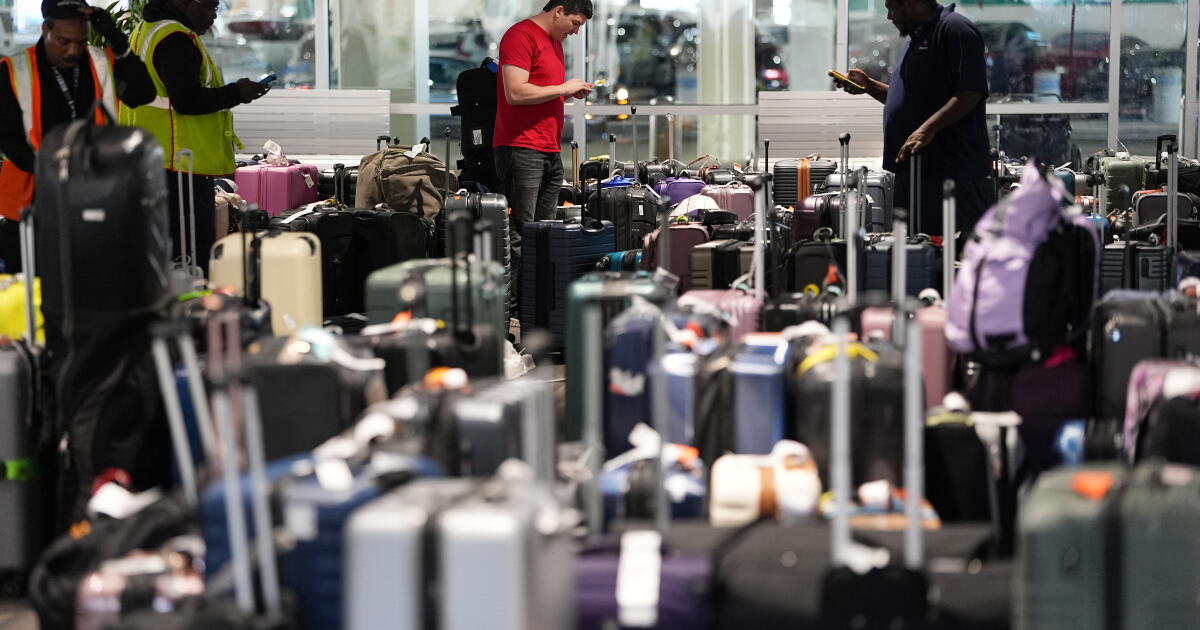
Luggage stood in long, silent rows across Philadelphia International Airport on a Monday, according to visual records from the Associated Press, as sudden ground halts left terminals immobilized. Flight displays turned abruptly to red across American corridors. The disruption followed an intervention by the Federal Aviation Administration, which issued a rare, nationwide ground stop prompted by systemic issues within its air traffic control apparatus. News reports confirmed that more than 12,000 flights were delayed or canceled during the episode, temporarily paralyzing domestic movement across the United States and creating secondary friction for transpacific routes reliant on continental gateways.
Travelers moving between North America and the Pacific Rim frequently view modern aviation through the prism of scheduling predictability. Commercial airlines publish itineraries premised on rapid transfers across oceans, relying upon an intricate framework of radar coordination and automated routing. Yet when central traffic control mechanisms fail, that spatial choreography immediately dissolves. Commercial aviation behaves less like an open skyway and more like an unforgiving assembly line, where an operational stall at an interior junction immobilizes the entire chain.
The illusion of continental continuity
Cross-border travelers often plan long-haul journeys around distant seasonal arrivals, assuming domestic feeder flights pose minimal structural risk. That confidence, recent evidence suggests, remains vulnerable when central institutions confront technical paralysis. The Federal Aviation Administration ground stop demonstrated that even heavily managed airspace corridors can undergo rapid administrative freezes.
When central air traffic management halts departures across a continent, long-distance travelers absorb the immediate operational shock.
Disrupted itineraries extend far beyond local tarmac delays. Passengers attempting to reach overseas gateways find themselves stranded at secondary interior points, missing onward connections across the Pacific. Luggage remains separated from owners, piling up along baggage collection belts while carrier counters confront mounting backlogs. The formal mechanics of refunds and rebooking, while established under consumer rules, offer little immediate relief when route networks exhaust available aircraft and airspace capacity.
Rethinking reliance on fragile central systems
Air traffic management demands absolute operational caution, making precautionary ground halts necessary whenever technical integrity is compromised. The institutional trade-off, however, exposes the acute vulnerability of centralized flight administration. When central control systems falter, alternative domestic routing disappears almost instantaneously.
The resulting disorder indicates an enduring friction in contemporary long-distance journeying. Transit planning operates around compressed schedules, yet passengers depend upon centralized technical architecture that remains susceptible to acute systemic shocks. Each widespread stoppage serves as a practical reminder that global distances have not been completely insulated from technical failure.
Those rows of unclaimed bags documented at Philadelphia International Airport illustrate that persistent vulnerability. Once central coordination breaks down, long-distance passage ceases to be an exercise in predictable transit, revealing instead what cross-continental movement inevitably remains: a fragile sequence dependent upon every supporting link.
Sources
Newsletter
Pacific Daily
A curated briefing from Thailand, Asia-Pacific and the world.