Burj Khalifa Ticketing Opens to India Through Unified Digital Payments
Direct online reservations via UPI bypass traditional foreign exchange friction at Dubai’s central landmark
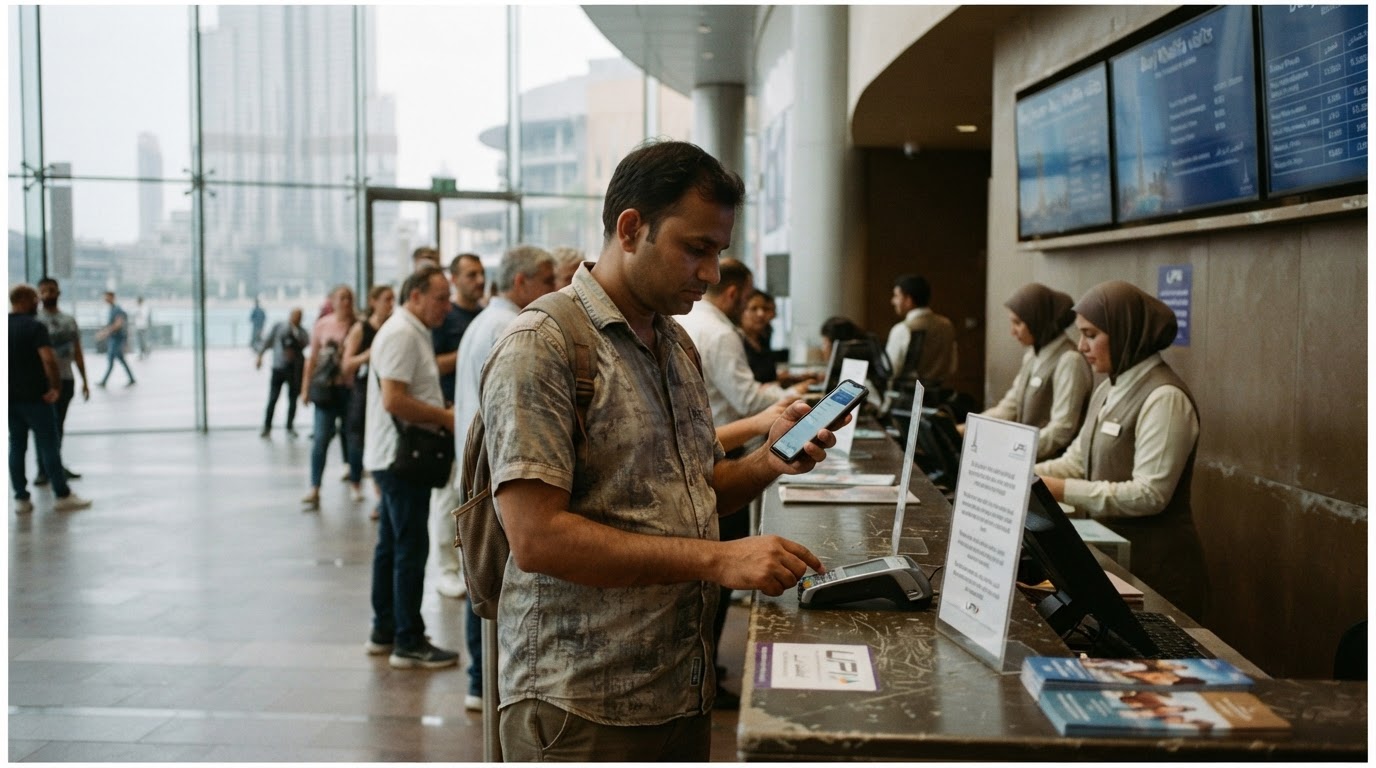
Cross-border leisure expenditure usually stalls at the settlement terminal, where currency conversion costs and payment gateway declines alter travel patterns. Dubai’s Burj Khalifa altered that operational friction for South Asian travelers by enabling direct online bookings through India’s Unified Payments Interface, known as UPI. Reports published across 2025 and into 2026 confirm that travelers from India can now reserve Burj Khalifa experiences online using their domestic accounts, eliminating intermediary international card networks.
Financial infrastructure functions as a quiet filter for prime real estate and luxury attractions. A vertical estate like the Burj Khalifa relies on constant foot traffic through ticketed observation decks, dining operations, and coordinated public spectacles. Traditional foreign currency payment routes impose settlement delays and transaction surcharges on overseas visitors. Integrating UPI Indian payment mechanisms addresses this issue directly, letting outbound tourists purchase admission before departure with the same protocol used for routine domestic commerce.
Shifting Flows and Settlement Corridors
Regional consumption data underscores the commercial rationale behind linking the landmark directly to Indian liquidity. Commercial campaigns such as Burj Khalifa Goes Bollywood have long signaled the site's deliberate marketing orientation toward the subcontinent. During major calendar moments, including Year’s Eve celebrations, the tower functions as an international media focal point, broadcasting high-definition video productions that drive worldwide interest. Yet festive programming produces limited commercial yield without accessible consumer channels attached to it.
Opening digital booking rails bridges the distance between media visibility and verified revenue. Outbound leisure spending from India has expanded rapidly, supported by electronic clearing systems that handle upwards of 1800 institutional endpoints across connected financial frameworks. In regional transit hubs from Thailand to the Middle East, bilateral clearing agreements increasingly dictate where high-volume travelers allocate their discretionary budgets. Integrating Dubai’s premier vertical asset into this clearing environment protects its retail ticketing revenues from fluctuating card-processing approval rates.
The Friction of Cross-Border Access
Cultural landmarks compete globally for disposable income. Diverse international demographics, including visitors with Iranian heritage or broader expatriate connections, navigate distinct cross-border liquidity hurdles. Dubai’s Burj Khalifa has positioned itself as an accessible cosmopolitan center, yet financial borders routinely complicate consumer transactions. Integrating direct digital rails from sovereign payment ecosystems represents an institutional response to international guest circulation.
Such integration reconfigures how high-volume destinations capture value. The success of national payment corridors outside their home territories ultimately rests on platform uptime, regulatory reciprocity, and the scale of international consumer adoption. For the operators of the tower, maintaining accessible digital reservations now depends on whether cross-border clearance channels can handle seasonal surges without administrative or monetary bottlenecks.
Sources
Newsletter
Pacific Daily
A curated briefing from Thailand, Asia-Pacific and the world.