Cross-Border Transit Disasters Reveal the Operational Limits of Consular Identification
The confirmation of a Mexican arts administrator killed in Spain underscores how emergency accounting lags behind modern professional mobility
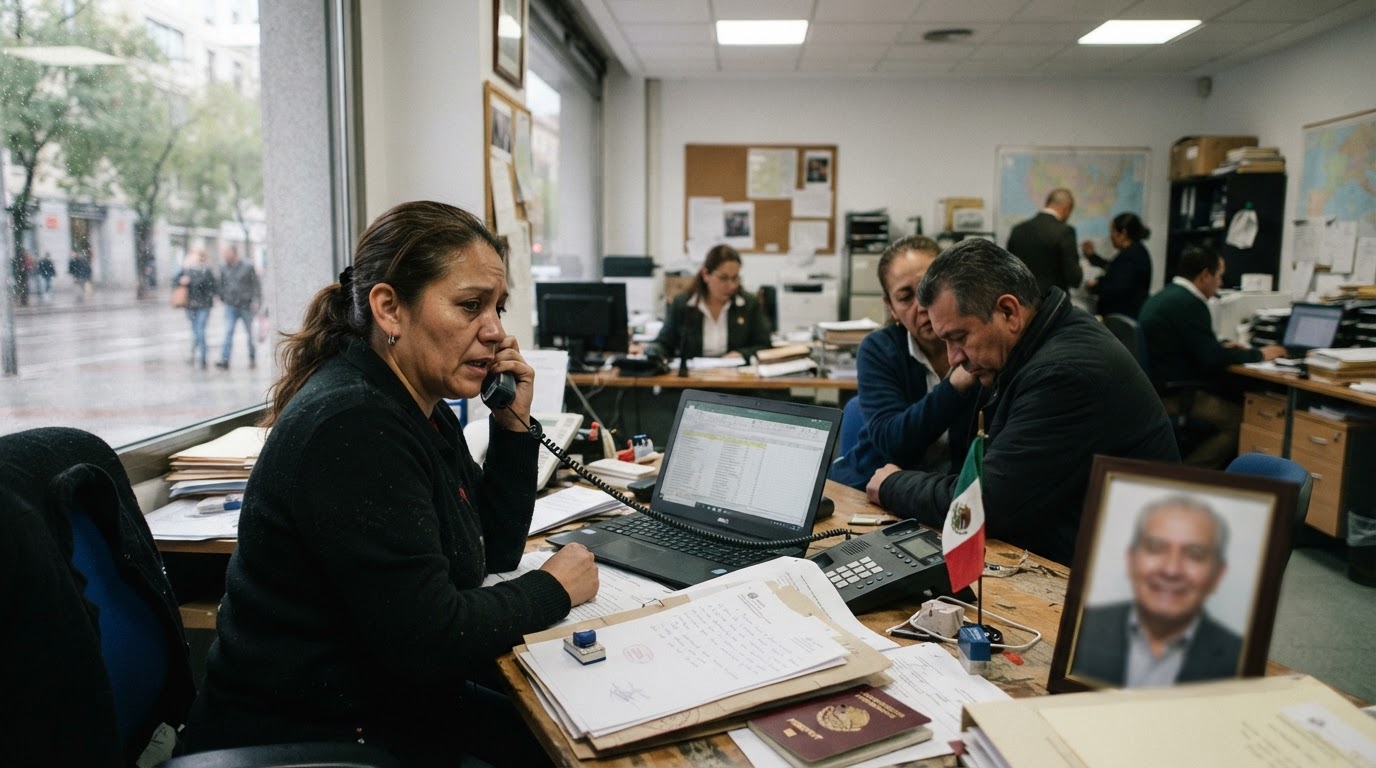
Mass transit systems move travelers across continents with high efficiency, yet post-accident accounting capabilities remain strictly bounded by provincial borders. That administrative gap became visible when Mexico's Ministry of Foreign Affairs, known as SRE, confirmed on Monday the death of Fernando de Jesús Calvillo Silva. The 45-year-old arts administrator was among at least 69 casualties of a train collision that occurred on Oct. 28 in Toledo, Spain. The casualty tally reflects more than structural failure along a passenger rail corridor; it exposes how sovereign consular networks depend on cumbersome, bilateral biological tracing whenever modern workforce mobility outpaces jurisdictional reach.
Calvillo was born in the Mexican state of Aguascalientes and resided in Oklahoma City in the United States, serving as Community Relations Director for the Oklahoma Visual Arts Coalition. His presence aboard a rail line in Spain demonstrated the ordinary cross-border movement common among contemporary arts professionals. When the collision happened, sovereign tracking apparatuses proved incapable of bridging those dispersed geographic ties. SRE officials could not independently establish his fate until relatives traveled across the Atlantic to Spain, providing comparative DNA samples to match unidentified remains.
Forensic Friction Across Jurisdictions
Official state protocols prioritize standard diplomatic condolences over logistical accountability. Marking the identification, Sheinbaum issued a brief executive statement.
"We reiterate our condolences and express our regret regarding the events in Toledo, Spain," said Sheinbaum.
Such diplomatic condolences obscure the technical inertia governing cross-border disaster operations. International passenger travel operates through rapid electronic ticketing, yet foreign casualty verification continues to depend on protracted physical interventions by surviving kin. The spontaneous shrine at Estación de Santa Justa, where relatives placed candles alongside memorial photos, illustrated the procedural interval that families endure while genetic laboratories sequence remains.
Consulates maintain legal databases, identity rolls, and bilateral communication channels. Neither digital records nor official diplomatic interventions can bypass the physical imperative of forensic testing when high-speed impact erases baseline identification marks. SRE remained immobilized until comparative laboratory work finished on Spanish soil. This sequence demonstrates that foreign ministries possess no sovereign mechanism to accelerate host-nation evidentiary workflows during mass-casualty events, leaving them dependent on local municipal pacing.
Host administrations must preserve local chain-of-custody protocols to avoid misidentification, making deliberate physical testing legally necessary. That procedural standard protects judicial integrity, yet it shifts administrative costs directly onto surviving households forced to coordinate transatlantic travel under duress.
The Mobility Disconnect
The deeper structural tension stems from the mismatch between hyper-mobile labor markets and static municipal emergency management. Professional workers cross international jurisdictions with administrative ease. Calvillo's career path from Aguascalientes to an established post in Oklahoma City, and ultimately onto a Spanish rail carriage, typifies how contemporary knowledge workers operate across distant urban centers. Emergency responders, by contrast, function under municipal protocols designed for resident populations whose genetic and medical documentation exists within domestic archives.
When cross-border transit crashes occur, the evidentiary burden falls squarely on separated families forced to negotiate foreign judicial procedures under extreme distress. Consular posts can issue transit permits, but they lack the operational authority to compress the days required to gather and sequence comparative genetic samples across jurisdictions. Multilateral transport regulators have created frictionless cross-border ticketing networks, but sovereign states have not built paired cross-border identification protocols. Until international response frameworks bridge that procedural divide, mobile professionals remain exposed to an unresolved administrative friction where physical transit is seamless, yet forensic identification remains bound by domestic boundaries.
Sources
Newsletter
Pacific Daily
A curated briefing from Thailand, Asia-Pacific and the world.