Bangkok Temple Arrest Exposes the Mechanics of Bypassed Tourism Labour
A targeted intervention in Phasi Charoen illuminates the commercial logic driving vertically integrated foreign tour operations across Southeast Asia
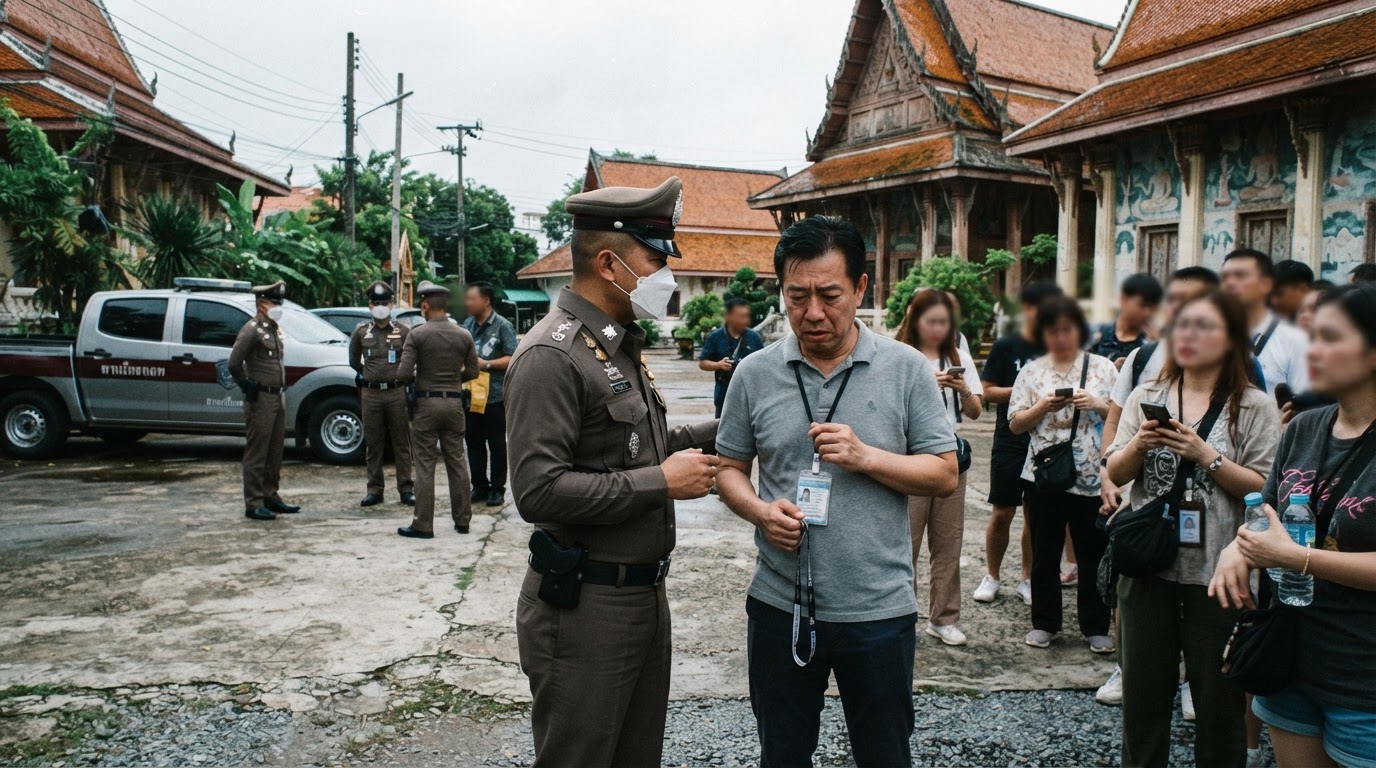
BANGKOK
Officers from the Tourist Police Bureau and officials from the Tourism Department detained a 52-year-old Chinese national on Thursday evening at Wat Pak Nam Phasi Charoen in Bangkok, intercepting an operational model that bypasses statutory service protections. The police ledger records specific allegations against the suspect, identified as Chen: operating without a guide permit while driving a passenger van and delivering historical commentary to a group of seven Chinese visitors in the Pak Khlong Phasi Charoen area. Taken to the Phasi Charoen police station, Mr Chen represents a single node in a well-defined commercial pattern. For economic regulators, the enforcement action confirms that inbound travel intermediaries continue to capture localized service margins by consolidating transport and narration into non-domestic hands.
At the core of this arrangement sits a direct corporate incentive to eliminate domestic wage leakage. In conventional package tourism, international agencies contract registered domestic guides and licensed transport operators, dividing the visitor expenditure across host-country service tiers. When an overseas operator instead deploys an individual to drive the passenger van and conduct on-site cultural briefing, the entire operational fee remains contained within an external account. Local transport providers and certified Thai guides are removed from the transaction entirely, lowering variable costs for off-market travel organizers while denying the domestic labour market its mandated statutory capture.
The Logic of Off-Ledger Integration
Regulatory authorities face severe structural friction when attempting to police these integrated circuits. Seven passengers occupying a private van carry the physical profile of an informal family outing rather than an organised commercial excursion. Because cross-border digital platforms allow organisers to market packages, collect payments, and dispatch itineraries abroad, domestic enforcement agencies possess few fiscal paper trails within Thailand itself. Field officers must consequently witness the physical act of professional cultural narration on site at cultural landmarks to establish a legal violation under current statutes.
Industry defenders frequently maintain that informal foreign tour conductors merely fill a language and cultural void that local labour markets fail to service adequately. By this logic, direct group leadership guarantees seamless communication and itinerary compliance for travelers navigating complex religious architecture. Yet that commercial rationale directly ignores the statutory framework governing protected professions. Thailand reserves tour guide roles for domestic citizens precisely to force capital dispersal into local communities, deliberately preventing inbound tourism expenditure from turning into an offshore financial loop.
Jurisdictional Limits and Market Signals
Interceptions conducted by the Tourism Department and Tourist Police Bureau demonstrate tactical effectiveness at specific cultural sites, but spot inspections do not alter the underlying business incentives. Deploying inspection units to monitor courtyards at Wat Pak Nam Phasi Charoen consumes disproportionate enforcement resources relative to the localized scale of an eight-person group. The economic dividend for circumventing domestic labor requirements remains intact so long as overseas operators can market closed-circuit packages with minimal liability at origin.
Until regulatory oversight moves upstream to intercept the digital platforms and private transport bookings financing these excursions, on-the-ground policing will remain an intermittent exercise in perimeter containment. The operational durability of Thailand's statutory labor protections now depends entirely on whether regulators can attach liability to the cross-border corporate entities profiting from these tours, rather than relying solely on spot checks at temple gates.
Sources
Newsletter
Pacific Daily
A curated briefing from Thailand, Asia-Pacific and the world.