IHG Signs Hyderabad Airport Contract on Extended Pipeline Terms
A five-year delivery runway shifts development risk to local partners while international operators secure asset-light expansion.
SINGAPORE
Hotel management agreements routinely record commercial footprint expansion years in advance of physical operations. When IHG Hotels & Resorts concluded a management agreement with AR Infra Consultancy in October 2026, the transaction established the debut of the Crowne Plaza brand in Hyderabad. The deal specifies an opening in the first quarter of 2031. More than four years separate the signed contract from the scheduled arrival of the first guest. That calendar gap highlights a fundamental asymmetry in modern hospitality expansion. International brand owners record future room counts on their corporate rosters while domestic partners shoulder the immediate financial liabilities of construction.
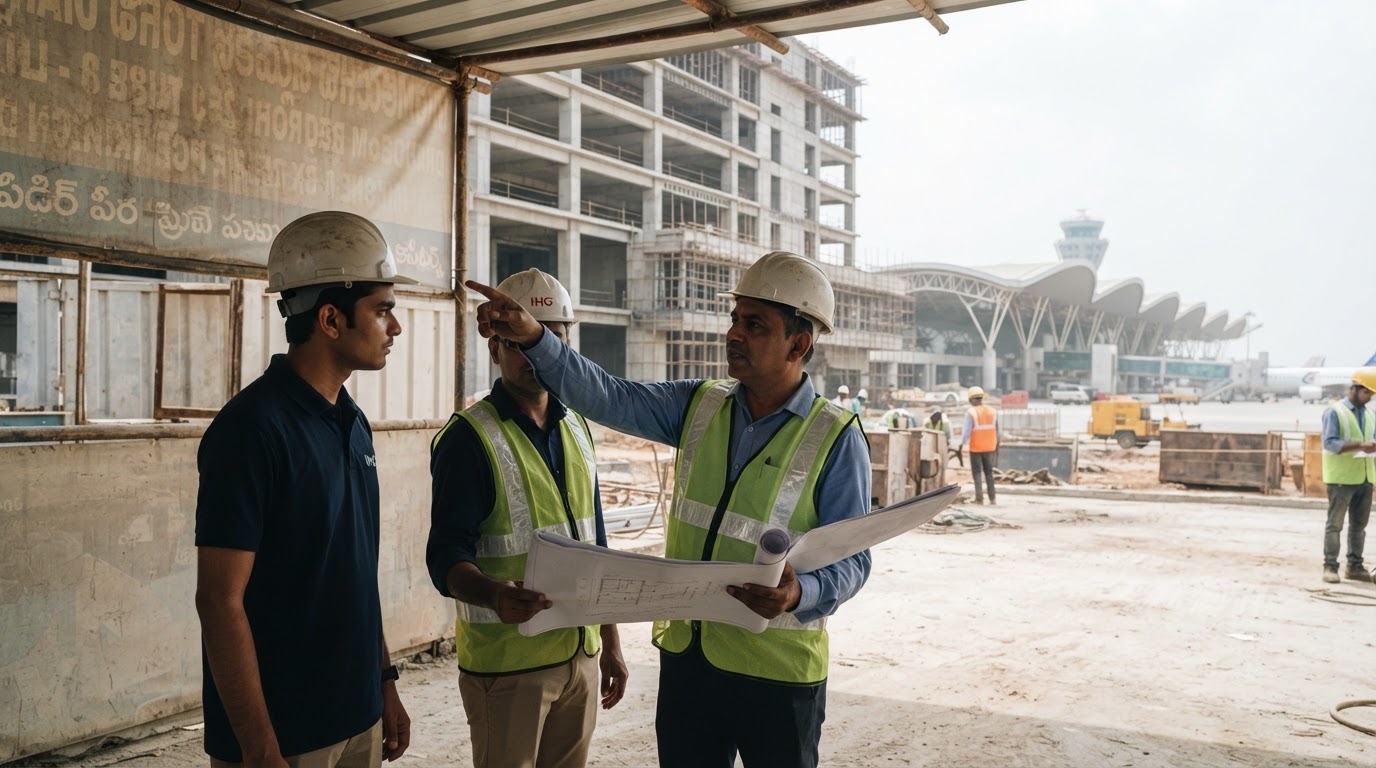
Under the terms of the project, Crowne Plaza Hyderabad Shamshabad Airport Road will deliver 250 rooms, an inventory that incorporates 37 suites. The asset is situated along Airport Road in Shamshabad, close to Rajiv Gandhi International Airport. Planned hospitality facilities comprise five food and beverage outlets, including an all-day dining restaurant. According to the development outline, the hotel intends to serve airline transit passengers, business visitors, corporate long-stay guests, and the regional meetings sector. Placing room inventory adjacent to the planned World Trade Centre follows a familiar development pattern around airport perimeters. The underlying commercial thesis presumes that corporate office demand will emerge in tandem with airport passenger volumes.
Asymmetric Capital Exposure
Management contracts allow multinational hotel groups to accumulate market share without committing corporate capital to direct real estate investments. Under this contractual division, IHG supplies brand distribution channels and reservation networks, whereas AR Infra Consultancy must finance the entire structural development. Fluctuations in construction costs, interest rate shifts, and regulatory hold-ups appear exclusively on the local balance sheet. The brand owner gains a strategic presence in Shamshabad at negligible financial exposure. Meanwhile, the developer carries the compound holding costs of land and civil works throughout the multi-year development period.
Long-dated management contracts enable international hotel brands to secure strategic airport corridors while regional developers shoulder construction volatility.
Property developers often view extended execution timelines as an operational necessity rather than a structural risk. Completing a 250-room hospitality project near major transit infrastructure requires managing aviation zoning regulations, environmental clearances, and municipal utility connections. Associating with an international hospitality marque early provides the developer with critical institutional credibility. That corporate affiliation can prove valuable when negotiating credit facilities with commercial lenders or securing municipal permits. Even so, affiliation alone cannot protect an unbuilt project from inflationary pressures or debt servicing burdens during prolonged construction schedules.
Commercial Infrastructure Dependency
The future financial performance of the Shamshabad site remains tightly tethered to public and private infrastructure that the hotel developer cannot control. Siting 250 keys next to the planned World Trade Centre assumes the timely completion of surrounding corporate infrastructure. If delivery of the commercial trade hub encounters delays, the property must fall back almost entirely on passenger flows through Rajiv Gandhi International Airport. Corporate pipeline announcements from hospitality groups—whose portfolios include marques like InterContinental and Holiday Inn Express—frequently treat contracted keys as guaranteed inventory. The true scarcity in hotel development is not corporate branding, but local execution capability and patient capital.
Signed management agreements grant global operators an immediate public victory while postponing operational accountability to distant fiscal quarters. For AR Infra Consultancy, delivering the 250-room hotel by the first quarter of 2031 demands disciplined site management across half a decade of macroeconomic shifts. Meanwhile, the hotel licensor secures an asset-light footprint in Hyderabad without deploying corporate capital. Until the doors open to paying travellers, the contract stands as an administrative commitment rather than an operational reality. The financial strain of bridging that five-year gap remains entirely on the domestic developer.
Sources
Newsletter
Pacific Daily
A curated briefing from Thailand, Asia-Pacific and the world.