The Extended Stay Model in Australia: A Blueprint for Asia's Urban Densities
IHG's Staybridge Suites expansion into Australia prompts consideration for its relevance in Thailand's evolving urban landscape.
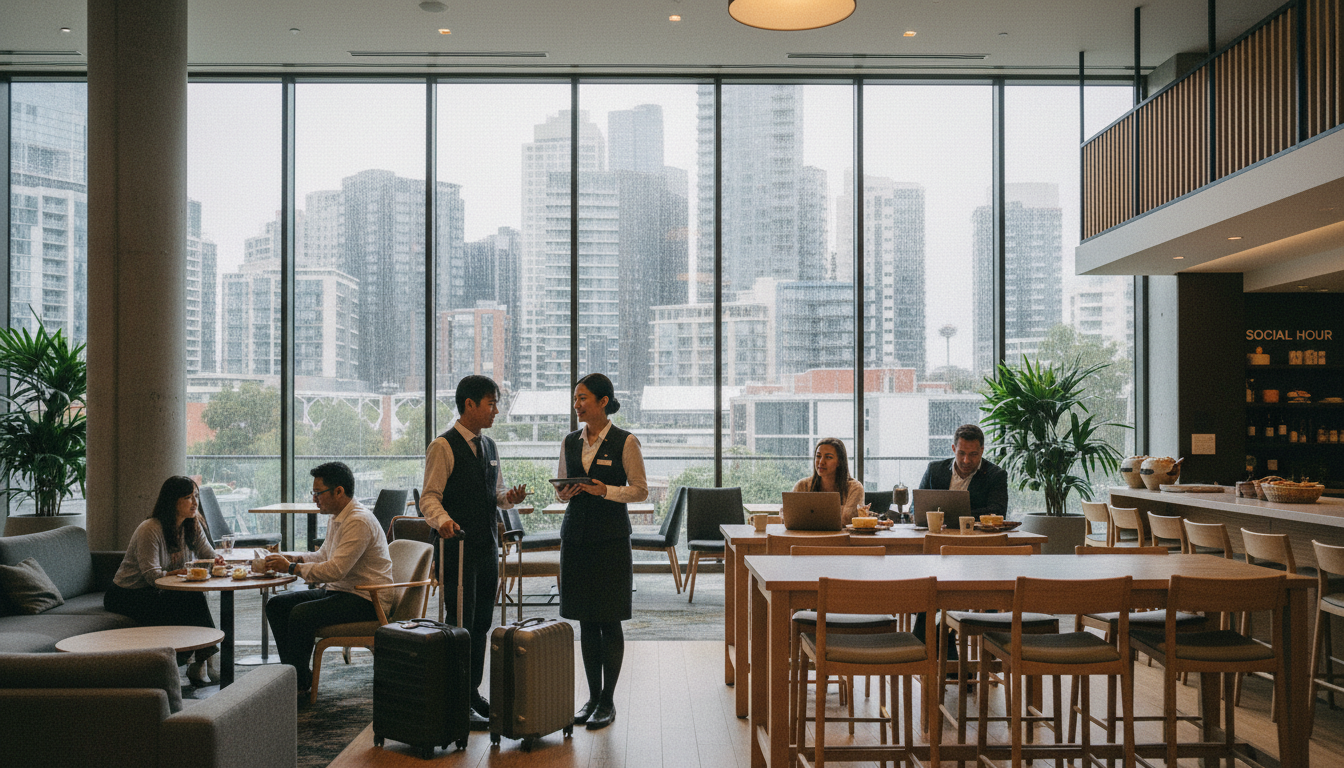
IHG Hotels & Resorts has initiated a significant expansion of its Staybridge Suites brand in Australia, signing a Master Development Agreement with Aland. This agreement grants Aland exclusive development rights for the upscale extended-stay brand, targeting a portfolio of at least 15 hotels and 2,000 rooms. This move establishes a substantial presence for a hospitality model designed for longer-term residents.
The extended-stay concept, characterized by amenities that support a residential experience—kitchenettes, laundry facilities, separate living and sleeping areas—responds to specific user needs. These are often business travelers on assignment, expatriates, or individuals relocating, seeking more than a transient hotel room. The design imperative here shifts from transient luxury to functional, adaptable living spaces. The success of such a model relies on its ability to integrate domestic utility with professional efficiency, a balance that requires considered spatial planning and material choices. This design approach prioritizes practicality and comfort for sustained occupation, moving beyond the compact efficiency often seen in traditional hotel rooms.
While this specific agreement concerns Australia, its implications extend to the broader Asia-Pacific region. The Bangkok Post reported in December 2017 that Staybridge Suites was set to debut in Thailand. This earlier development suggests an existing recognition of the extended-stay market's potential within Southeast Asian urban centers. Thailand, with its dynamic economy and increasing influx of long-term international residents, presents a comparable environment where demand for such accommodations could be significant. Cities like Bangkok face continuous pressure on urban housing and transient accommodation, making the efficiency of an extended-stay model a relevant consideration. The Australian venture, with its planned scale, offers a contemporary case study for how such a model can be integrated into a national market.
A key challenge for the extended-stay model, particularly in densely populated urban areas, involves land use and the integration of these larger format properties into existing urban fabrics. The spatial requirements for a kitchen, for instance, are non-negotiable for the brand’s promise. This demands either substantial new construction or innovative adaptation of existing structures. The question becomes whether the economics of land acquisition and construction in high-value areas like Bangkok align with the return profile of extended-stay units, which typically command lower nightly rates than luxury hotels but achieve higher occupancy and longer stays.
The counterargument posits that the Australian context, with its distinct economic drivers and migratory patterns, might not be perfectly analogous to Thailand. Australia's significant resource sector and higher average wages for expatriate workers could sustain a different tier of extended-stay pricing and demand. Thailand's market, while growing, might be more sensitive to price points, potentially requiring a recalibration of the upscale offering to meet local economic realities. However, the fundamental human need for a temporary home, rather than just a room, transcends national borders. The precise articulation of 'upscale' within the Thai context — through materials, finishes, and the integration of local design sensibilities — will determine its long-term viability.
The expansion in Australia offers a measure of confidence in the sustained demand for this specific hospitality typology. For Thailand, the ongoing development of its urban centers and the patterns of its long-term visitor economy will continue to test the adaptive capacity of its built environment. The crucial unresolved constraint is how readily the functional design of the extended-stay model can be reconciled with the land and cost structures prevalent in Asia’s fast-growing, dense cities.
Sources
Newsletter
Pacific Daily
A curated briefing from Thailand, Asia-Pacific and the world.