The Wet Perimeter of the Pacific Basin
As coastal cold fronts sweep into Vancouver, oceanic shifts across the Pacific test the fragile illusion of stable seasonal arrivals.
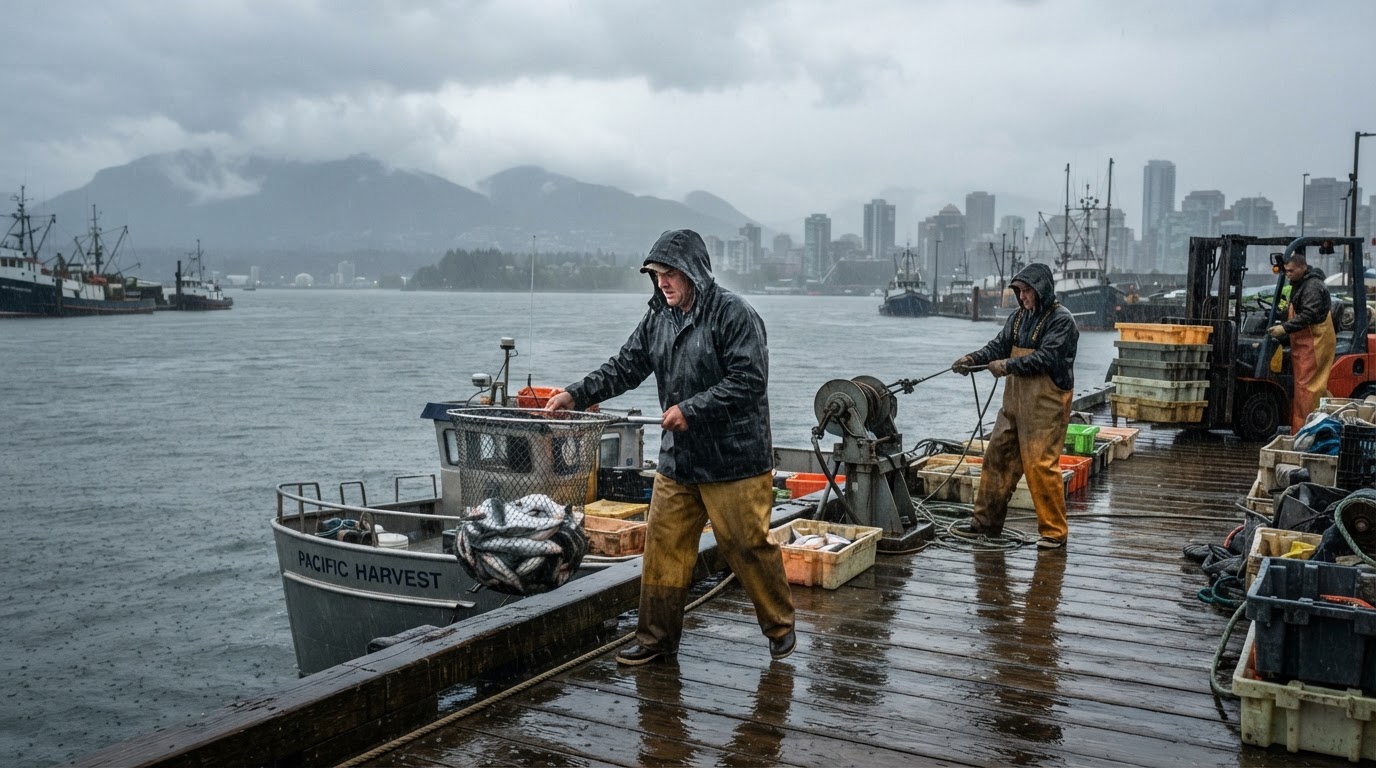
Piers along Metro Vancouver's waterfront take on a slate-grey sheen the moment autumn yields to maritime precipitation. Streetlights reflect against slick asphalt while pedestrian traffic thins out, retreating under coats and awnings as the brief dry window of late October dissolves. Metro Vancouver trick-or-treaters managed an uncharacteristically dry Halloween, yet that brief reprieve vanished almost immediately. Rain and showers have filled the outlook for the opening week of November. The shift felt sudden, though along this coastline it is an established annual rhythm. Maritime cities organize public life around damp weather, accepting low cloud and steady precipitation as ordinary civic routine.
Seasonal expectations are growing harder to anchor to familiar calendars. Meteorologist Matt Albers from Environment and Climate Change observed that the early days of the month would carry scattered sun, clouds and intermittent showers before shifting. A cold front was timed to move across the area by Wednesday night and Thursday morning. Such atmospheric turns are routine on paper, but they occur against an ocean that is behaving with unprecedented intensity.
Shifting Ocean Currents
Across the wider ocean, the broader Pacific system is signalling severe structural disruption. Reports from BBC and The Washington Post documented that El Niño reached record strength weeks ahead of its anticipated peak. The United Nations described the phenomenon as an atmospheric wrecking ball capable of driving record temperatures across the ocean. Simultaneously, RNZ reported that the Cyclone Watch Service was activated as the South Pacific cyclone season opened, while the Food and Agriculture Organization moved to strengthen capacities across Pacific countries to measure and analyze food loss.
The next couple of days will be nicer, with scattered sun and clouds, with some showers.
That evaluation from Albers, offered to Daily Hive as commuters prepared for wet roadways, captured the immediate local scale of a much wider marine reality. Coastal travelers often regard urban weather forecasts as insular matters of umbrellas, rain boots and transit delays. Viewed from the rim of the wider basin, however, a local cold front is merely the northernmost ripple of an agitated ocean. Weather in coastal ports cannot be divorced from the broader thermodynamics governing islands and archipelagos thousands of miles away.
Demands of a Restless Coast
What this coastline demands of anyone arriving on its edge is an abandonment of predictable rhythms. Travelers and residents alike tend to treat the climate as an aesthetic backdrop, expecting predictable rainfall patterns that fit comfortably into municipal planning or leisure schedules. Counterarguments naturally emerge from municipal habit, where seasoned locals note that November wetness has defined northern coastal ports for generations. Sceptics might insist that a standard cold front sweeping off the water warrants no broader philosophical alarm. That complacency misses the compounding pressure of an ocean whose baseline thermal energy has broken historical precedents.
When equatorial waters overheat and cyclonic systems gather force in the South Pacific, the entire hemispheric machinery recalibrates. Food security efforts tracked by international bodies demonstrate how quickly environmental stress converts into operational strain for remote communities. Cities on the continental fringe may possess the drainage systems and economic insulation to treat a sodden Thursday morning as an inconvenience. Smaller island societies face immediate existential exposure from the exact same climatic drivers.
Standing by the damp timber of the northern waterfront, the grey horizon no longer signals just local winter. Every squall arriving off the water reflects a vast, interconnected body under severe thermodynamic strain. The physical edge of the continent asks for vigilance rather than mere endurance, demonstrating that no harbor remains truly detached from the disturbances churning across the wider Pacific.
Sources
Newsletter
Pacific Daily
A curated briefing from Thailand, Asia-Pacific and the world.