Minority Histories and the Limits of National Archives in Southeast Asia
Anitha Devi Pillai’s documentation of Singaporean Malayalees exposes how institutional state narratives struggle to register micro-diasporic memory.
SINGAPORE
Post-colonial statecraft across Southeast Asia has consistently privileged consolidated demographic blocs, subordinating distinct linguistic migrations to broad administrative classifications. Within official population frameworks, complex lineages originating from India were routinely categorized into singular ethnic designations for civic management. This administrative simplification established bureaucratic stability, yet it simultaneously eclipsed the specific histories of smaller migrant communities whose outward movements shaped regional trading ports. National identity construction naturally favors standardized categories over localized nuances, creating durable gaps in how smaller populations remember their own integration.
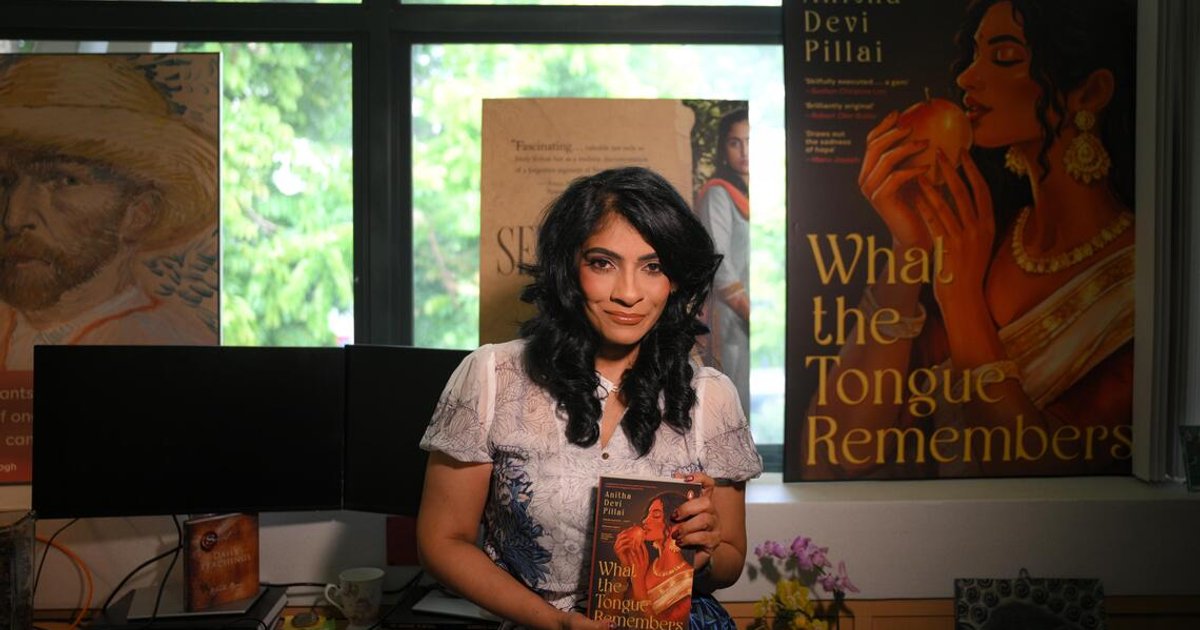
The release of What The Tongue Remembers, an English-language debut fiction collection by Anitha Devi Pillai on Oct 20, interrupts that systemic compression. Pillai developed the work not from rapid cultural commentary, but through five years of writing underpinned by two decades of research into the Malayalee community in Singapore. Rooted in Kerala and altered by generations of migration, the community occupies a distinct niche within Singapore’s Indian populace. By constructing eleven stories paired with eleven recipes and an explanatory glossary, Pillai translates ethnographic inquiry into literary record, using domestic settings, food, and family tensions to map generational continuity.
Archival Gaps in Migrant Historiography
Official state archives document civic compliance, industrial labor flows, and statutory census metrics, yet they rarely capture the informal mechanisms through which minority communities retain culinary and linguistic cohesion. Kerala’s outward migration historically provided administrative personnel, trade labor, and professionals who settled within Singapore. Despite this prolonged presence, formal civic records provide scant visibility into how intra-community conflicts, familial expectations, and domestic traditions navigated subsequent demographic integration. Institutional documentation records the external economic contributions of migrant workers, while entirely omitting the private spaces where communal survival is negotiated.
Pillai’s long-term research demonstrates that recording these trajectories requires decades precisely because formal institutions overlooked them. When minority documentation depends on private recollections, the primary evidentiary material resides within domestic spaces rather than state repositories. Culinary memory and household negotiations become the operational ledger of cultural survival. The eleven recipes embedded alongside narrative fiction function as material artifacts, anchoring transient social practices in print. These culinary records provide tangible evidence of community persistence that formal ledgers fail to capture, turning domestic routines into durable historical data.
Skeptics of ethnographic fiction may argue that subjective literary narratives cannot substitute for empirical historiography, and that personal recollections inevitably risk nostalgic distortion over verified historical assessment. Creative prose naturally lacks the verified evidentiary weight of demographic registers or statutory filings. However, that objection ignores the structural reality of colonial and post-colonial archiving: formal bureaucratic records were structured to govern populations, not to record minority vernacular experience. When statutory institutions omit distinct subgroup identities, creative documentation serves as an essential secondary repository that preserves what formal records discarded.
The Structural Fragility of Cultural Succession
This dynamic carries broader regional implications across urbanized commercial centers where rapid modernization, generational linguistic shifts, and dominant-language integration steadily erode micro-minority heritages. Without systematic recording, smaller diasporic groups risk losing distinct cultural markers under standardized national identities. Pillai’s deliberate choice to publish in English widens accessibility across younger Singaporeans who no longer read ancestral vernacular scripts. Yet translating domestic customs into a dominant global medium inevitably introduces a layer of cultural mediation, illustrating the delicate compromise between broader visibility and vernacular fidelity.
Pillai hopes the collection widens dialogue surrounding minority communities, but the fundamental institutional challenge remains unresolved. An individual literary intervention, even one grounded in twenty years of investigative work, cannot institutionalize communal continuity or replace dedicated educational mechanisms. Preserving distinct micro-diasporic identities requires continuous intergenerational transmission and systemic archival support, none of which can be guaranteed solely between the covers of narrative prose. Until educational systems and institutional archives accommodate sub-ethnic particularities, the burden of preservation will continue to fall upon individual chroniclers working against demographic absorption.
Sources
Newsletter
Pacific Daily
A curated briefing from Thailand, Asia-Pacific and the world.