The Punctuality Deficit in Transpacific Premium Travel
Air Canada acknowledges that hardware alone cannot secure high-yield international passengers when flight schedules falter
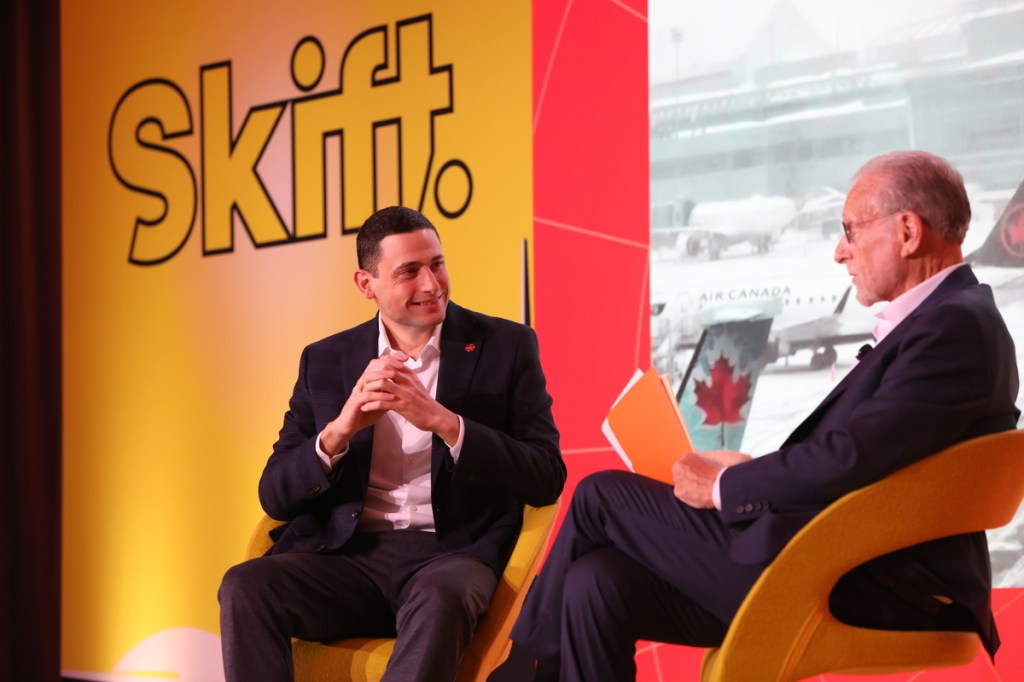
Long-haul departure halls operate on an implicit bargain between carriers and the travelers who pay four times the standard fare to cross an ocean. Premium passengers surrender significant capital not merely for physical space, but for the orderly preservation of their time. Curtains separate cabin classes, lounges insulate high-yield ticket holders from concourse friction, and priority boarding lanes promise an uninterrupted passage across time zones. Yet the entire architecture collapses the moment an aircraft sits stranded at the gate.
That tension surfaced in New York City when Mark Nasr, Executive Vice President and Chief Operations Officer of Air Canada, addressed the carrier's network realities at the Skift Aviation Forum. Speaking alongside CBS News Travel Editor Peter Greenberg, Nasr acknowledged that adding another luxury fixture will not resolve the carrier's underlying challenge. Air Canada does not need another lie-flat seat. What the airline requires is operational punctuality, and its operations chief conceded that the operation has not yet achieved that standard.
The Hardware Illusion
For North American network carriers competing across the Pacific Rim, cabin design has long served as the primary instrument of differentiation. During his appearance, Nasr described Air Canada as the original premium airline in North America, pointing to historical outlays in business-class hardware. As Nasr stated:
"We were the first with lie-flat seats, all-aisle access, a lot of investments in concierge services, food and beverage,"
Those physical enhancements answered an earlier era of transpacific competition. Today, lie-flat beds and direct aisle access represent the baseline expectation for corporate travelers moving between North America and Asian commercial hubs. When every competing legacy airline provides comparable mattress pads and multi-course dining menus, physical amenities cease to function as a decisive commercial advantage. They become table stakes.
What remains unsettled is execution. A passenger booking premium transit across long oceanic routes is frequently navigating critical meeting schedules or secondary connections across regional networks. In that context, an exceptional meal cannot compensate for a missed morning arrival in Tokyo or Seoul. Luxury hardware detached from schedule integrity functions less as a travel service and more as an expensive waiting room.
Operational Reality Over Prestige
Nasr's admission marks a rare executive departure from marketing orthodoxy. Airlines routinely direct capital toward visible consumer touchpoints because cabin interiors generate promotional imagery and reinforce premium branding. Overhauling maintenance turnarounds, crew scheduling, and tarmac coordination requires grinding operational discipline that rarely features in corporate announcements. Yet without those invisible mechanics, the premium proposition remains incomplete.
The broader lesson for Pacific Rim aviation is unmistakable. High-yield transpacific travelers assess a carrier's value proposition through the prism of reliability rather than hospitality rhetoric. The seat cushions can recline to a perfect horizontal plane, but if the departure board flashes persistent delays, the premium promise dissolves before the aircraft ever leaves the ground.
Sources
Newsletter
Pacific Daily
A curated briefing from Thailand, Asia-Pacific and the world.